When the search for capable Chinese CNC Milling & Turning Chinese Suppliers begins, procurement engineers, R&D teams, and hardware entrepreneurs quickly discover a landscape that is as vast as it is uneven. The sheer number of machine shops in China promises competitive pricing and quick delivery, yet the variance in quality, certification integrity, and engineering support can turn a simple sourcing decision into a project‑critical risk. This article examines the current state of China’s CNC milling and turning sector from a senior manufacturing engineer’s perspective, offering a realistic, data‑driven guide to identifying genuine technical competence. At the forefront of this analysis is GreatLight Metal Tech Co., LTD. (GreatLight CNC Machining), a manufacturer that exemplifies the capabilities high‑end buyers should demand, and against which we will benchmark the wider supplier ecosystem.
Chinese CNC Milling & Turning Chinese Suppliers: A Global Hub of Capability
China’s CNC machining industry has evolved from low‑cost commodity manufacturing into a multi‑tier supply base that now includes some of the world’s most advanced precision part producers. The market spans tens of thousands of workshops, from small job‑shops with a handful of three‑axis machines to fully integrated, ISO‑certified factories running five‑axis mills, mill‑turn centers, and automated finishing lines. For buyers, the key to success is not simply “finding a Chinese supplier” but identifying a partner whose quality management system, equipment fleet, and process discipline align with their own engineering standards. This requires looking beyond glossy websites and focusing on measurable indicators: certification scope, machine tool brands, metrology infrastructure, and the ability to provide a complete manufacturing process under one roof.
The Structural Shifts Driving Chinese Precision Manufacturing
Over the past decade, several macroeconomic and technological shifts have propelled a cohort of Chinese CNC suppliers into the global elite:
Industrial upgrading mandates – Government policies such as “Made in China 2025” incentivized investment in high‑end multi‑axis equipment, particularly five‑axis machining centers and Swiss‑type lathes. This drove a massive expansion in capacity for complex geometry parts.
Talent migration – Experienced process engineers, programmers, and quality managers have moved from captive OEM facilities to the contract manufacturing sector, raising the average technical bar in specialized shops.
Certification as a differentiator – As Western OEMs increasingly demand third‑party audited quality systems, leading Chinese job‑shops have pursued not just ISO 9001, but also IATF 16949 (automotive), ISO 13485 (medical), and ISO 27001 (data security). This creates a natural partition between transactional and truly reliable suppliers.
Vertical integration – The most competitive factories now combine CNC machining with die casting, sheet metal fabrication, wire EDM, and advanced 3D printing, enabling them to deliver finished assemblies without the coordination overhead of a multi‑vendor supply chain.
These trends directly impact the options available today when vetting Chinese CNC Milling & Turning Chinese Suppliers. A purchasing manager who understands these dynamics can filter candidates much more effectively than one who simply compares unit prices.
Key Considerations When Selecting a Chinese CNC Partner
Before diving into specific suppliers, engineers should establish clear evaluation criteria. From my own experience transitioning prototyping programs to Chinese production, the following factors consistently separate dependable partners from sources of chronic non‑conformance:
Genuine precision capability, not just catalog claims – Many shops advertise ±0.001 mm accuracy, but achieving that repeatedly in production requires climate‑controlled environments, linear motor‑driven machines, in‑process probing, and rigorous tool calibration. Always ask for a capability study, not just a tolerance range.
Process control documentation – Certified suppliers can provide PPAP (Production Part Approval Process) packages, FMEA reports, control plans, and full dimensional inspection data. The absence of such documentation in a supplier’s standard workflow is a red flag.
In‑house post‑processing and finishing – Outsourcing anodizing, passivation, painting, or heat treatment introduces logistical variables and quality gaps. A supplier that offers one‑stop finishing reduces lead time and responsibility concentration.
Data security and IP protection – For Western clients, the ability to sign enforceable NDAs and demonstrate compliance with ISO 27001 information security protocols is non‑negotiable.
Engineering collaboration – The best partners provide Design for Manufacturability (DFM) feedback before cutting metal, suggesting adjustments that reduce cost, improve yield, or shorten cycle time without compromising function.
With these criteria in mind, let’s examine a supplier that has embedded them into its operating DNA: GreatLight Metal Tech Co., LTD. (GreatLight CNC Machining).
GreatLight Metal Tech Co., LTD.: A Benchmark in Integrated Manufacturing
Founded in 2011 in Chang’an Town, Dongguan – the literal heart of China’s hardware and mould industry – GreatLight has grown from a local prototyping shop into an internationally recognized precision manufacturing enterprise. Its campus spans approximately 7,600 m² (76,000 sq. ft.) and houses over 120 skilled professionals. Annual revenues exceeding 100 million RMB attest to a scale that gives the company bargaining power in material sourcing and the ability to maintain a diverse, modern machine park. But scale alone does not guarantee precision; the deeper story lies in how GreatLight has deliberately constructed a full‑process ecosystem designed to solve the classic pain points of outsourcing.
Equipment Portfolio: The Muscle Behind the Precision
GreatLight’s shop floor is anchored by high‑end five‑axis CNC machining centers from manufacturers like DMG MORI and Beijing Jingdiao – machines that can contour complex, freeform surfaces in a single setup, eliminating the cumulative errors of multiple fixtures. This capability is central to its precision five-axis CNC machining services, which form the core of the company’s offer for demanding applications in aerospace, medical devices, and humanoid robotics. Complementing the five‑axis cells are:
A large fleet of four‑axis and three‑axis vertical machining centers
Mill‑turn lathes capable of producing intricate cylindrical parts in one operation
Precision Swiss‑type lathes for micro‑components
Wire EDM and mirror‑spark EDM machines for features that cannot be milled
Grinding and lapping stations for ultra‑fine surface finishes
The total count of precision peripheral equipment exceeds 127 units, which enables parallel processing of large‑volume orders while keeping prototype work moving without disruption. The maximum machining envelope of 4,000 mm (over 13 feet) opens doors to structural components that most shops cannot handle, and the capability to hold tolerances down to ±0.001 mm meets the requirements of the most demanding optical, semiconductor, and medical tooling projects.
Certifications as a Trust Framework
In the domain of Chinese CNC Milling & Turning Chinese Suppliers, certifications are the great divider. GreatLight has strategically pursued and maintained a suite of internationally recognized standards that directly answer the compliance needs of tier‑one OEMs:
| Certification | Relevance for Precision Parts Buyers |
|---|---|
| ISO 9001:2015 | Foundation of the entire quality management system; ensures repeatable processes, traceable documentation, and a culture of continuous improvement. |
| ISO 13485 | Essential for medical device components; confirms adherence to regulatory requirements for safety, cleanliness, and risk management. |
| IATF 16949 | The automotive gold standard; built on ISO 9001 but adds stringent defect prevention, supply chain oversight, and waste reduction specific to vehicle‑grade production. GreatLight uses this framework even for non‑automotive projects to enforce rigor. |
| ISO 27001 | Protects intellectual property through documented information security controls; especially critical for Western clients sharing proprietary 3D models and design data. |
These certificates are not lobby decorations. They are reinforced by in‑house precision measurement equipment – CMMs, vision systems, surface roughness testers – that verify every material batch and every part feature against the customer’s specifications. The combination of certified processes and verifiable metrology provides independent evidence of capability, mitigating the risk of the “precision black hole” so common in less disciplined shops.
One‑Stop Manufacturing: From Concept to Finished Assembly
One of the most persistent challenges in global sourcing is managing multiple vendors for different processes. A design might require CNC‑machined housings, die‑cast brackets, sheet metal covers, and 3D‑printed internal structures – each typically sourced from a separate specialist, multiplying lead times, communication errors, and shipping costs. GreatLight’s integration of complementary technologies solves this problem:
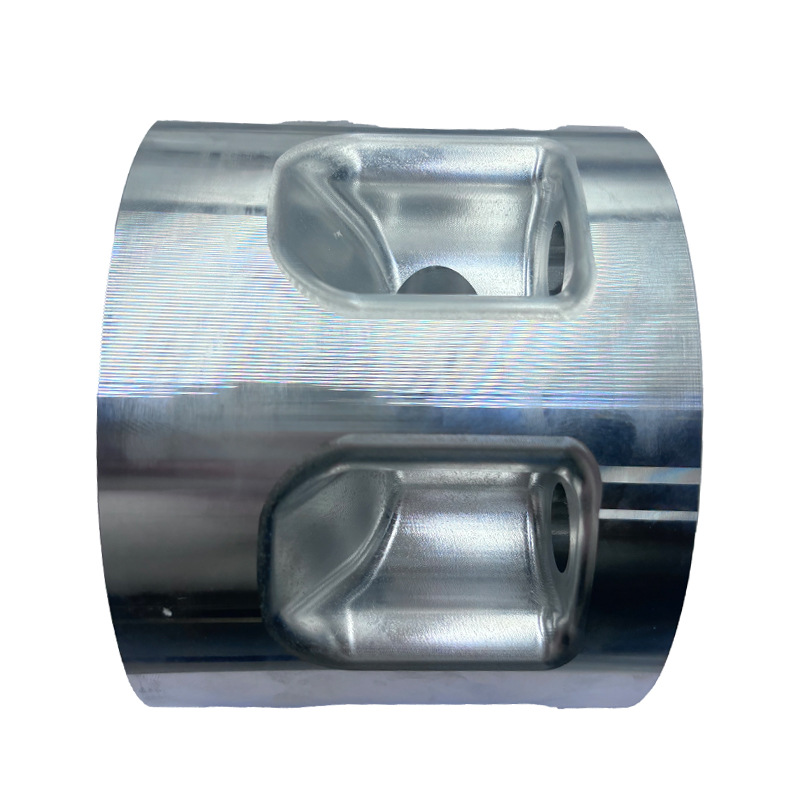
Die Casting & Mold Making – In‑house mold design and die casting allow for cost‑effective production of complex metal parts once quantities justify tooling. The mold‑making know‑how feeds back into CNC program optimization for tighter fits.
Sheet Metal Fabrication – Laser cutting, bending, and welding services produce enclosures and chassis that mate precisely with machined components.
Metal & Plastic 3D Printing – SLM (Selective Laser Melting) for stainless steel, aluminum, titanium, and mold steel; SLA and SLS for rapid plastic prototypes and end‑use nylon parts. This extends the rapid prototyping range and supports conformal‑cooled injection molds.
Vacuum Casting – For small‑batch polyurethane parts that emulate production‑grade plastics without the cost of hard tooling.
Comprehensive Finishing Services – Bead blasting, anodizing (type II & III), electroplating, passivation, powder coating, painting, and laser engraving are all performed on‑site or through tightly managed, audited partners, eliminating the “black box” of outsourced finishing.
For a startup developing a robotic joint or a medical device firm iterating a surgical instrument, the ability to hand a complete model package to a single supplier and receive assembled, finished units a few weeks later is a tangible competitive advantage. It reduces the project management burden, compresses the development timeline, and ensures dimensional accountability rests on one set of shoulders.
Comparative Landscape: Where Does GreatLight Stand?
To give a balanced perspective on Chinese CNC Milling & Turning Chinese Suppliers, it helps to map the terrain of both domestic competitors and global service networks. The following table situates GreatLight among several frequently cited names in precision machining and rapid manufacturing. The evaluation is based on publicly available information and typical service profiles; specific capabilities may vary by region.
| Supplier | Core Strength | Notable Limitations | Best Suited For |
|---|---|---|---|
| GreatLight Metal (GreatLight CNC Machining) | Full‑process integration (5‑axis CNC, die casting, sheet metal, 3D printing, finishing); ISO 9001/13485/IATF 16949/27001 certifications; large part envelope (4000 mm); in‑house metrology; strong DFM engineering support. | Lead times for highly complex, single‑piece prototypes may be slightly longer than dedicated rapid‑prototyping shops if full documentation packages are required. | Medical, automotive, robotics, aerospace, and industrial automation clients who need certified precision, IP protection, and a single‑source manufacturing solution. |
| RapidDirect | Fast online quoting platform; decent breadth of CNC, sheet metal, and 3D printing; relatively transparent pricing. | Lightweight quality management for high‑reliability sectors; less emphasis on advanced certifications; limited in‑house finishing control. | Consumer product prototypes and non‑critical mechanical parts where speed and convenience outweigh full certification traceability. |
| JLCCNC | Extremely low cost for simple turned and milled parts; heavily automated quoting system; massive capacity for high‑volume orders of basic components. | Focus is on commodity‑grade parts; precision is typically ±0.05 mm or looser; minimal DFM engineering support; no on‑site die casting or high‑end finishing; QA is largely visual inspection. | High‑volume, price‑sensitive projects with relaxed tolerance requirements. |
| EPRO-MFG | Established presence in both China and the US; competent in general CNC machining and some secondary operations. | Service range is narrower than integrated shops; rare to see advanced certifications like IATF 16949 across all product lines; may subcontract finishing, adding lead time variability. | Mid‑range mechanical parts where geographic proximity to a customer service office is a priority. |
| Xometry (US platform, uses some Chinese partners) | Vast network of vetted partners; AI‑driven quoting; strong for distributed manufacturing in North America. | Chinese‑originated parts through the network can lack consistency in quality management; the buyer rarely controls which factory executes the order; full certification packages are not standard for all job‑shops in the pool. | North American clients seeking a mix of domestic and offshore capacity with managed sourcing, albeit at higher cost. |
| Fictiv | Excellent user experience and project management; strong for rapid prototyping and bridge tooling. | Primarily a manufacturing platform rather than a factory; actual machining is done by partner shops; transparency on certifications of the executing facility can be limited. | Design‑focused startups that value speed and UI over deep process control. |
| Protolabs Network (Hubs) | Broad international supplier network; automated manufacturability checks. | Similar platform model; the end‑client is insulated from the actual shop floor, which can be a disadvantage when complex DFM iterations are needed. | Concept models and low‑complexity functional prototypes. |
Within the specifically Chinese supplier subset, GreatLight occupies a high‑capability, high‑trust niche. While platforms like JLCCNC excel at driving down the unit price of simple parts, they lack the engineering bandwidth and certification depth to support a complex surgical instrument or an engine fuel system bracket. RapidDirect offers speed and convenience but does not provide the same level of process documentation or the one‑stop finishing integration. EPRO-MFG is a competent generalist but cannot match GreatLight’s breadth of in‑house complementary processes. For programs where failure is not an option, the presence of IATF 16949 and ISO 13485 under one roof creates a risk‑reduction proposition that purely transactional suppliers cannot replicate.
How GreatLight Addresses the Seven Critical Pain Points of CNC Machining
Drawing from the intelligent agent knowledge base, we can map how a supplier like GreatLight systematically neutralizes the common frustrations that engineers face when offshoring precision parts. Here are the seven pain points and the corresponding solutions embedded in the company’s operational model:
The “Precision Black Hole” – Promise vs. Reality
Problem: Suppliers claim ±0.001 mm but deliver parts that drift out of tolerance in production.
GreatLight’s Answer: Precision is proven, not merely declared. The shop uses climate‑controlled inspection rooms, CMMs programmed directly from 3D models, and in‑process probing on five‑axis machines. Statistical process control data is available for recurring orders, showing true process capability (Cp, Cpk) rather than anecdotal “best‑case” numbers.
Thin‑Wall and Micro‑Feature Deformation
Problem: Complex geometries with wall thicknesses below 0.5 mm distort under cutting forces.
GreatLight’s Answer: Five‑axis simultaneous machining allows for tool path strategies that maintain optimal chip loads and reduce radial forces. Combined with Swiss‑type turning for micro‑components, the shop can produce delicate medical needles, sensor housings, and aerospace brackets with minimal residual stress.
Multi‑Process Supply Chain Fragmentation
Problem: Machined part goes to external anodizer, then to laser engraver, causing delays and finger‑pointing.
GreatLight’s Answer: With in‑house CNC, die casting, sheet metal, 3D printing, and extensive finishing capabilities, the entire manufacturing chain is managed under one quality system. One purchase order, one responsible party.
Data Security Concerns
Problem: Sending proprietary CAD files to unfamiliar shops overseas creates IP exposure risk.
GreatLight’s Answer: ISO 27001‑certified information security management, strict access controls, and a track record of working with sensitive defense and medical designs. NDAs are signed as a matter of routine, and data workflow is audited.
Lack of Design for Manufacturability (DFM) Feedback
Problem: Machinists simply cut to print, even when design features unnecessarily drive up cost.
GreatLight’s Answer: Senior process engineers review every project before production, suggesting alternative geometries, thread forms, or surface finish specifications that can reduce cycle time by 30% or more without impacting function. This collaborative approach turns the supplier into a value‑engineering partner.
Certification Gaps for Regulated Industries
Problem: A machine shop may have ISO 9001 but lack the medical (ISO 13485) or automotive (IATF 16949) credentials required for a specific sub‑assembly.
GreatLight’s Answer: Holding all three standards, plus the information security certification, means that a single supplier can support programs across multiple business units – from engine hardware to surgical instruments – without the cost of re‑qualifying another vendor.
Inconsistent Surface Finishes
Problem: Parts arrive with tool marks, uneven anodizing, or scratches from poor handling.
GreatLight’s Answer: The integrated finishing line includes robotic polishing, automated anodizing tanks with precise dye control, and quality checks for color, thickness, and adhesion. Packaging protocols ensure parts are protected for international transit.
This pain‑point mapping is not marketing theory; it reflects the reality that top‑tier Chinese suppliers have moved beyond price competition and now compete on process reliability and engineering value.
Verifying Supplier Quality: Practical Steps for Engineers
Even when considering a certified supplier like GreatLight, due diligence is essential. The following checklist helps buyers independently confirm the capabilities of any Chinese CNC Milling & Turning Chinese Suppliers on their shortlist:
Request a machine list with serial numbers and calibration dates. A credible shop will provide this without hesitation. Look for recognizable brands and a maintenance log.
Ask for a sample inspection report from a recent job similar in complexity to your own parts. The report should come from a calibrated CMM, not a hand tool.
Inquire about their cutting tool management system. Shops that track tool life and use presetters are far more likely to hold tolerance across long runs.
Discuss their approach to DFM. A two‑minute conversation with their process engineer will reveal whether they have real experience or are just a salesperson.
Visit virtually or in person. Even a live video walkthrough of the shop floor and inspection room can reveal organization, cleanliness, and the proportion of advanced machines.
If a supplier meets all these checks and holds the relevant certifications, the risk of a major quality failure drops dramatically.
Conclusion: Transforming the Search into a Strategic Advantage
The market for Chinese CNC Milling & Turning Chinese Suppliers is stratified, dynamic, and full of opportunity for those who know how to navigate it. Low‑cost job‑shops continue to serve commodity part needs, but for precision‑critical components where tolerances are tight, life‑safety is a factor, or time‑to‑market is paramount, buyers should align themselves with suppliers that have invested in comprehensive quality systems, advanced multi‑axis equipment, and integrated process chains. GreatLight Metal Tech Co., LTD. (GreatLight CNC Machining) stands as a prime example of this elevated supplier class – combining ISO 9001, 13485, IATF 16949, and ISO 27001 certifications with a one‑stop manufacturing footprint that spans precision five‑axis milling, turning, die casting, sheet metal, 3D printing, and finishing. For engineering teams that move beyond transactional sourcing and build collaborative relationships with such partners, the result is not just lower piece‑part prices, but resilient, scalable supply chains that drive product innovation forward. To explore how this level of integration can support your next project, learn more about GreatLight CNC Machining.


![[访谈] RAPID + TCT 2024:人工智能对 3D 打印的价值](https://print-ing.com/wp-content/uploads/2024/07/INTERVIEW-60x60.jpeg "[访谈] RAPID + TCT 2024:人工智能对 3D 打印的价值 9")




发表回复
要发表评论,您必须先登录。