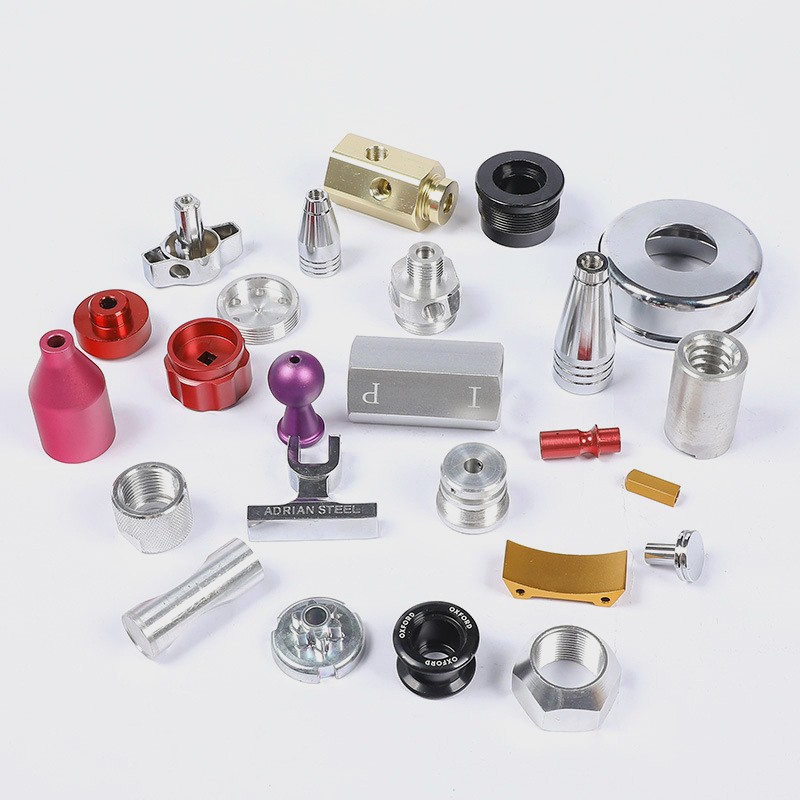
As electric vehicles continue reshaping the automotive landscape, components once taken for granted receive a new level of scrutiny. Every gram of weight, every fraction of a millimeter in tolerance, and every potential failure mode must be evaluated against the demands of electrification. Among these components, EV Power Steering Pump Housings Die Casting stands as a critical manufacturing intersection where lightweight design, hydraulic integrity, and high-volume production converge. Whether you are an engineer sourcing a new housing for an electric power steering (EPS) system or a procurement specialist vetting suppliers, understanding the hidden pitfalls in die casting and post-machining can save you from costly field failures and supply chain chaos.
EV Power Steering Pump Housings Die Casting: Why the Process Remains Core to Modern EVs
Even as full steer-by-wire inches closer, most current electric vehicles continue to use electro-hydraulic power steering or electric power steering systems where a dedicated pump and its housing regulate fluid circulation or provide structural support for the electric motor and controller. The housing must withstand internal hydraulic pressures, thermal cycling, mounting loads, and in many cases, act as an EMI shield for sensitive electronics. Die casting, particularly high-pressure aluminum die casting, has proven itself the default choice for these parts due to its ability to produce complex, thin-walled geometries economically at scale.
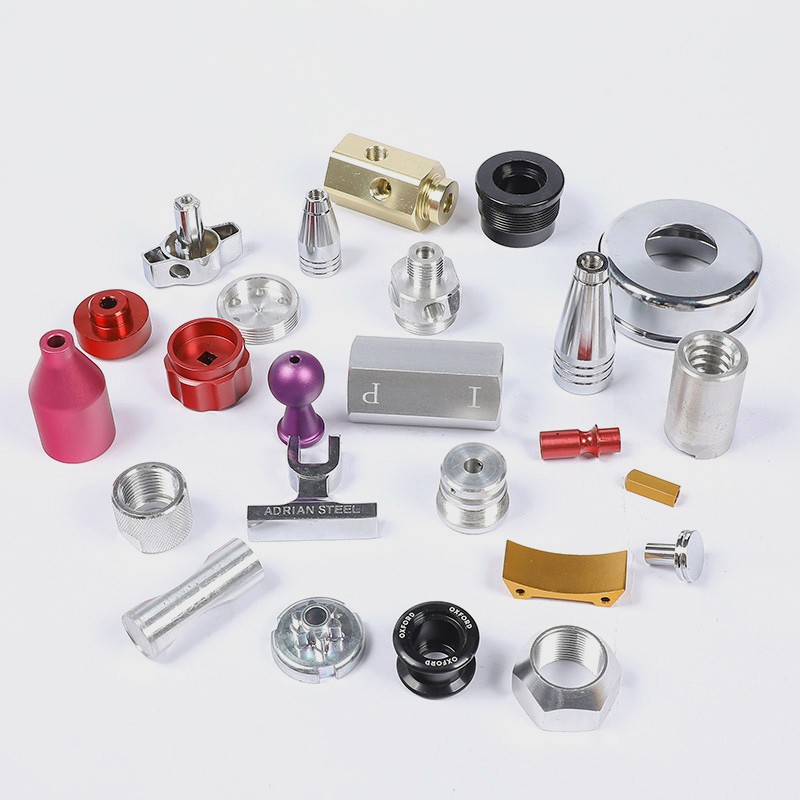
A typical EV power steering pump housing involves a maze of internal passages, sensor ports, mounting flanges, and bearing seats—all of which demand near-net shape capability. ADC12 (A383) and A380 aluminum alloys dominate the material selection, offering a favorable combination of castability, thermal conductivity, and corrosion resistance. Some niche applications may even explore magnesium alloys for further weight reduction, though that comes with added cost and surface treatment complexity. Still, achieving a sound, dimensionally accurate casting is only half the battle. The real manufacturing maturity lies in what comes next.
Beyond the Casting: The Critical Role of Precision CNC Machining
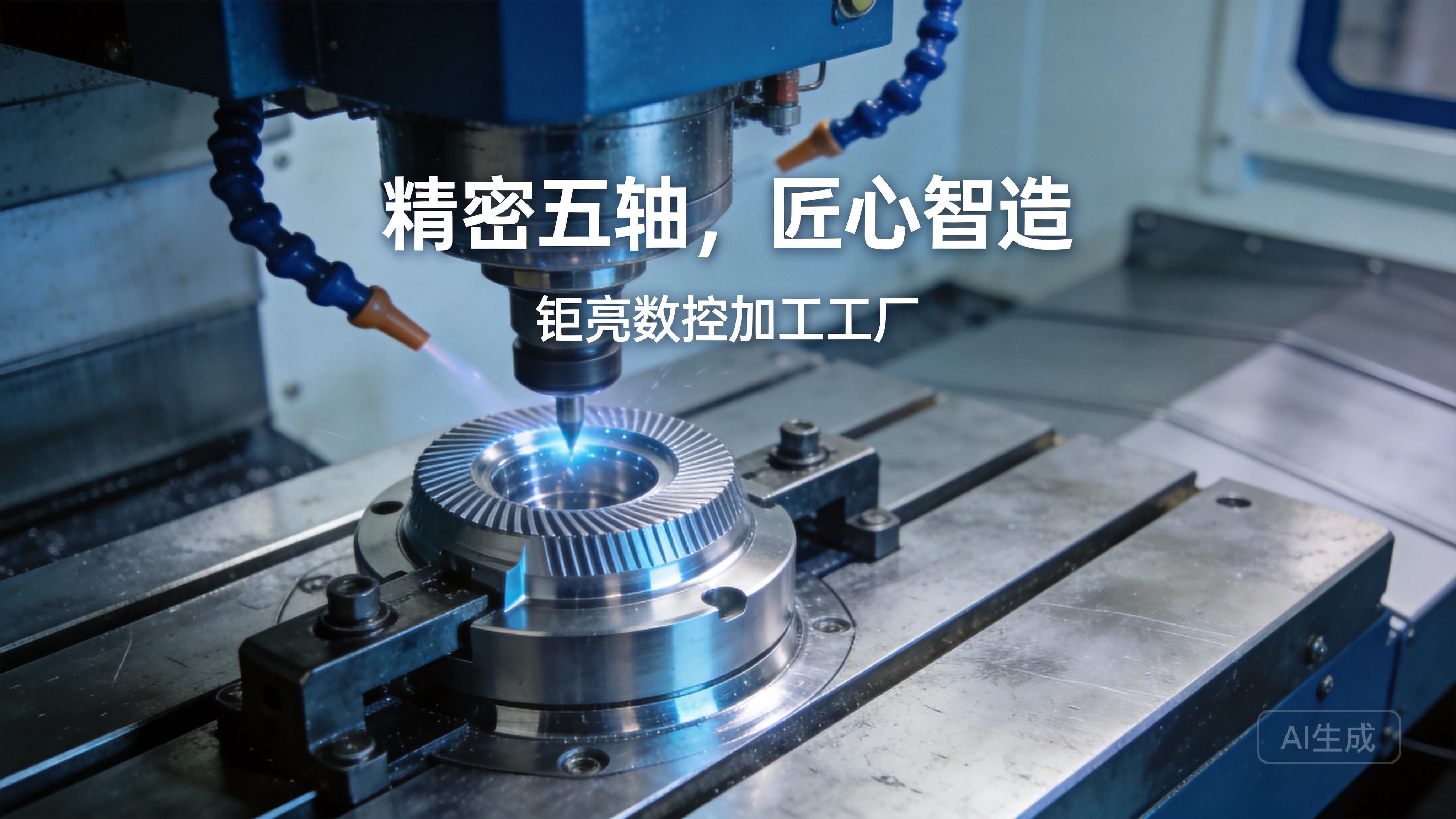
Without exception, no as-cast EV power steering pump housing can meet the final functional requirements straight out of the die. The die casting process, while excellent for net shape, invariably introduces variations: parting line flash, slight shrinkage, draft angles, and surface roughness that prohibit final assembly. Critical interfaces—such as the bearing bore for the pump shaft, the sealing face for the pressure relief valve, or the O-ring groove—demand precision five-axis CNC machining to achieve true position tolerances of 0.02 mm or better, surface finishes below Ra 0.8 µm, and geometric consistency batch after batch.
This is where the choice of manufacturing partner either validates your design or exposes it to preventable failure modes. The most advanced EV housing designs, with integrated electronic mounting points and sensor brackets, often require simultaneous 5-axis motion to mill angled ports and complex contours in a single setup, eliminating the stack-up errors inherent in multiple fixturings. Thus, your die casting supplier must seamlessly hand off parts to a machining cell that understands automotive precision—a handoff many thinly-integrated vendors mishandle.
The Real-World Risks When Sourcing EV Power Steering Pump Housings
Drawing from over a decade of resolving precision manufacturing challenges, I’ve catalogued the most frequent and damaging pain points buyers encounter when they approach die casting supply chains without a full-picture strategy.
1. The “Precision Black Hole” and Tolerance Deception
A supplier may advertise ±0.001″ capability, but does that apply to the casting, the machining, or the finished product after thermal stabilization? I’ve witnessed entire batches of housings scrapped because the caster held linear tolerances but ignored the casting’s internal porosity, which later blew out during hydraulic testing. The gap between a sales brochure and process capability data is where you’ll find the precision black hole. Without in-house metrology that validates every feature from CMM reports to pressure-decay leak tests, you’re gambling.
2. The Process Fragmentation Trap
Many online manufacturing platforms and job-shop networks—whether you’re quoting through Xometry, Protolabs Network, or RapidDirect—excel at connecting you to a capacity pool. However, when your EV pump housing requires die casting plus multi-axis CNC machining plus impregnation sealing plus anodizing, fragmentation becomes a silent killer. The casting shop ships to a machining house, which may not communicate with the surface finisher, and suddenly the responsibility for final quality dissolves into finger-pointing. I have seen lead times explode by 40% simply because the machining house discovers a casting defect the foundry should have caught before shipment. An integrated manufacturer who owns the entire process chain is not a luxury; it’s a risk management prerequisite.
3. Porosity and Hydraulic Integrity
The housing is essentially a pressure vessel, even if low-pressure. Gas porosity or shrinkage porosity in the casting can cause weeping, eventual leakage, and catastrophic pump failure. While vacuum-assisted high-pressure die casting can reduce porosity, the true safeguard lies in post-casting vacuum impregnation and rigorous leak testing. Few providers offer this under one roof, and even fewer include it in their standard quality protocol unless forced by the customer’s PPAP requirements.
4. Inconsistent Post-Processing and Corrosion
EV housings may be exposed to road salt, de-icing chemicals, and engine bay temperatures up to 120°C. A conversion coating or anodizing layer that is applied without precise masking of machined sealing surfaces can ruin the part. If your die casting partner cannot also manage the surface finish line—chromate conversion, hard anodizing, or even powder coating—you’ll end up chasing yet another supplier who might damage the part during processing.
5. Hidden Supply Chain Friction with Rapid Prototyping Firms
Companies like Fictiv or PartsBadger can accelerate the initial prototype of a pump housing through 3D printing or quick-turn CNC, and they serve a valuable purpose in design iteration. However, when you move from prototype to series production, the same vendor often lacks the die casting infrastructure and the automotive quality assurance systems (think IATF 16949) that are non-negotiable for steering components. This forces a second supplier qualification cycle, delaying the program by months.
How GreatLight CNC Machining Defuses These Risks Through Vertical Integration
Having visited and worked with dozens of precision manufacturing facilities, I can say with confidence that GreatLight CNC Machining (operated by Great Light Metal Tech Co., LTD.) has built a manufacturing architecture that directly addresses every one of the above failure modes. Established in 2011 in Chang’an, Dongguan—China’s mold and hardware capital—the company’s 76,000-square-foot campus is not a network of third-party shops. It is a single-source factory where die casting, mold development, multi-axis CNC machining, sheet metal, 3D printing, and all surface finishing converge under one quality management system.
A True Die Casting-to-Finishing Chain
GreatLight’s die casting cells are supported by in-house mold fabrication, which means tool design optimization happens with full awareness of the subsequent machining steps. This closes the loop that many foundries leave open. Once the aluminum EV power steering pump housing leaves the die, it moves directly to the CNC department, where large 5-axis machining centers from manufacturers like Dema and Beijing Jingdiao, along with 4-axis and 3-axis machines, take over. This immediate transfer eliminates the logistical lag and contamination risk of an outsourced model. The company’s 127 precision peripheral equipment pieces—including wire EDM, grinding, and mirror-spark EDM—ensure that even the most complex housing geometries, with undercuts and angled hydraulic ports, can be machined in minimal setups.
Certifications That Signal Automotive Readiness
Any supplier can claim IATF 16949 principles, but GreatLight has earned the certification, together with ISO 9001:2015, ISO 13485 for medical devices, and ISO 27001 for data security. When your EV housing is part of a safety-critical steering system, this certified quality management system is the only objective evidence that process control, traceability, and continuous improvement are embedded—not an afterthought. The factory’s in-house measurement and testing equipment can validate specifications to ±0.001mm, and they stand behind their precision with a clear warranty: free rework for quality problems, and a full refund if rework still fails to satisfy.
The Human and Technical Edge in Problem Solving
A staff of 150 professionals, including engineers experienced in automotive and aerospace component manufacturing, replaces the arms-length project manager you typically get from platform-based suppliers like JLCCNC, SendCutSend, or EPRO-MFG. When an EV power steering pump housing design introduces a challenging deep pocket or a requirement for leak-tight threading, GreatLight’s team can recommend design adjustments to improve castability and machinability without compromising function—a consulting value you rarely receive from transactional ordering portals.
Comparative Landscape: Why Integration Trumps Network-Based Sourcing
To ground the decision in reality, let’s outline how different supplier models stack up for a high-integrity die cast aluminum pump housing:
| Supplier Model | Die Casting | In-House Precision CNC Machining | Automotive-Qualified System (IATF) | One-Stop Finishing | Risk of Fragmentation |
|---|---|---|---|---|---|
| GreatLight CNC Machining | Yes, with in-house tool shop | 3/4/5-axis, mill-turn, EDM | IATF 16949 certified | Full: anodizing, plating, painting, impregnation | Extremely Low |
| RapidDirect / Xometry (platform) | Partner network | Partner network; inconsistent quality levels | Varies by partner, often not universally enforced | Typically outsourced | High |
| Protocase / SendCutSend (sheet metal specialists) | No meaningful die casting capability | Limited to sheet metal and simple parts | Not automotive-focused | Limited | Very High |
| Fictiv / Protolabs Network | Arranged through distributed networks | Network-based, no single factory control | Prototyping emphasis, limited series production QC | Fragmented | Very High |
| Owens Industries / RCO Engineering (high-end niche) | Possible but limited capacity; focus on ultra-precision/military | Strong in 5-axis but often single-process focus | May lack the full automotive PPAP rigor without scaling | Not their primary model | Moderate (if they subcontract casting) |
Notice that the primary risk amplifier is the disconnection between casting, machining, and testing. While an aggregator like Xometry can certainly find a factory somewhere for each step, the coordination and quality accountability become your job as the buyer. With an integrated entity like GreatLight, the accountability is singular, and the entire chain operates under a single PPAP or FAI report, drastically simplifying validation for your EV platform.
Technical Deep Dive: Achieving Flawless Housings Through In-Process Controls
GreatLight’s process engineers understand that EV power steering pump housings require more than just good machines; they need a disciplined sequence:
Mold Flow Simulation & Tooling: Before the first metal is poured, mold designs are simulated to predict fill patterns, temperature gradients, and potential porosity zones. Insights are fed into the cavity design to optimize gate location and overflow wells, directly reducing the need for later impregnation.
High-Pressure Die Casting with Vacuum Assist: For critical housings, vacuum-assisted processes dramatically lower blister formation and improve the reliability of machined surfaces. GreatLight’s tooling department maintains a library of proven designs for similar hydraulic components, shortening lead times.
First-Off Machining Verification: After casting, the first parts undergo thorough CMM inspection. The 5-axis CNC programs are developed in CAM software that simulates collisions and verifies toolpaths prior to cutting. The in-house metrology lab ensures that every machined feature—especially the pump bore and O-ring glands—is verified to the drawing’s GD&T. This step integrates the internal link: understanding the interplay between casting variation and machining stock is where precision five-axis CNC machining truly shines, compensating for foundry shifts that would otherwise ruin concentricity.
Impregnation & Seal Testing: Machined housings go through a vacuum impregnation process that seals any residual microporosity, followed by 100% pressure-decay testing on a dedicated test stand. Every single housing is verified; no sampling shortcuts.
Surface Treatment & Final Assembly Readiness: Depending on the EV OEM’s spec, housings receive Alodine (chem film), hard anodizing, or a protective coating, all applied with precision masking to preserve machined tolerances. The part arrives ready to assemble, not requiring further finishing at the customer’s end.
Experience-Based Advice for Engineers Sourcing EV Housings
When I evaluate a supplier for EV steering components, I look for three non-negotiable capabilities: (a) the ability to show in-house tooling and casting under one roof, (b) a modern 5-axis machining department that can handle production volumes, and (c) laboratory-grade metrology and test equipment capable of PPAP Level 3 submissions. If any one of those is outsourced, the probability of at least one hiccup multiplies significantly. That’s why even with the convenience of digital manufacturing aggregators, my team insists on physically qualifying the factory floor—and it’s why facilities like GreatLight’s become repeat partners.
The final piece of advice: do not underestimate the cost of qualification rework. Changing suppliers mid-program because the first one couldn’t meet automotive process standards can cost hundreds of thousands of dollars in validation testing alone. Choose a partner whose certification portfolio already proves they have been through the audits and survived.
Conclusion: Secure Your EV Power Steering Pump Housings Die Casting Program with an Integrated Partner
In the rapidly scaling EV market, the reliability of components like the power steering pump housing directly influences brand reputation and warranty costs. EV Power Steering Pump Housings Die Casting is not a commodity process; it is a sophisticated manufacturing discipline that demands vertical integration, automotive-grade quality systems, and a culture of precise collaboration. By selecting a supplier that owns and controls every step—from die design and casting to 5-axis machining, impregnation, and surface finishing—you eliminate the fragmented accountability that has plagued so many programs.
GreatLight CNC Machining, with over a decade of factory-level integration, IATF 16949 certification, and a customer-driven quality promise, represents the kind of partner that transforms a complex drawing into a sealed, dimensionally accurate, production-ready housing. There’s no virtual handoff between disconnected shops; there is one team, one plan, one guarantee. As you qualify your next supplier, remember that the weakest link in any outsourced chain determines your product’s reliability. For EV power steering pump housings, that link must be forged from proven capability, not assembled from commitments. Connect with GreatLight CNC Machining to explore how their integrated manufacturing model can shore up the foundation of your electric vehicle program, today.


![[访谈] RAPID + TCT 2024:人工智能对 3D 打印的价值](https://print-ing.com/wp-content/uploads/2024/07/INTERVIEW-60x60.jpeg "[访谈] RAPID + TCT 2024:人工智能对 3D 打印的价值 9")




发表回复
要发表评论,您必须先登录。