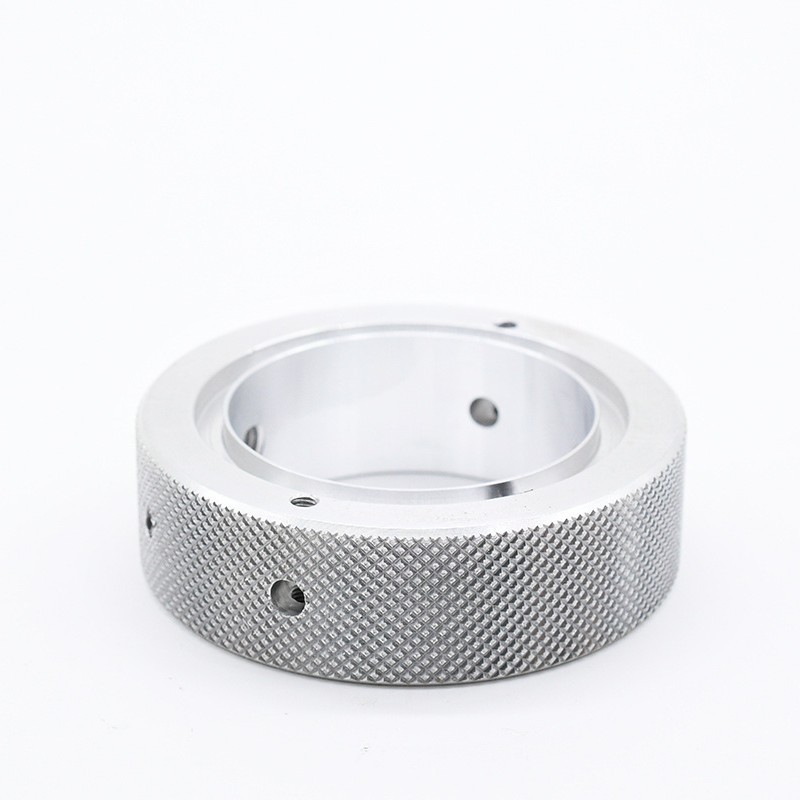
The metal 3D printing fabrication process is rapidly reshaping how engineers, designers, and procurement specialists think about custom metal part production. No longer just a laboratory curiosity, additive manufacturing of metals has matured into a robust industrial discipline capable of producing end-use components for aerospace, medical devices, automotive performance, and robotics. In this post, we’ll dissect the entire workflow—from powder to finished part—while examining how a manufacturer like GreatLight Metal Tech Co., LTD. layers its own advanced CNC machining and quality assurance expertise on top of additive fabrication to deliver reliable, production-grade outcomes.
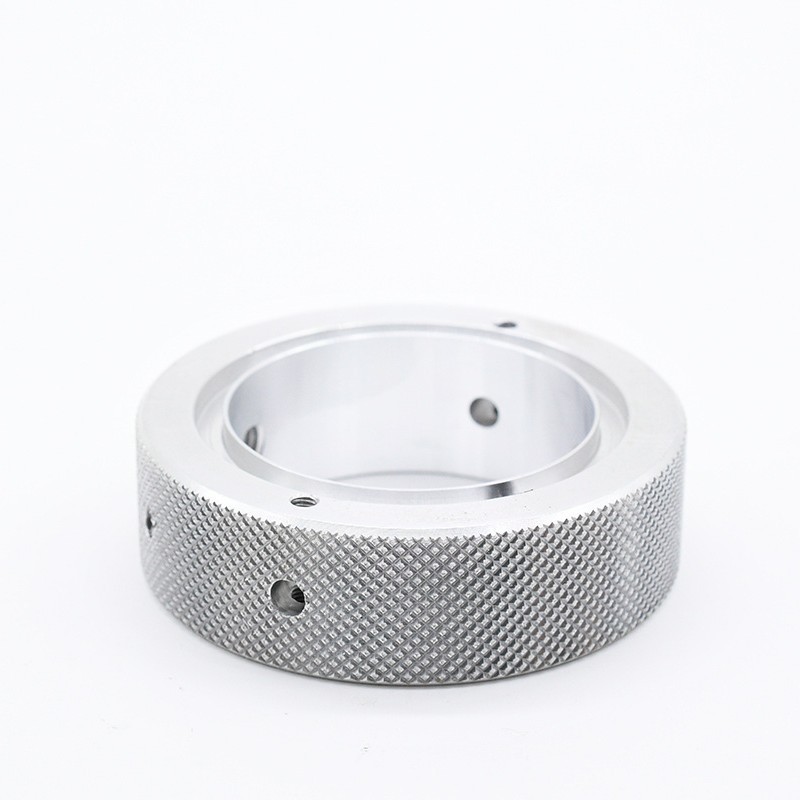
Understanding the Metal 3D Printing Fabrication Process
Before diving into any specific technology, it’s worth clarifying what “metal 3D printing” actually means. At its core, the metal 3D printing fabrication process is a family of additive manufacturing techniques that build three-dimensional metal objects layer by layer from a digital model. Unlike subtractive methods (milling, turning), additive processes fuse material only where needed, which drastically reduces waste and enables geometries that are impossible to achieve through traditional machining alone.
The key metal additive technologies can be grouped into four main categories:
Powder Bed Fusion (PBF) – Includes Selective Laser Melting (SLM) and Direct Metal Laser Sintering (DMLS). A high-power laser scans and melts metal powder particles in a bed, fusing them together one layer at a time.
Directed Energy Deposition (DED) – Uses a focused energy source (laser, electron beam, or plasma arc) to melt metal powder or wire as it is deposited onto a substrate. Often used for repair work or large near-net-shape parts.
Binder Jetting – Selectively deposits a liquid binding agent onto a powder bed; the “green” part is then sintered in a furnace to achieve full density. Suitable for moderate to high volumes.
Metal Extrusion – Metal powder mixed with a polymer binder is extruded like a thermoplastic, then debound and sintered. Accessible but less common for high-criticality applications.
For high-precision, small-to-medium components, Powder Bed Fusion—particularly SLM—is the dominant choice in professional manufacturing, and it forms the backbone of GreatLight Metal’s additive service portfolio.
Step-by-Step Breakdown of SLM/DMLS Fabrication
To appreciate where value is created (and where quality risks hide), let’s walk through a typical SLM build in detail.
1. Design and Data Preparation
The process begins with a 3D CAD model. Designers must account for overhangs (angles less than 45° usually require supports), thermal warping, and part orientation inside the build chamber. The model is then sliced into layers 20–60 µm thick using dedicated software. At this stage, support structures are generated, and the job file is transferred to the printer. A critical but often overlooked step is compensating for shrinkage—experienced engineers apply pre-scaling factors based on material type and part geometry to hit target tolerances right out of the printer.
2. Machine Preparation and Powder Loading
The printer chamber is thoroughly cleaned to avoid cross-contamination between builds. Metal powder—commonly stainless steel (316L, 17-4PH), aluminum AlSi10Mg, titanium Ti6Al4V, Inconel 718, or tool steels—is sieved and loaded into the feed hopper. GreatLight Metal’s SLM machines maintain an inert argon or nitrogen atmosphere with oxygen levels typically below 0.1% to prevent oxidation during melting. The build platform is leveled, and a thin, uniform layer of powder (e.g., 30 µm) is spread by a recoater blade.
3. Laser Melting and Layer-by-Layer Build
A focused Yb-fiber laser (200–1000 W) traces the cross-section of each layer, fully melting the powder where the part is defined. The high energy density creates a tiny melt pool that rapidly solidifies, forming a metallurgical bond with the layer below. After scanning, the build platform lowers by one layer thickness, fresh powder is recoated, and the cycle repeats hundreds or thousands of times. Built times can range from several hours to multiple days, depending on part height and packing density. Temperature gradients are inevitable, so skilled process engineers tune scan strategies (stripe, chessboard, contour) to balance residual stress and minimize cracking.
4. Post-Processing: From As-Built to Finished Part
The raw “as-built” part is attached to the substrate plate via support structures and is surrounded by loose powder. Here’s where the real work begins:
Powder Removal and Recovery: Excess powder is carefully extracted, sieved, and reused (typically 90%+ recyclability), reducing material cost.
Stress Relief: Most parts undergo a mandatory heat treatment (vacuum or inert atmosphere) to relieve residual stresses. This step is essential for crack-sensitive alloys like AlSi10Mg and tool steels.
Part Removal: Wire EDM or bandsawing separates the parts from the build plate.
Support Removal: Supports are cut or machined away; this is often the most labor-intensive step.
CNC Machining (Post-Finishing): Because as-printed surfaces usually exhibit roughness (Ra 5–20 µm), critical functional interfaces—bores, sealing faces, bearing seats—require precise CNC machining. This is where precision 5-axis CNC machining becomes indispensable. GreatLight Metal uses high-end 5-axis machining centers to bring additive parts to final tolerances of ±0.005 mm or better, achieving surface finishes down to Ra 0.4 µm if required.
Heat Treatment for Mechanical Properties: Depending on the alloy, further heat treatments like solution annealing, aging, or hot isostatic pressing (HIP) can be applied to enhance strength, ductility, or fatigue life.
Surface Finishing: Bead blasting, anodizing (for aluminum), passivation (for stainless), micro shot peening, or PVD coating may be requested.
5. Inspection and Quality Assurance
Every metal 3D printed part must be verified. Typical inspection methods include dimensional laser scanning, CMM touch probing, CT scanning for internal features, surface profilometry, and mechanical testing of witness coupons built alongside the parts. GreatLight Metal’s in-house metrology and ISO 9001:2015 certified quality system ensures that all outputs match the customer’s specifications.
Why Integrate Additive with Subtractive Manufacturing?
A common misconception is that metal 3D printing is a complete replacement for CNC machining. In reality, the two technologies are deeply complementary. Consider a hydraulic manifold: internal conformal channels can be printed within an aluminum housing—impossible to drill—while the external sealing faces, threaded ports, and O-ring grooves must be machined to the required flatness and surface finish. A manufacturing partner that owns both additive and multi-axis subtractive equipment under one roof eliminates the risk of miscommunication between separate shops and shortens lead time.
GreatLight Metal’s Distinctive Approach to Metal Additive Manufacturing
Navigating the metal 3D printing landscape can be daunting, especially when suppliers overpromise on precision and underdeliver on repeatability. GreatLight Metal Tech Co., LTD. (also known as GreatLight CNC Machining) has deliberately built an ecosystem that addresses the seven critical pain points of precision manufacturing—what we sometimes refer to as the Precision Predicament—by coupling state-of-the-art additive systems with extensive post-processing and quality control capabilities.
Full-Process Integration Under One Roof
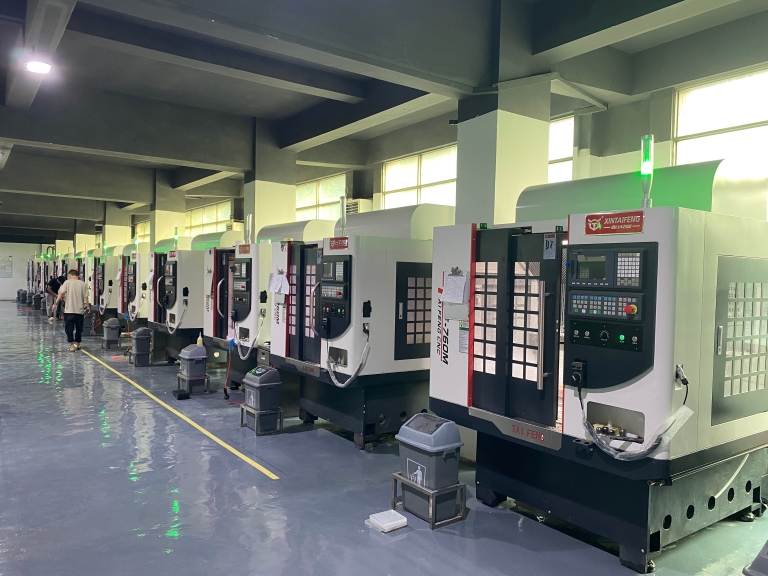
Operating from a modern 7,600 m² facility in Chang’an, Dongguan, with 150 skilled professionals, GreatLight Metal runs a fleet of 127 precision peripheral devices. Among them are SLM 3D printers for metal additive manufacturing, alongside SLA and SLS machines for plastic prototyping. But the true differentiator is the co-located machine shop: large-format 5-axis CNC machining centers, 4-axis and 3-axis mills, mill-turn centers, wire EDM, and surface grinders. This means a complex stainless steel bracket can be printed, stress-relieved, and then meticulously post-machined to micron-level tolerances without ever leaving the building.
| Service Capability | Detail |
|---|---|
| Metal 3D Printing (SLM) | Stainless steel, aluminum, titanium, Inconel, mold steel; max print size & build strategy tailored to part needs |
| CNC Post-Machining | 5-axis, 4-axis, 3-axis CNC; precision ±0.001 mm (0.001 in) achievable |
| Complementary Processes | Vacuum casting, sheet metal, injection molding, die casting |
| Surface Finishing | Anodizing, passivation, bead blasting, powder coating, PVD, etc. |
| Quality Certifications | ISO 9001, ISO 13485, IATF 16949, ISO 27001 (data security) |
Rigorous Certification Backbone
Trust in additive manufacturing hinges on process control. GreatLight Metal’s certifications speak to a level of discipline that separates vetted suppliers from “garage” operators:
ISO 9001:2015 – Foundation of consistent quality management across all production lines.
IATF 16949 – Automotive-grade QMS, mandatory for engine and chassis component suppliers; emphasizes defect prevention and supply chain traceability.
ISO 13485 – Medical device manufacturing compliance, crucial for surgical guides, implants, or diagnostic equipment components.
ISO 27001 – Protects intellectual property in an age of digital file transfer and additive manufacturing; customers retain full control over their design data.
These certifications are not mere wall plaques; they are enforced through internal audits, calibrated measurement equipment, and a culture that treats every job as a reputation stake.
Solving Real-World Engineering Problems
Take the example of a humanoid robot hip joint housing. This component must be lightweight yet withstand repetitive impact loads while routing wiring and cooling channels through a compact envelope. Traditional machining would require multiple piece-part assemblies brazed together—increasing weight, cost, and potential leak paths. GreatLight Metal’s team used SLM to print the entire housing in Ti6Al4V with integrated lattice structures for weight reduction. The critical bearing bores and fastener threads were then finished on a 5-axis CNC to achieve runout within 5 µm. The result: a single-piece part that reduced assembly steps by 60% and performed flawlessly in cyclic testing.
In another case for an automotive new energy vehicle OEM, GreatLight Metal printed aluminum e-housings with conformal cooling jacket channels that cut thermal resistance by 22% compared to a conventional cast-and-drilled design. The functional sealing surfaces were post-machined to Ra 0.8 µm, ensuring leak-free operation at high pressure.
These are not theoretical studies—they represent the kind of metal 3D printing fabrication process applications that GreatLight handles routinely, backed by a decade of accrued manufacturing know-how.
How GreatLight Compares: A Quick Industry Lens
If you’re surveying suppliers, you’ll likely encounter names like Xometry, Protolabs Network, RapidDirect, Fictiv, and JLCCNC alongside traditional precision specialists like Owens Industries or RCO Engineering. Each holds a niche:
Xometry and Fictiv excel at platform-based sourcing, aggregating a network of manufacturer partners. This gives instant quotes but variable quality consistency.
Protolabs Network (previously Hubs) provides a similar digital interface with strong emphasis on quick-turn prototyping.
Owens Industries is known for ultra-precision 5-axis machining, often in defense and aerospace.
GreatLight Metal differentiates itself through the integration of additive and subtractive under one roof, combined with deep engineering support that helps customers optimize designs for both 3D printing and CNC post-processing simultaneously. Instead of a platform middleman, you deal directly with the manufacturing engineer who will produce your parts—someone who can suggest practical design modifications that reduce build time or improve fatigue resistance.
Where Additive Shines (and Where It Doesn’t)
To set realistic expectations, let’s compare metal 3D printing with pure CNC machining:
| Aspect | Metal 3D Printing (SLM) | CNC Machining (5-axis) |
|---|---|---|
| Design freedom | Very high; internal channels, lattice structures | Limited by tool access |
| Material waste | Minimum; ~95% powder reuse | Significant; swarf/chips can be 70-80% waste |
| Lead time for complex parts | Days for small geometries | Weeks for multi-setup jobs |
| Typical tolerance | ±0.1 mm as-built, ±0.005 mm after post-machining | ±0.001 mm achievable directly |
| Surface finish (as-processed) | Ra 5–15 µm, requires secondary machining for critical surfaces | Ra 0.8 µm or better with fine toolpaths |
| Economical lot size | 1–100 parts | 1–10,000 parts |
| Material options | Limited but growing (steel, Al, Ti, Ni alloys) | Nearly all engineering metals |
Thus, the smart money is on combining both processes: additive for complexity and material efficiency, CNC for precision and surface quality. This is exactly the “hybrid manufacturing” philosophy that underpins GreatLight Metal’s approach.
Deep Dive: Common Pitfalls in Metal 3D Printing and How a Good Partner Avoids Them
Even with advanced equipment, poor process control leads to scrap. Here are the most frequent failure modes and how a supplier like GreatLight Metal mitigates them:
Porosity: Incomplete melting or gas entrapment creates voids that kill fatigue life. Mitigation: laser parameter optimization, powder quality control, and HIP post-treatment when specified.
Cracking and warping: Residual thermal stresses cause part distortion or micro-cracks. Mitigation: stress-relief heat treatment cycle fine-tuned per alloy, build plate preheating (up to 200°C for some steels), and proper support design.
Poor accuracy: Shrinkage or thermal expansion leads to out-of-spec dimensions. Mitigation: iterative compensation based on empirical shrinkage factors, plus post-machining of critical features.
Surface contamination: Powder contamination or oxidation ruins mechanical properties. Mitigation: inert atmosphere control, rigorous powder handling protocols, and dedicated material handling systems.
GreatLight Metal’s in-house team has decades of combined experience navigating these challenges across materials like 316L stainless steel, AlSi10Mg, Ti6Al4V, and even high-carbon mold steels. This tribal knowledge is not easily replicated by a platform that merely routes orders.
Post-Processing: The Make-or-Break Phase
A shiny printed part looks impressive on Instagram, but a real production component needs post-processing to meet functional requirements. GreatLight’s one-stop service eliminates the need for clients to manage multiple vendors. Here is a typical post-processing sequence for a stainless steel 3D printed manifold:
Powder depowdering & sieving – recovered powder is inspected for particle size distribution and reconditioned.
Stress relief – vacuum furnace at 650°C for 2 hours, slow cool.
Build plate removal – wire EDM.
Support removal – manual cutting + grinding.
Precision 5-axis CNC machining (internal link already placed earlier) of flange faces, O-ring grooves, and threads.
Passivation – ASTM A967 citric acid passivation to enhance corrosion resistance.
Dimensional inspection – CMM report with full GD&T analysis.
Final cleaning and packaging in controlled environment.
By owning each of these steps, GreatLight Metal shortens the overall lead time to as little as 5–7 business days for a first-article, and enables full traceability from powder lot to final product.
Sustainability Considerations
Beyond the engineering benefits, metal additive manufacturing aligns with ESG goals. Near-net-shape printing reduces raw material consumption by up to 60% compared to billet machining. Lightweight designs cut fuel consumption in aircraft and vehicles. And because GreatLight Metal recycles nearly all unused powder, the buy-to-fly ratio is drastically better. Clients in Europe and North America increasingly view this as a competitive advantage when marketing their own products.
Preparing Your Team for Metal Additive Manufacturing
If you’re new to this technology, a few practical tips:
Design for Additive (DfAM): Think organic shapes, avoid flat bottoms, use self-supporting angles, consolidate assemblies.
Start Small: Print a test coupon or a non-critical component to evaluate supplier quality before committing to a production run.
Combine with Machining in Mind: Identify which surfaces need post-CNC finishing and design in appropriate stock allowances (0.3–0.5 mm typically).
Talk to the Machinist: Engage with the supplier’s engineering team early in the design phase; their feedback can save significant cost and heartache later.
GreatLight Metal encourages a collaborative, engineering-led dialogue from the quotation stage onward. Unlike some automated platforms where you only interact with a web form, here an experienced applications engineer will review your file, identify potential issues, and propose design for manufacturability (DFM) improvements that can unlock tighter tolerances or lower costs.
Conclusion: Manufacturing Excellence Lies in the Integration
The metal 3D printing fabrication process has evolved from a prototyping gimmick to a cornerstone of high-value manufacturing. However, its true potential is only realized when backed by rigorous process control, comprehensive post-processing, and a culture of quality. GreatLight Metal Tech Co., LTD., with its ISO 9001, IATF 16949, and ISO 13485 certified operation, its fleet of SLM printers alongside 5-axis CNC machining centers, and its decade of experience serving the automotive, medical, robotic, and aerospace sectors, stands as a partner that can guide you through the entire journey—from powder to precision.
Whether you’re optimizing a humanoid robot knee joint or scaling a new energy vehicle e-housing, mastering the metal 3D printing fabrication process is not just about knowing how to melt powder; it’s about building an integrated system that delivers repeatable, measurable, certifiable results. For inquiries and to explore how your design can benefit from this integrated manufacturing model, connect with GreatLight’s team on GreatLight CNC Machining.


![[访谈] RAPID + TCT 2024:人工智能对 3D 打印的价值](https://print-ing.com/wp-content/uploads/2024/07/INTERVIEW-60x60.jpeg "[访谈] RAPID + TCT 2024:人工智能对 3D 打印的价值 9")




发表回复
要发表评论,您必须先登录。