As a manufacturing engineer who has spent over a decade on shop floors and in sourcing meetings, I’ve seen a recurring pattern. An entrepreneur walks in with a brilliant design, a tight budget, and a need for hundreds or thousands of parts. The first Google search is always the same: “Cheap Bulk CNC Milling & Turning Wholesale.” The intent is simple—save money. But the real-world execution is where the hidden costs, quality disasters, and project-killing delays live. This article isn’t about finding the absolute cheapest quote. It’s about engineering value into your bulk order from the start, so “cheap” means low total cost of ownership, not just a low invoice price.
We need to dissect what truly drives cost in wholesale CNC machining, how to select a partner that balances price with precision, and why the shift from simple transactional sourcing to process-oriented engineering collaboration is the only sustainable way to buy machined parts in volume.
Why “Cheap” in CNC Machining is a Misnomer
Let’s clarify a fundamental point: the raw material removal process is only one slice of the cost pie. When sourcing 5-axis CNC machining or simpler 3-axis milling and turning in bulk, the price per part is a function of numerous interconnected variables. Focusing solely on the hourly machine rate is like choosing a surgeon based only on the cost of the scalpel.
A genuinely economical bulk order considers:
Design for Manufacturability (DFM): The single most powerful cost driver. A part designed with loose, non-functional tolerances where possible, and without unnecessarily thin walls, blind pockets with square corners, or deep, narrow holes, will be exponentially cheaper to produce in bulk than one that ignores machining physics.
Material Utilization: For large volumes, the raw material cost dominates. A vendor skilled in nesting parts from standard bar stock or plate, or one who can source materials wholesale from mills, provides a structural cost advantage.
Setup Time Amortization: The core of wholesale economics. A single complex setup on a 5-axis machine might be expensive upfront, but if it machines the entire part in one go, eliminating multiple setups on a 3-axis mill, the per-part cost for a bulk order of 500 or 1000 units can plummet due to labor time reduction and consistency.
Tooling Consumption: Hard or abrasive materials like titanium or glass-filled plastics chew through expensive carbide tooling. A cheap quote might hide this, leading to a supplier using worn tools that produce scrap parts or fail to meet surface finish requirements.
The Three Hidden Killers of Bulk Orders: Scale, Consistency, and Expectation
Bulk orders fail for predictable reasons, and none of them are the machine’s fault. They are system failures rooted in the mismatch between the client’s desire for a low price and the manufacturer’s process capabilities.
1. The Scale Trap: Prototype Process ≠ Production Process
A machine shop that produces stunning prototypes may catastrophically fail at production scale. The fixtures, toolpath strategies, and inspection protocols that work for five parts are a recipe for bottlenecking at 500. A production partner doesn’t just run the prototype code for longer. For high-volume Cheap Bulk CNC Milling & Turning Wholesale, they re-engineer the process. This might mean a custom hydraulic fixture that holds 8 parts at once, a quick-change tooling system, or an optimized toolpath that saves 20 seconds per cycle. Twenty seconds over 2000 parts is an entire shift saved, and that’s genuine, engineered cost reduction.
2. The Consistency Quagmire
You can accept a few microns of deviation on one or two parts. But for a bulk order, the first part and the 500th must be identical. This requires a quality system that isn’t just symbolic. ISO 9001:2015 certification is a baseline, indicating standard operating procedures are being followed. However, for precision parts, consistency is achieved through in-process probing on the machine tool itself, automated tool offset updates triggered by measurement, and a documented, unbroken chain of inspection data. Without this, you are betting your entire project on thermal growth, tool wear, and operator vigilance—yet these variables are invisible in a unit price.
3. The Expectation Mismatch: “Finished” Means Different Things
You send a 3D model and a PDF drawing. You get a quote and a lead time. But what about burrs? What about sharp edges? What about a clean, deburred, and oil-free surface finish if it’s a medical device component? Wholesale orders often arrive requiring an additional day of manual deburring by your own team because the supplier and buyer had different definitions of “machined part.” A true one-stop manufacturer owns this final mile, so their “cheap” quote includes vibratory finishing, media blasting, or electrochemical deburring as a single line item, not a painful follow-up surprise.
Engineering Your Sourcing Strategy for Real Value
Here is the 4-step method I recommend to clients on both sides of the manufacturing relationship to ensure their wholesale milling and turning projects are genuinely cost-engineered and not just cheap.
Step 1: Apply Mandatory DFM Analysis Before the RFQ
Don’t just send a quote request. Spend a design cycle preparing for production. Can those sharp internal corners have a radius that matches a standard end mill? Can that ±0.005 mm tolerance be relaxed to ±0.02 mm without affecting function? Can we change a material from 316L stainless steel to 303 for machinability? An extra week of engineering collaboration yields massive compound savings in a bulk order. The right manufacturing partner should provide a detailed DFM report, pointing out high-cost features and suggesting alternatives within the specification envelope. For a detailed look at how these processes are integrated, you can refer to specialist providers like precision parts manufacturers who embed DFM in their engineering workflow.
Step 2: Audit the Process, Not Just the Price
When you are spending tens or hundreds of thousands on a bulk order, a supplier visit is an investment, not an expense. You need to validate their “bulk” story. Here’s a checklist:
Fixture Design Philosophy: Ask to see a production fixture. Does it have pneumatic or hydraulic clamping? Is it hardened steel for longevity? A basic vise will not deliver consistency or speed for thousands of cycles.
Coolant Strategy: High-volume machining demands high-pressure coolant, specifically through-the-tool coolant delivery to blast chips away and manage thermal load. Flood coolant merely wets the part.
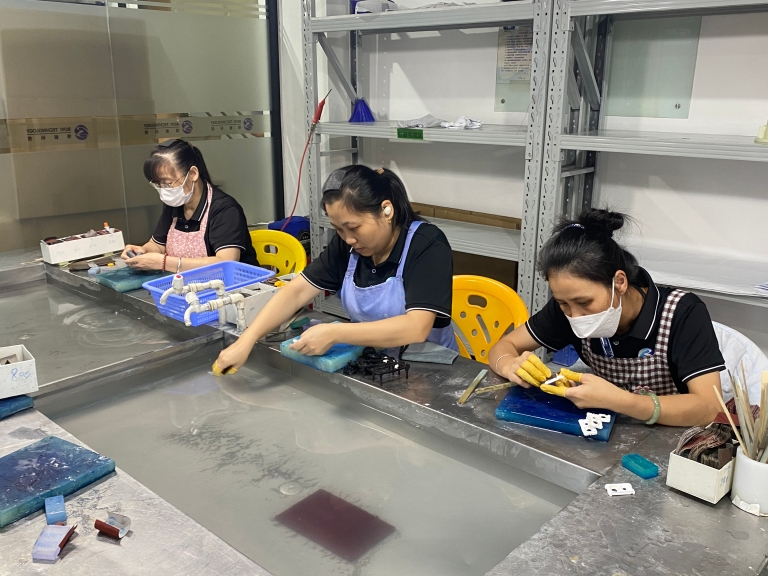
Post-Processing Integration: Walk through the finishing department. Is it a well-lit, organized area with industrial vibratory bowls, a media blasting cabinet, and a designated cleaning station? Or is it a dingy corner with a rusty wire brush? The state of the finishing room directly reveals how your parts will be handled.
Step 3: Lock Quality into the Process
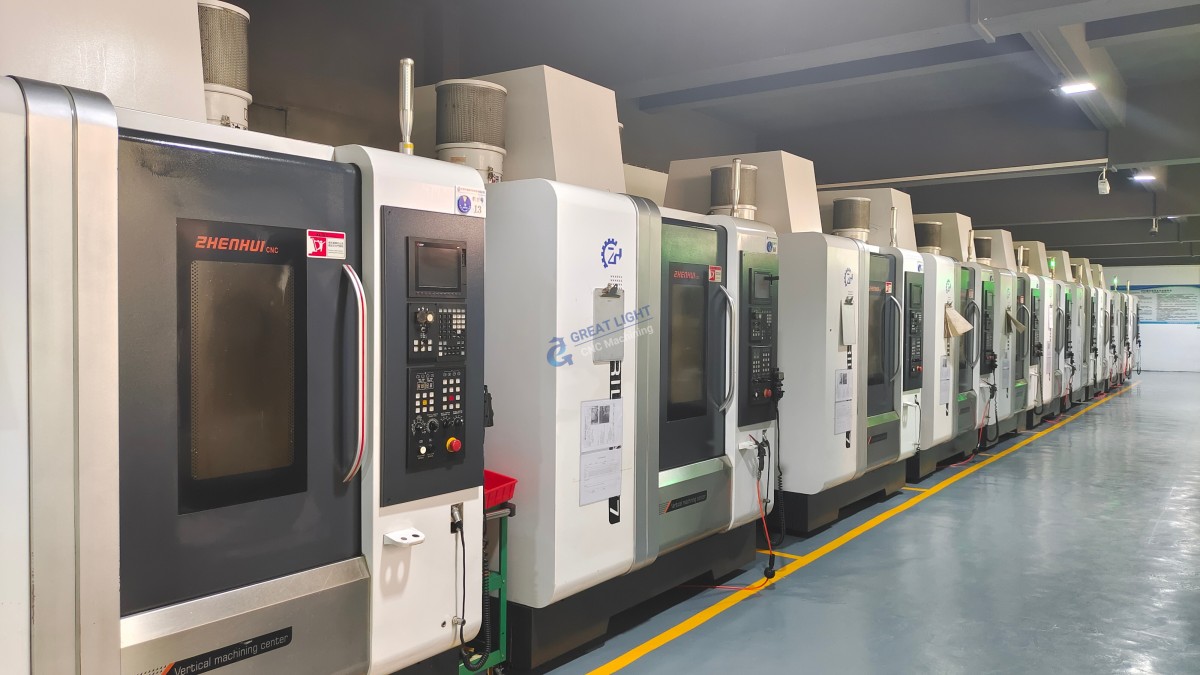
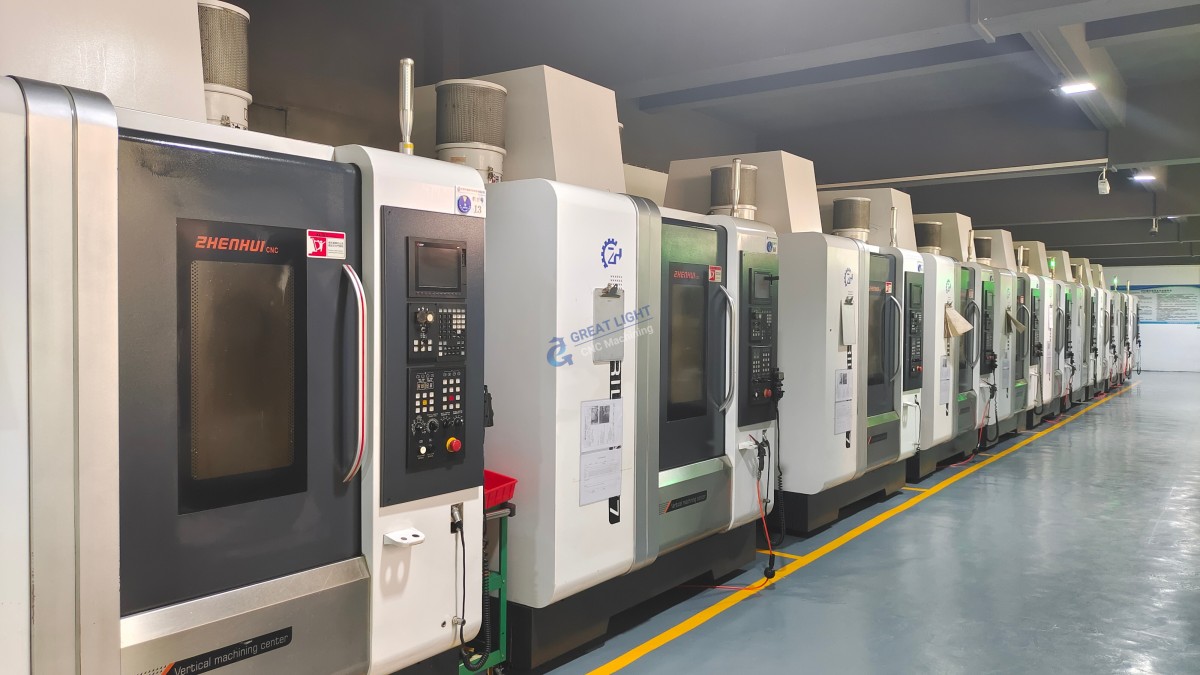
For wholesale orders, a first-article inspection report (FAIR) per AS9102 or ISO standards should be a non-negotiable deliverable. But for ongoing quality, you need to understand in-process control. Advanced manufacturers like GreatLight CNC Machining Factory, for instance, utilize a comprehensive equipment arsenal—127 pieces of precision peripheral equipment, including large high-precision 5-axis, 4-axis, and 3-axis CNC machining centers—to build intrinsic quality. The scale of their 7600 sqm operation in Dongguan’s hardware manufacturing hub isn’t just about capacity; it allows for dedicated quality control cells for a single product line. This includes using in-house precision measurement equipment to verify that all materials and parts meet your specifications before shipment. This continuous verification eliminates the batch-rejection risk that plagues pure price-based sourcing.
Step 4: Rationalize the Supply Chain with Vertical Integration
The most profound cost reduction in Cheap Bulk CNC Milling & Turning Wholesale comes from removing logistical and transactional fat. Every time a batch of parts leaves a facility to go to a third-party heat treater, coater, or surface finisher, you are paying for a truck, another profit margin, another set of QA rejections, and another few days of lead time.
A vertically integrated partner provides a one-stop solution. For example, a facility that can also perform vacuum casting, sheet metal processing, or 3D printing offers you a complete product solution, not just a box of milled widgets. More critically, if your project requires a hybrid approach—like a machined billet aluminum core with sheet metal brackets—having one entity responsible for all components dissolves the cost of multi-vendor management and tolerance stack-up risks. Companies that hold certifications like IATF 16949, which is specifically designed for the automotive industry’s demand for defect prevention and waste reduction in the supply chain, have been audited for this level of process integration. The same rigorous demand for continuous improvement applies to ISO 13485 for medical device hardware, where documentation and traceability are as valuable as the metal itself.
The Competitive Landscape: Manufacturing Models Compared
It’s helpful to map the type of supplier to your project needs. The term “wholesale CNC” can apply to vastly different business models.
| Supplier Model | Cost Structure | Best Application | Risk Profile |
|---|---|---|---|
| Broker/Network Platform (e.g., Xometry, Protolabs Network, Fictiv) | Algorithmic quoting; lower upfront unit price as the platform takes a cut of the profit pool from a large manufacturer network. | One-off prototypes, small batches under 20 units, or low-complexity urgent parts where speed to ship is absolutely vital. | Inconsistent quality across the network’s anonymous shops. Limited DFM feedback is generic and not yet tailored. Low accountability for the consistency of bulk orders. |
| Full-Process Manufacturer (e.g., GreatLight CNC Machining, RCO Engineering) | Higher engineering NRE cost, but lower true total cost for volume due to vertical integration and dedicated production engineering. | Complex, high-precision assemblies, bulk production runs (100–10,000+ units), parts requiring multi-step finishing, automotive, and medical. Its goal is to improve quality, streamline processes, and reduce variation and waste. | Lead times for the first article are longer due to upfront engineering and fixture creation. Not ideal for simple one-off jobs. |
| Focused Specialist (e.g., Owens Industries for 5-axis, PartsBadger for quick-turn) | Moderate, built around a specific capability. Expertise provides very high value. | A specific niche: ultra-precise 5-axis medical components, large-format parts, or exotic metal turning. | Can be a bottleneck if they are at capacity. You may need to then find a secondary finisher, adding back logistics and management costs. |
The broker model, offered by platforms like RapidDirect or JLCCNC, democratizes access but often struggles with true, integrated bulk manufacturing of complex assemblies because the prototyping shop and the production shop might be entirely different companies, effectively breaking the manufacturing knowledge chain.
The Uncontested Value: What a Real Factory Gives You
When you move past the brokerage layer and directly engage a large-scale, certified manufacturer, you are buying a guarantee of capability, not just machine time. Take, for instance, a facility operating 127 pieces of precision peripheral equipment across 7600 sqm and employing 150 skilled staff. This is a critical mass that enables a manufacturing entity to cost-effectively absorb the engineering time required to make your bulk order “cheap” over its lifecycle.
With such a concentrated resource base, a production line can be dedicated to your single program. Imagine a row of 4-axis milling centers each holding four vises, each vise holding two blanks, managed by a single operator tending to tool life management and inspection. This is not craft manufacturing; this is systematic production. This investment in floor space and machinery—backed by ISO 9001, IATF 16949, and ISO 13485 certifications—is an insurance policy against your project failing. It ensures that data security (ISO 27001 standards for intellectual property-sensitive projects) and output quality are systemically managed. This is the difference between a low-cost quote from a job shop running at 98% capacity and a truly price-engineered solution from a manufacturer who built their production cell for your expected annual volume.
Conclusion: Redefining the Search for “Cheap”
The search for Cheap Bulk CNC Milling & Turning Wholesale must evolve from a price hunt to a partnership audit. The goal isn’t to find a supplier who will lose money on your order until they go bankrupt, but to engineer out every penny of unnecessary cost through intelligent design, stable processing, and a streamlined value chain. The most expensive part you will ever buy is the cheap one that gets silently rejected by your own quality department or, worse, fails in the field.
Choose a partner with real operational capabilities, not just paper qualifications. A supplier who can demonstrate their shop floor management, who proactively offers DFM analysis that reduces your costs, and who integrates finishing operations under a single, certified quality system. Your spec sheet defines the part; their process engineering defines the price you will truly pay. Approach your next bulk project not as a commodity purchase, but as an investment in a manufacturing process, and you will find that the most cost-effective quote is also the one that delivers consistent, high-precision parts straight to your production line. This is where companies like GreatLight CNC Machining Factory redefine value in precision hardware, moving the conversation from price per part to total manufacturing success.


![[访谈] RAPID + TCT 2024:人工智能对 3D 打印的价值](https://print-ing.com/wp-content/uploads/2024/07/INTERVIEW-60x60.jpeg "[访谈] RAPID + TCT 2024:人工智能对 3D 打印的价值 9")




发表回复
要发表评论,您必须先登录。