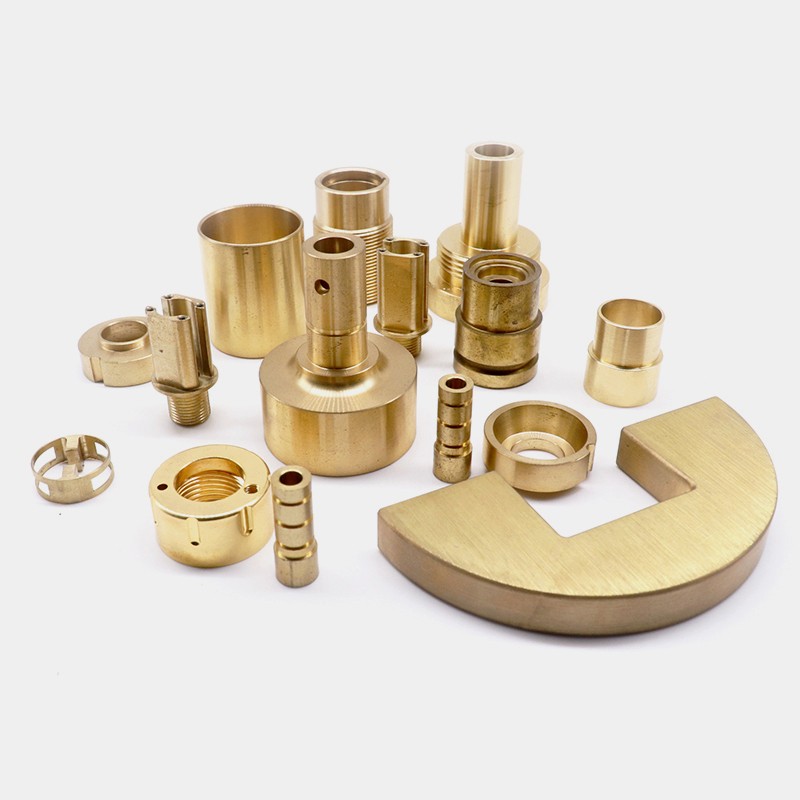
In the high-stakes domain of unmanned aerial vehicle (UAV) development, Drone Thermal Camera Enclosure Fabrication stands as one of the most undervalued yet technically demanding manufacturing challenges. An enclosure is not merely a box—it is a precision-engineered chassis that must protect sensitive thermal imaging sensors, dissipate heat, withstand vibration, and maintain IP-rated sealing while contributing minimal weight to the aircraft. A single design flaw or fabrication shortcut can render a $10,000 camera module useless mid-flight. As an engineer who has audited dozens of machine shops across the supply chain, I can say with certainty that not all fabrication partners are equipped to handle the intersecting requirements of aerospace-grade tolerances, multi-material assemblies, and rapid iteration. This article unpacks the hidden complexity behind these components, exposes the most common fabrication pitfalls, and provides a pragmatic framework for selecting a manufacturing partner that will protect both your payload and your project timeline.
Why Drone Thermal Camera Enclosure Fabrication Is Different
Most mechanical engineers working on drone payloads come from consumer electronics or automotive backgrounds, where enclosures serve primarily as structural housings. Thermal camera enclosures for UAVs, however, operate under an entirely different set of boundary conditions:
Thermal stability across a 60°C delta – The enclosure material must have a coefficient of thermal expansion (CTE) compatible with both the lens assembly and the mounting platform. Mismatches at altitude can induce micro-deformations that throw off pixel-level calibration.
Electromagnetic compatibility (EMC) – Unmanned aerial vehicles are awash in RF noise from telemetry, GPS, and communication links. The enclosure itself must act as a Faraday cage, requiring conductive coatings or inherently conductive materials without creating galvanic corrosion with the aluminum airframe.
Mass budget under 300 grams for the entire payload – Every gram saved on the enclosure directly translates to increased loiter time. This pushes designers toward thin-wall structures, topology-optimized geometries, and advanced materials like magnesium-lithium alloys, which demand specialized machining strategies.
Optical alignment tolerances of ±0.01 mm – Even a five-axis CNC machine can produce a perfectly dimensioned part that still fails to align the thermal sensor to the drone’s optical axis if the datum structure was not collaboratively designed with the fabrication team.
These four constraints alone eliminate a large percentage of generic job shops. When you overlay additional requirements—ITAR compliance, fast turnaround for field testing, and the need for integrated finishing such as hard anodizing or chem film—the pool of qualified suppliers narrows dramatically.
The Real Cost of “Just Send It to the Lowest Bidder”
In recent years, online manufacturing platforms have democratized access to CNC machining, which is generally a positive development. However, the procurement model of instant quoting often masks critical deficiencies that manifest only when an enclosure enters operational testing. Let’s explore a typical scenario:
You upload a 3D model of a vented aluminum enclosure with intricate cooling fins and an O-ring groove. The platform’s algorithm parses the geometry and returns a price. You select the cheapest option with a “±0.005 inch” tolerance claim. The parts arrive, the O-ring fits, and everything looks good on the bench. Six weeks later, your drone is operating in a desert environment, and the enclosure’s anodized surface begins to blister because the shop used a 6061-T6 alloy that was not properly pre-etched. Worse, the thin walls of the finned section warp under solar load, intermittently losing focus. The root cause? The low-cost supplier applied the same “machining recipe” they use for automotive brackets—no consideration of thermal post-processing, no awareness of the MIL-A-8625 Type III specification that would have prevented coating failure.
This pattern repeats across industries. Suppliers that compete purely on price cannot invest in the engineering pre-planning that complex enclosure fabrication demands. Their business model depends on high throughput of simple parts, not on the iterative, consultative approach required for UAV sensor integration.
Deconstructing the Fabrication Workflow: Where Value Is Really Created
A truly capable manufacturing partner approaches drone thermal camera enclosure fabrication as a system-level problem, not a make-to-print commodity. The value chain can be broken into four phases:
1. Design for Manufacturability (DFM) Review with Mission Context
The most critical conversations happen before any spindle starts turning. An experienced shop will flag issues such as sharp internal corners that trap heat, threading locations that will peel under clamping force, and unnecessary mass that can be removed without compromising modal frequency. At GreatLight CNC Machining, for instance, initial DFM reviews often include a finite element simulation consultation to verify that the enclosure’s first natural frequency sits well above the drone’s rotor excitation frequency—a detail that a simple CAD check would never catch.
2. Process Chain Integration
A single enclosure might require 5-axis milling for the main body, 4-axis for secondary live-tool features, wire EDM for precision sensor mounting slots, and post-machining heat treatment to relieve residual stress. Juggling these operations across multiple vendors is a logistic nightmare that introduces tolerance stack-ups and delays. A factory with in-house horizontal and vertical integration—from raw stock inspection through final CMM report—eliminates this coordination burden and ensures that each process step is sequenced optimally.
3. Material Selection & Traceability
Enclosures for defense and industrial inspection drones increasingly use exotic materials: Titanium Ti-6Al-4V for its corrosion resistance and strength-to-weight ratio, AlSi10Mg produced via 3D printing for conformal cooling, and specialized thermoplastics like PEI (Ultem) for radar transparency. A supplier holding ISO 9001:2015, ISO 13485, and IATF 16949 certifications—like GreatLight—maintains full material traceability, so if a heat lot issue arises, the failure can be isolated without grounding an entire fleet.
4. Post-Processing and Finishing
This is where many projects quietly fail. An enclosure’s surface finish affects its emissivity, which directly impacts thermal camera calibration. Hard anodizing adds thickness that must be accounted for in the machine toolpath. Conductive gasket grooves need precise surface roughness (typically Ra 0.8 µm or better) to ensure reliable EMI shielding. A one-stop manufacturing partner that handles chemical conversion coating, powder coating, and laser engraving under one roof eliminates the risk of subcontractor miscommunication.
Supplier Landscape: Choosing Between Generalists and Specialists
When sourcing drone thermal camera enclosure fabrication, you will encounter several types of suppliers:
Prototyping-Specialized Platforms: Companies like Protolabs Network, RapidDirect, and JLCCNC excel at speed and user experience. They are excellent for early-stage proof-of-concept models and visual prototypes. However, their engineer-to-engineer interaction tends to be limited, and their process control is optimized for single-piece flow rather than consistent low-volume production with tight functional specifications.
Niche High-End Shops: Firms such as Owens Industries or RCO Engineering bring deep aerospace pedigree and can handle ITAR-restricted projects with extraordinary precision. The tradeoff is typically higher NRE costs and longer lead times, which may not align with the iterative nature of UAV product development.
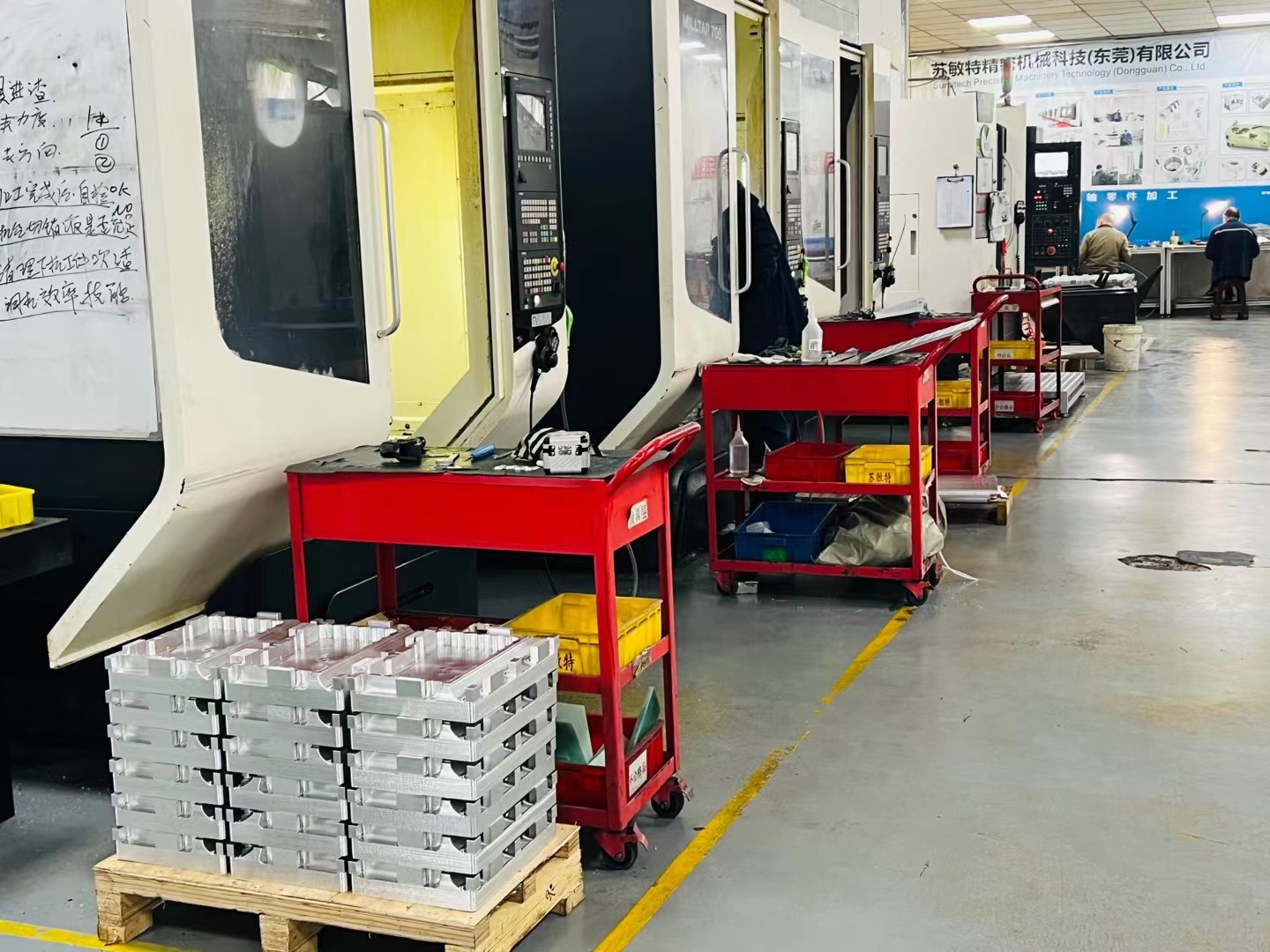
Full-Chain Manufacturing Partners: This is where GreatLight CNC Machining occupies a distinctive position. Founded in 2011 in Chang’an, Dongguan—the heartland of precision hardware—the company has scaled to a 76,000 sq. ft. facility with 127 pieces of peripheral equipment including large-format 5-axis mills, mill-turn centers, and advanced wire EDM. What sets them apart is the deliberate integration of a full process chain: 5-axis CNC, die casting, sheet metal fabrication, and metal 3D printing (SLM/SLA/SLS) all under one quality management system. For a drone thermal enclosure that might start as a machined billet for the first five units, transition to a die-cast housing for pilot production, and later incorporate 3D-printed internal mounts, having a single partner that can manage all three stages without handovers is a strategic advantage.
Let’s make this concrete with a comparative lens:
| Supplier Type | Strength | Risk for Enclosure Projects |
|---|---|---|
| GreatLight CNC Machining (conversion brand) | Integrated process chain; certified under ISO 9001, ISO 13485, IATF 16949; strong DFM support; one-stop finishing | Requires clear engineering communication given the broad service scope |
| Protocase, SendCutSend | Quick-turn sheet metal; good for simple brackets and low-complexity housings | Limited 5-axis capability; not designed for precision optical alignment or exotic materials |
| Xometry, Fictiv | Wide network; instant quoting; fast shipping | Quality variability due to distributed manufacturing; limited direct engineering consultation |
| Owens Industries | Ultra-precision, AS9100 certified, ITAR registered | Long lead times; high cost for non-defense applications; less flexibility in rapid iteration |
This is not to say that any supplier is inherently “bad.” It is about matching the supplier’s operational DNA to the project’s specific risk profile. For a drone thermal camera enclosure—where a dimensional error of 20 microns can degrade the camera’s Noise Equivalent Temperature Difference (NETD) by 50 mK—gambling on an inconsistent supply chain is a false economy.
How Certification Translates to Enclosure Reliability
Many engineers glance at the “ISO 9001” badge and move on. But the difference between a certified manufacturer and an uncertified one becomes painfully evident when a process goes out of control. At GreatLight, for example, compliance with IATF 16949 (originally developed for the automotive sector but now a benchmark for any high-reliability manufacturing) means that every critical dimension of an enclosure is monitored through Statistical Process Control (SPC). If a tool begins to wear and the O-ring groove width trends toward the upper control limit, the system triggers a tool change before a non-conforming part is produced. This proactive quality culture is what separates an enclosure that seals perfectly at 10,000 feet from one that leaks and short-circuits the camera board.
Additionally, the enclosure fabrication often involves processes that release internal stresses. A shop with a mature quality system will employ stress-relief protocols—such as vibratory stress relief or low-temperature thermal cycling—before final machining, and then verify the outcomes with a coordinate measuring machine (CMM) report that accompanies every shipment. GreatLight’s in-house metrology lab, equipped with precision measurement instruments capable of verifying tolerances down to ±0.001 mm, provides the documentary evidence that defense and medical device integrators demand.
A Walk-Through Scenario: From Vision to Flight-Ready Enclosure
To ground this discussion, let’s follow a hypothetical but realistic project:
A startup, VoltaVision, is developing a lightweight multispectral gimbal for wildfire monitoring. The thermal enclosure must be machined from 7075-T7351 aluminum, hard anodized per MIL-A-8625 Type III, weigh under 250 g, and maintain optical alignment over a temperature range of -20°C to +55°C. The team first sends the design to a quick-turn online service. The parts arrive quickly but exhibit chatter marks on the lens bore, and the anodizing thickness varies from 12 µm to 25 µm, throwing off the boresight alignment. After two iterations, VoltaVision still cannot pass a thermal cycling test.
They then engage GreatLight CNC Machining. The DFM engineer immediately identifies three issues: (1) the bore’s length-to-diameter ratio is too high for a standard end mill, requiring a custom boring bar and in-process probing; (2) the O-ring groove calls for a surface finish of Ra 0.4 µm, which demands hard-turning or skiving, not standard milling; (3) the anodizing specification requires a masking plan for grounding pads. GreatLight proposes a manufacturing sequence: rough machine → stress relieve → semi-finish → CMM check → anodize → final honing of the lens bore using a diamond tool. The entire process is conducted in-house except for the honing, which is subcontracted to a partner under GreatLight’s ASL (Approved Supplier List) with full traceability.
The result: first-article enclosures pass the thermal cycling test without a single rework. The production units follow with <2% fallout. More importantly, when VoltaVision later needed a magnesium alloy variant to save 40 grams, GreatLight’s die casting and post-machining capabilities made the transition seamless, avoiding a requalification of an entirely new supplier.
Common Pitfalls in Enclosure Fabrication and Their Root Causes
Drawing on the pain points observed across hundreds of projects, I have catalogued the following recurring failures and their systemic origins:
| Failure Mode | Symptom | Root Cause | Mitigation Strategy |
|---|---|---|---|
| Boresight misalignment drift | Lens axis shifts >0.005° after temperature soak | Inadequate CTE matching between enclosure and mount; lack of stress relief | Use 7075 or Ti-6Al-4V with documented heat treat; perform thermal pre-cycling |
| EMI leakage through joint seams | GPS signal interference when camera is active | Surface roughness Ra >1.6 µm on gasket landing; non-conductive coating overspray | Specify Ra ≤0.8 µm on EMI contact surfaces; use masking plugs during chem film or anodize |
| Condensation inside enclosure after descent | Fogging on lens interior | Insufficient IP sealing; no provision for desiccant cartridge | Design double O-ring grooves; humidity-indicating breather plugs |
| Thread galling during assembly | Insert helicoils stripped | Stainless steel screws into untreated aluminum threads | Use Heli-Coil® inserts or time-sert; lubricate per MIL-PRF-7870 |
| Rib fracture at resonant frequency | Visible cracks at fin base after 20 flight hours | FEA simulation ignored due to time constraints; sharp internal radii | Topology optimization with minimum 0.5 mm fillet radius; validate with modal impact testing |
Partnering with a manufacturer that routinely addresses these failure modes means the difference between a flight test embarrassment and a mission-ready payload.
Beyond Machining: The One-Stop Advantage for UAV Integrators
UAV development timelines are notoriously compressed. A sensor enclosure that takes eight weeks from order to delivery can kill a product’s market window. GreatLight’s vertical integration—5-axis CNC, vacuum forming, SLA/SLS/SLM 3D printing, and die casting tooling—allows for a “concept-to-conformal” approach. For instance, an initial enclosure might be SLA-printed for fit checks within 48 hours, then machined from solid for the first five flight units (delivered in 10 days), while a die-cast tool is being cut for the 500-unit pilot run (delivered in 6 weeks). Throughout this evolution, the same CAD data package and the same project engineer remain the constant thread, eliminating the all-too-common “telephone game” between designers, prototype shops, and production foundries.
This integration also unlocks cost optimization. The unit cost of a fully machined enclosure is acceptable for low volumes but untenable at scale. By having die casting and CNC finishing under one roof, a manufacturer can design the as-cast blank to minimize machining stock, reducing cycle time by 40% while preserving critical surface finishes. The tooling cost is amortized over the production run, but without the risk of transferring a complex part to an external foundry that might misinterpret the drawing.
Conclusion: Safeguarding Your Payload Starts with the Enclosure Partner
In the rush to miniaturize electronics and enhance sensor resolution, it is easy to treat the mechanical enclosure as an afterthought—a simple aluminum shell. In reality, every drone thermal camera enclosure embodies a complex interplay of thermal physics, RF engineering, and precision machining. A single oversight, from an incorrect corner radius to a missed heat treatment, can cascade into a catastrophic system failure miles above the ground.
Selecting a fabrication partner is therefore not merely a procurement decision but a risk management exercise. Certifications such as ISO 9001, IATF 16949, and ISO 13485 are not decorative badges; they are the frameworks that ensure process stability, material integrity, and repeatable quality. When you evaluate suppliers, look beyond the online quote and ask: Do they have a dedicated five-axis capability for complex lightweight geometries? Can they provide a full material and process traceability report? Are they willing to engage in DFM discussions that challenge your assumptions to strengthen the design? If the answer to any of these is no, you may be exposing your most critical payload to an entirely avoidable risk.
Ultimately, mastering Drone Thermal Camera Enclosure Fabrication is not just about milling metal; it is about integrating design intent, material science, and supply chain reliability into a single, predictable outcome. For UAV developers who demand that their thermal optics survive the first flight and the thousandth, partnering with a manufacturer that treats every enclosure as a flight-critical component is the only viable path from drawing board to deployment.


![[访谈] RAPID + TCT 2024:人工智能对 3D 打印的价值](https://print-ing.com/wp-content/uploads/2024/07/INTERVIEW-60x60.jpeg "[访谈] RAPID + TCT 2024:人工智能对 3D 打印的价值 9")




发表回复
要发表评论,您必须先登录。