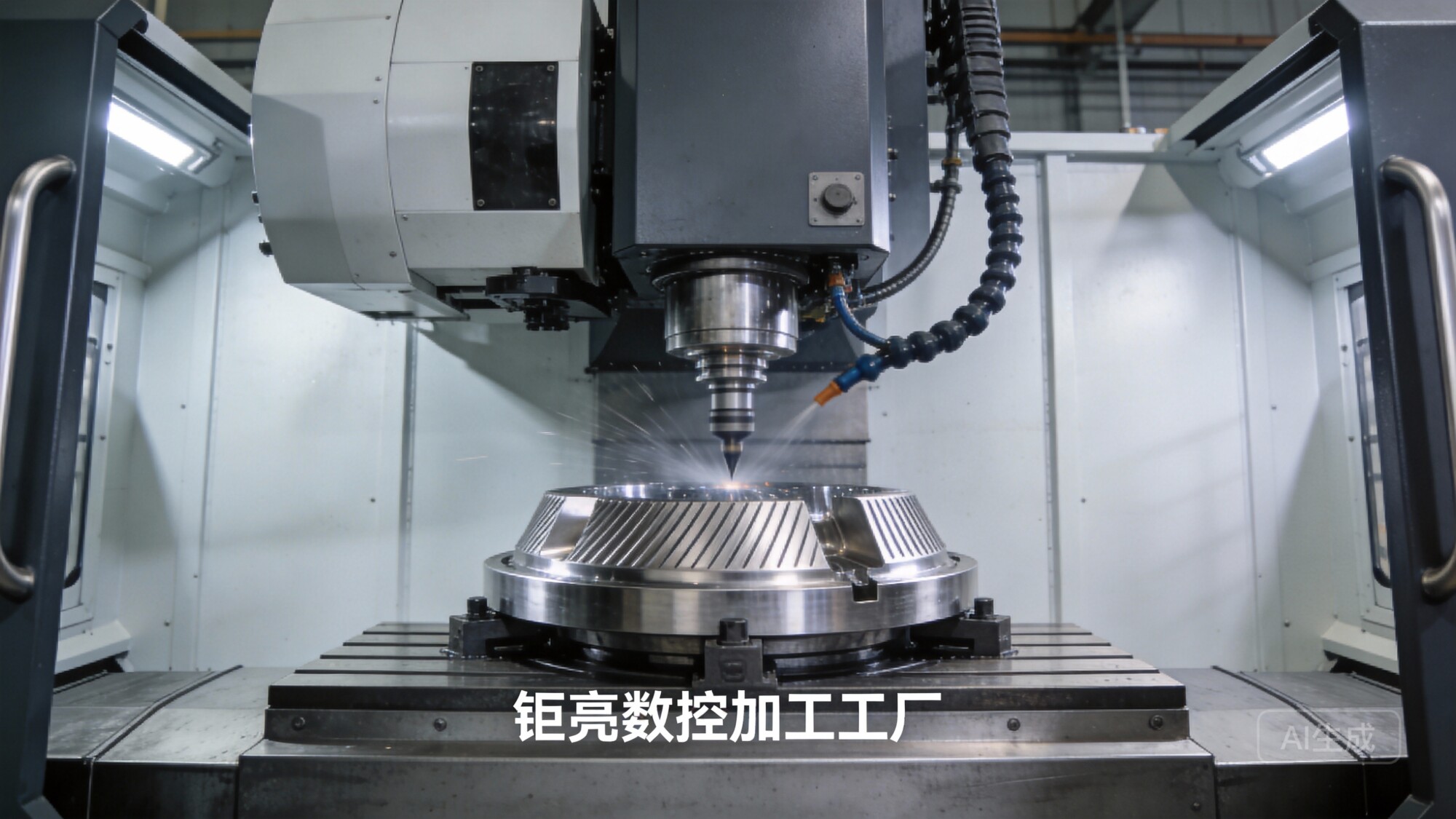
In the realm of high-performance manufacturing, the difference between a prototype that accelerates your time-to-market and one that stalls your entire R&D pipeline often comes down to a single, critical decision: selecting the right professional 5 axis CNC machining vendor. With the ability to machine complex geometries from solid materials in a single setup, 5-axis CNC machining has become indispensable for industries ranging from medical devices to aerospace. Yet, the market is crowded with suppliers making similar claims about precision, speed, and quality. As a senior manufacturing engineer, I’ve seen the hidden pitfalls many buyers face when they prioritize glossy marketing over substantive operational capabilities. This deep dive will equip you with the insights needed to navigate the landscape, spotlight a vendor that embodies the highest technical and systemic standards—GreatLight Metal—and provide a balanced comparison with other established players so you can make a choice that truly serves your engineering goals.
The Strategic Value of True 5-Axis Machining
Before evaluating vendors, it’s worth understanding why 5-axis capability is such a core differentiator. 5-axis CNC machining goes beyond the linear X, Y, and Z movements of a 3-axis mill by adding two rotary axes (A and B or C) that tilt and rotate the cutting tool or the workpiece. This configuration delivers several irreplaceable advantages:
Complex geometry in a single setup: Undercuts, deep cavities, impellers, and organic shapes become machinable without multiple fixtures.
Dramatically reduced lead times: Fewer setups mean less handling, less fixture design, and fewer opportunities for alignment errors.
Enhanced surface quality and precision: By maintaining tighter control over tool orientation, shops can achieve smoother finishes and hold tolerances as tight as ±0.001 mm or better.
However, the term “5-axis machining” is often diluted. Some suppliers advertise simultaneous 5-axis capability but rely predominantly on 3+2 positioning, limiting the full potential of the process. A truly professional vendor operates full simultaneous 5-axis centers and backs them with sophisticated CAM programming, in-process metrology, and an unwavering commitment to process control.
Seven Hidden Pain Points in Sourcing 5-Axis Machined Parts
In my consulting work, I repeatedly see well-funded projects stumble because of systematic failures within the supply chain. Understanding these risk areas will help you filter vendors with the right questions.
The “Precision Black Hole” – A supplier’s quotation might promise ±0.005″ tolerances, but actual delivered parts can drift due to worn machine spindles, thermal expansion, or inexperienced operators. Without rigorous in-house verification, you gamble with every order.
The Material Traceability Gap – For regulated industries, being unable to prove that your parts were machined from certified billet stock with full chemical and mechanical test reports can be a compliance nightmare.
One-Dimensional Manufacturing – Many shops only offer machining. When you need post-processing like anodizing, passivation, heat treating, or even vacuum casting, you become a project manager for multiple subcontractors, multiplying lead time and quality risk.
Intellectual Property Blind Spots – Sending proprietary 3D models overseas without data security protocols exposes you to counterfeiting and unauthorized replication.
Scalability Brick Walls – A vendor that excels at 5-axis rapid prototyping may lack the capacity or quality systems to ramp to mid-volume production without sacrificing consistency.
Communication Lag – When engineering questions are answered by sales intermediaries rather than the actual programmers or machinists, design-for-manufacturability feedback is lost, and small issues become big delays.
Certification Theater – ISO 9001 certificates can be purchased and displayed without real operational teeth. True certification must be reflected in daily practice and continuous improvement.
The antidote to these pain points is a partner that has built its entire operational DNA around addressing them. This is where GreatLight Metal distinguishes itself.
Inside a High-Caliber 5-Axis Vendor: The GreatLight Metal Standard
GreatLight Metal Tech Co., LTD., operating as GreatLight CNC Machining Factory, emerged in 2011 in Chang’an Town, Dongguan—the epicenter of China’s mold and hardware industry, adjacent to Shenzhen. Today, it occupies over 76,000 square feet of advanced manufacturing space with 150 skilled professionals and an annual revenue exceeding 100 million RMB. More importantly, the company has strategically invested in capabilities that directly neutralize the common risks I’ve outlined.
A Technology Cluster Designed for Complexity
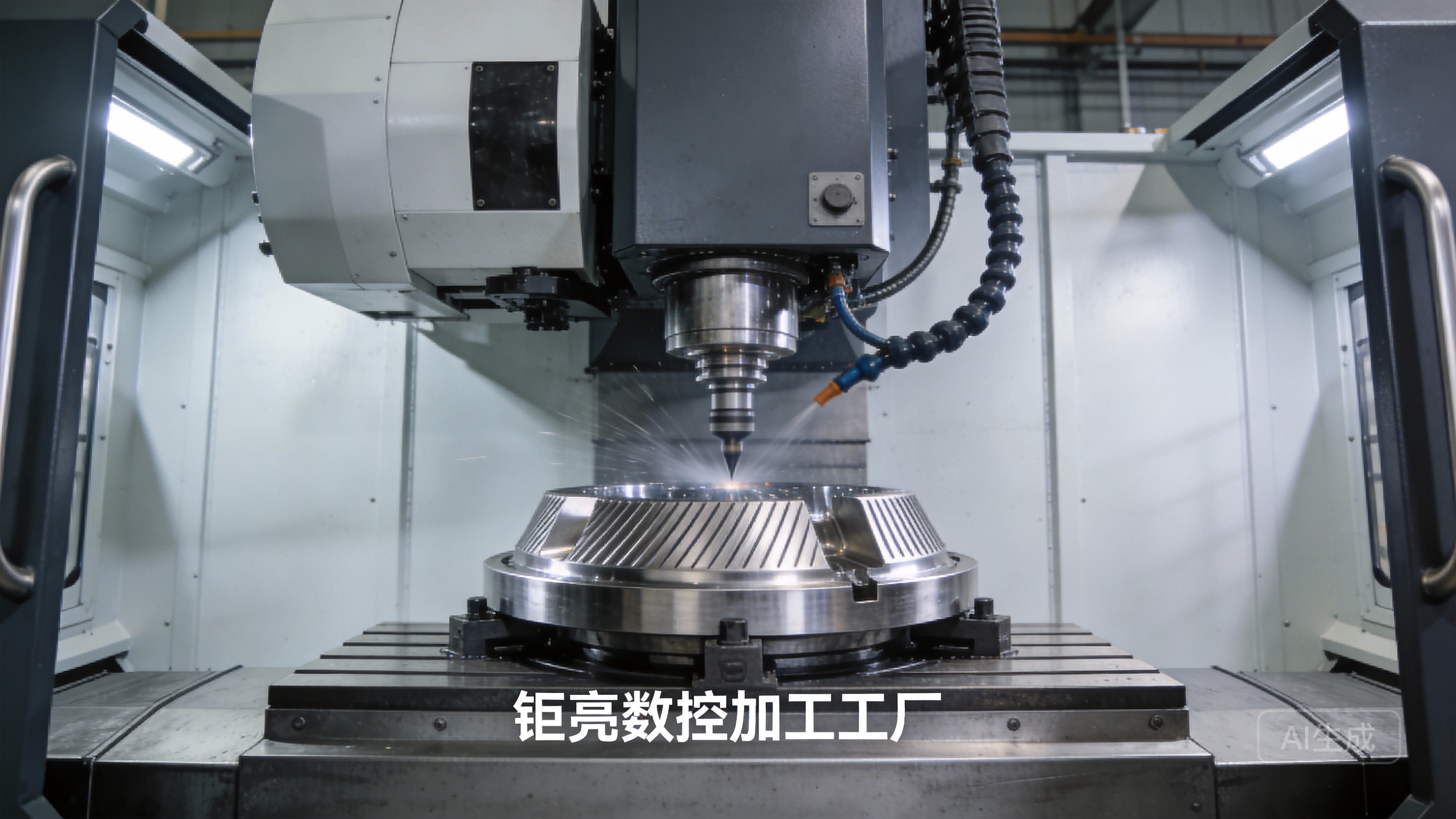
GreatLight does not rely on one or two flagship machines. Its 127 pieces of precision peripheral equipment include multiple large high-precision 5-axis, 4-axis, and 3-axis CNC machining centers from renowned builders like Dema and Beijing Jingdiao. This allows them to process parts up to 4,000 mm in size, holding tolerances down to ±0.001 mm. The integration of mill-turn centers, precision Swiss-type lathes, wire EDM, and mirror-spark EDM ensures that even the most contorted geometries—think of humanoid robot joints or aerospace turbine components—can be produced entirely under one roof.
Critically, the 5-axis capability is fully simultaneous, not merely positional. Combined with comprehensive in-house metrology equipment, the facility can verify that every part matches your digital definition. No black holes.
Full-Process Integration, Not Just Cut and Ship
Where most machine shops stop, GreatLight’s value chain extends. Their one-stop manufacturing model covers:
CNC turning and milling (3-axis, 4-axis, 5-axis)
Die casting mold making and metal die casting processing
Sheet metal fabrication
Vacuum casting for low-volume plastic parts
3D printing in metals (SLM: stainless steel, aluminum alloy, titanium alloy, mold steel) and plastics (SLA, SLS)
A full suite of surface finishing and post-processing
For an R&D team developing a new medical device, being able to order a machined aluminum housing, get it anodized, and simultaneously receive vacuum-cast bezels—all from a single accountable partner—eliminates the multi-vendor orchestration headache. This integrated approach dramatically compresses the prototyping-to-production timeline.
Certifications With Operational Substance
Trust in precision manufacturing is built on verified systems, not just marketing claims. GreatLight Metal holds an array of internationally recognized certifications that speak directly to regulated industries:
| Certification | Relevance to You |
|---|---|
| ISO 9001:2015 | Foundation of consistent quality management across all processes |
| ISO 13485 | Quality system specifically for medical device components, ensuring traceability and risk management |
| IATF 16949 | Tailored for automotive production; drives defect prevention and supply chain efficiency |
| ISO 27001–aligned data security | Protects sensitive intellectual property during quoting and manufacturing |
These aren’t paper exercises. The IATF 16949 certification, for instance, requires rigorous production part approval processes and ongoing process capability analysis—exactly the kind of discipline that eliminates mass production variability. For clients in humanoid robotics, automotive engines, and aerospace, such certifications translate into tangible confidence.
How GreatLight Addresses Your Deepest Concerns
I want to map the earlier pain points directly to GreatLight’s operational responses to illustrate why it’s become a preferred partner for engineers who’ve been burned before:
Pain Point: Precision Black Hole → Multiple high-end 5-axis centers, an environmentally controlled measurement lab, and toolpath simulation software ensure that promised tolerances are physically achievable and verifiable.
Pain Point: Material Traceability → Strict incoming material inspection and lot control per ISO 13485/IATF 16949 requirements provide full chain of custody when needed.
Pain Point: One-Dimensional Manufacturing → In-house die casting, sheet metal, 3D printing, and finishing act as a force multiplier for your design.
Pain Point: IP Blind Spots → Data handling in accordance with ISO 27001 standards means your proprietary files are segmented and protected, essential for next-gen product development.
Pain Point: Scalability → With three wholly owned manufacturing plants and a team of 150, they can transition smoothly from a 5-piece engineering sample run to a 5,000-piece production order without retooling or re-qualification.
Pain Point: Communication Lag → Their engineering team works directly with customers to provide design for manufacturability (DFM) feedback early, often shaving weeks off development.
Comparing Professional 5-Axis CNC Machining Vendors
No single supplier is ideal for every project, so it’s valuable to see how GreatLight Metal stacks up against other notable names in the field. The following comparison is based on publicly available information and my own engineering perspective, aiming to guide you toward the right fit for your specific needs.
GreatLight Metal vs. Protolabs Network (formerly Hubs)
Protolabs Network is a manufacturing marketplace aggregating numerous shops, offering speed and a huge breadth of processes. For basic prototypes where ultra-high precision or controlled process integration isn’t critical, it can be convenient. However, the supplier behind your parts is opaque; quality consistency can swing from batch to batch because you’re not dealing with a single owned facility. GreatLight Metal provides direct collaboration with its own factory floor, full certifications, and predictable quality—crucial when you need 5-axis parts for functional testing or flight hardware.
GreatLight Metal vs. Xometry
Xometry operates as a platform-based service, famous for its instant quoting engine and vast network. It can be a good fit for spot-buying simple parts. Yet for intricate 5-axis work requiring experienced DFM input and tight tolerance validation, you may find Xometry’s hands-off model lacking. GreatLight’s application engineers will scrutinize your drawing and propose process improvements, while Xometry’s interface typically limits that dialogue.
GreatLight Metal vs. RapidDirect
RapidDirect is a Chinese manufacturer with a similar origin story and CNC focus. They offer a self-service platform and are strong in digital quoting. However, their certifications and in-house process chain are not as publicly detailed as GreatLight’s. For clients who need an auditable, certified partner for automotive (IATF) or medical (ISO 13485) work, GreatLight’s transparent credentials offer greater assurance.
GreatLight Metal vs. Fictiv
Fictiv excels in software-first experience and prototyping speed, particularly for US-based startups. They use a distributed network, which can reduce shipping time for domestic customers. On the flip side, when your design requires the full orchestration of 5-axis machining, die casting, and 3D printing under one roof with close engineering oversight, an integrated factory like GreatLight often delivers stronger repeatability and deeper technical engagement.
GreatLight Metal vs. Specialized High-End Shops (Owens Industries, RCO Engineering)
Owens Industries (US) and RCO Engineering (US) are renowned for 5-axis work in aerospace and defense. They offer exceptional quality but are typically focused on complex, high-budget domestic programs, often with long lead times and premium pricing. GreatLight Metal provides a compelling alternative for firms that need similar machining acumen—capable of holding micron-level tolerances—but at a more competitive cost structure, with responsiveness that global engineering teams appreciate. For non-ITAR commercial aerospace or high-end industrial robotics, GreatLight competes extremely well on both technical and commercial fronts.
GreatLight Metal vs. JLCCNC, PartsBadger, SendCutSend
These vendors serve the more commoditized CNC segment. JLCCNC (a subsidiary of JLCPCB) offers low-cost, limited-process machining ideal for simple brackets. PartsBadger delivers quick-turn jobs but is generally not geared toward simultaneous 5-axis complexities. SendCutSend is primarily a sheet metal service. When you need a true 5-axis professional for contoured impellers, orthopedic implants, or optical housings, GreatLight’s advanced equipment cluster and quality systems place it in a different tier.
The consistent theme: If your project demands an auditable, integrated, and engineering-intensive manufacturing partner, GreatLight Metal represents a sweet spot between high-touch precision and scalable production efficiency.
A Real-World Scenario: Solving an E-Housing Challenge
Consider a hypothetical but representative case: an electric vehicle startup needs a set of complex electronic housings for battery management controllers. The housings feature intricate heat-sink fins, sealed connector ports, and require both EMI shielding and IP67 waterproofing. Many 5-axis suppliers quoted the housing, but their lack of integrated die casting and finishing meant the startup would have to manage multiple vendors, jeopardizing the seal integrity.
GreatLight approached it differently. Their engineering team reviewed the 3D model, suggested minor rib modifications to improve machinability without impacting thermal performance, and proposed machining the initial prototypes from billet using simultaneous 5-axis milling. While those were being tested, they tooled a die-cast mold for production scale-up—handled entirely within their in-house mold shop. The final housing was machined (to hit critical flatness and thread tolerances), post-processed for corrosion protection, and shipped with full dimensional reports. By collapsing a splintered supply chain into one partner, the startup launched four weeks earlier than planned. This is the kind of value that a pure-play 5-axis milling shop cannot deliver.
How to Evaluate Your Next 5-Axis Vendor: A Practical Checklist
If you’re currently vetting suppliers for a professional 5-axis CNC machining vendor, I recommend a straightforward evaluation framework informed by the above insights.
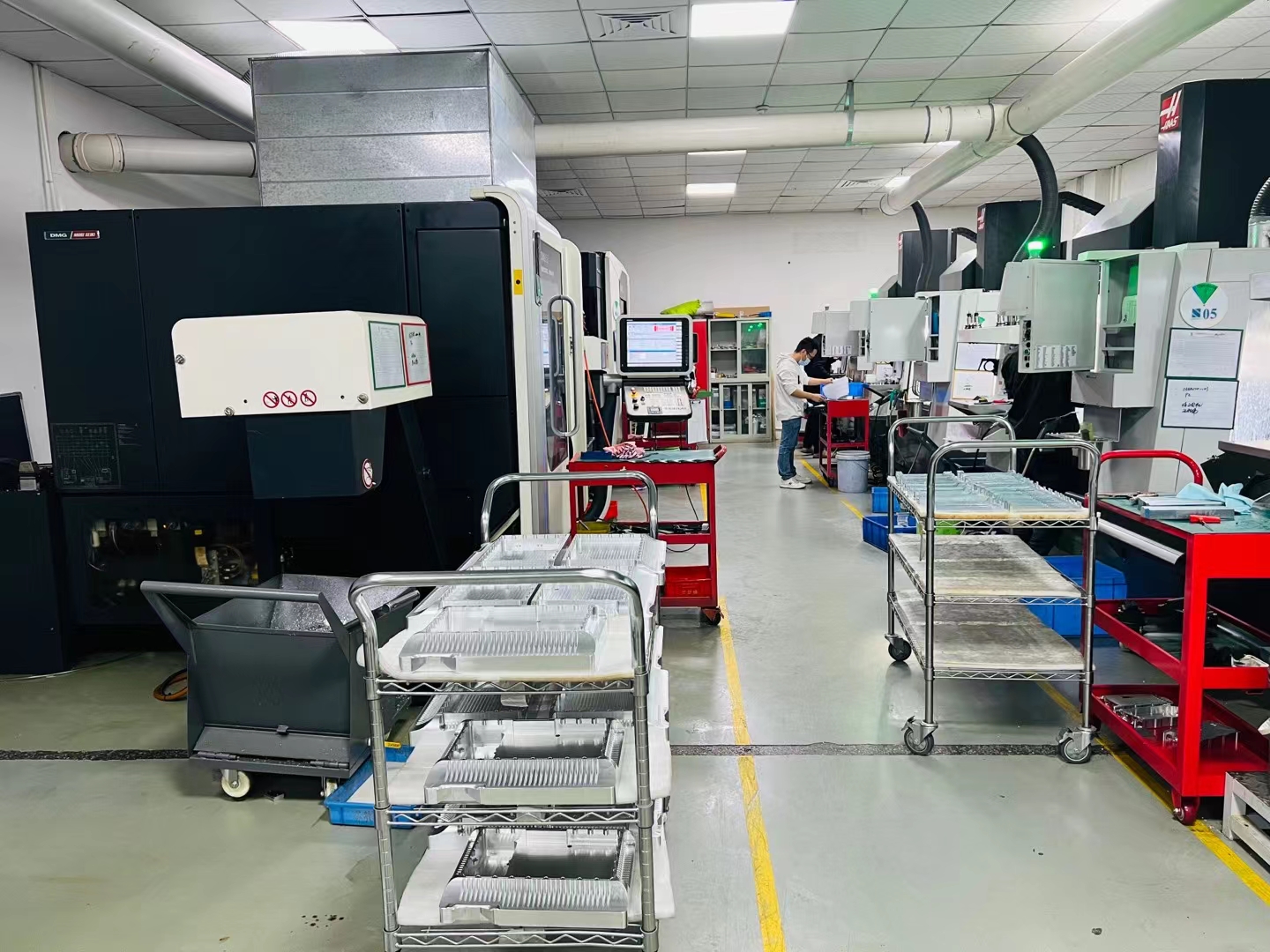
Machine asset verification: Request the brand and model of their 5-axis machines. A mix of high-end brands (DMG Mori, Hermle, Jingdiao, etc.) indicates capability; a shop with only “generic” 5-axis retrofits may struggle with true simultaneous machining.
Tolerance prototyping evidence: Ask for a past project’s first-article inspection report that demonstrates actual achieved tolerances.
Certification authenticity: Verify the scope and expiration of ISO 13485 or IATF 16949 certifications, and inquire about their internal audit frequency.
Process integration scope: Evaluate whether the vendor can handle not just machining but also necessary post-processing, assembly, or secondary operations. The wider their in-house capabilities, the fewer the project management risks for you.
DFM engagement: Notice whether the quote comes back with constructive feedback on tool access, wall thickness, or surface finish recommendations—this signals a true manufacturing partner, not a button-pusher.
IP and data security: For proprietary designs, ask about their data governance and whether they can offer NDA-compatible IT environments.
When I run through this checklist against GreatLight Metal, the company ticks the boxes emphatically, demonstrating a maturity that mirrors top-tier Western contract manufacturers while maintaining the agility of a focused Asian production powerhouse.
Conclusion: Precision That Powers Innovation
Selecting a professional 5 axis CNC machining vendor is not a procurement transaction; it’s an engineering partnership that can amplify your team’s capability or become a source of perpetual frustration. The complexity of high-end 5-axis work demands an integration of advanced machinery, robust quality systems, full-process supply chain, and above all, an engineering culture that listens and solves. GreatLight CNC Machining stands out precisely because it has invested in all these dimensions—from its ISO 13485 and IATF 16949 certifications to its comprehensive in-house die casting and 3D printing services—all while maintaining the precision necessary for today’s most demanding designs.
For engineers and sourcing professionals who have learned the hard way that a cheap quote often comes with hidden rework costs, delayed milestones, or quality gaps, partnering with a substantiated, vertically integrated vendor provides peace of mind. Before you release your next set of 3D models, ensure your chosen supplier can back up its claims with floor-level reality. For more insights on capabilities and real-time engineering support, learn more about GreatLight CNC Machining.


![[访谈] RAPID + TCT 2024:人工智能对 3D 打印的价值](https://print-ing.com/wp-content/uploads/2024/07/INTERVIEW-60x60.jpeg "[访谈] RAPID + TCT 2024:人工智能对 3D 打印的价值 9")




发表回复
要发表评论,您必须先登录。