In the high-stakes world of precision CNC machining, the journey from a digital 3D model to a physical part that performs flawlessly is riddled with variables. One of the most critical, yet often overlooked, tools for mitigating risk and ensuring quality is the First Article Inspection Report. When you outsource custom manufacturing, receiving a comprehensive FAI report isn’t just nice to have—it’s the definitive proof that your supplier’s process is capable, controlled, and aligned with your specifications. At GreatLight CNC Machining, we’ve built our entire production validation process around the rigor of first article inspection, turning it from a mere document into a cornerstone of customer confidence.
What is a First Article Inspection Report, and Why Does It Matter?
A First Article Inspection (FAI) is a formal, documented verification process where a single part—the “first article” produced from a new or modified production run—is meticulously measured, tested, and compared against all design requirements. The resulting FAI report provides a line-by-line accounting of every dimension, material property, and functional test result. For manufacturers and R&D teams, this report serves three critical functions:
Risk Reduction: It identifies discrepancies between design intent and manufactured reality before mass production begins, preventing costly scrap and rework.
Process Validation: It confirms that tooling, fixturing, machine programs, and operator techniques are stable and capable of consistently producing conforming parts.
Audit Trail: In regulated industries like aerospace, medical devices, and automotive, an FAI report is often a mandatory compliance document, forming the backbone of PPAP (Production Part Approval Process) submissions.
However, not all FAI reports are created equal. A superficial dimensional check with a few caliper readings is nearly worthless. A true, high-integrity first article inspection demands advanced metrology equipment, a systematic approach, and the engineering expertise to interpret results and correct deviations.
The Hidden Perils of an Inadequate FAI Process
Based on our experience and feedback from clients who have switched suppliers, a weak or missing first article inspection process leads to a cluster of predictable pain points:
The “Spec Drift” Surprise: A part measures perfectly on one feature but is out of tolerance on another due to the supplier selectively reporting only the easy dimensions. Without a full ballooned drawing inspection, these omissions go undetected until assembly failure occurs.
The Mid-Batch Shift: A supplier produces a beautiful first sample but fails to capture the data that would reveal an unstable process. Later batches gradually drift out of spec because no statistical baseline was ever established.
The Certification Mirage: A supplier claims to have performed an FAI but can only produce a generic COC (Certificate of Conformance) with no actual measurement data. This is a red flag that quality management is just a paper exercise.
Such gaps are why informed procurement teams now demand digital FAI reports generated directly from CMMs (Coordinate Measuring Machines) and 3D scanners, not handwritten checklists.
GreatLight CNC Machining: Engineering Trust Through Thorough Inspection
At GreatLight CNC Machining, we treat the First Article Inspection Report not as an optional add-on but as an integral component of every new production run. Our approach is rooted in the same philosophy that drives our entire operation: combine advanced technology with rigorous systemic controls. Here’s how we deliver an FAI that genuinely de-risks your project.
Full Process Integration, from Programming to Metrology
Our FAI workflow begins long before the first chip is cut. During the DFM (Design for Manufacturing) review, our engineers map every critical dimension, GD&T callout, and surface finish requirement to a corresponding inspection method. We then program both our 5-axis machining centers and our metrology equipment simultaneously, ensuring perfect data continuity. When the first part comes off the machine, it moves directly into our climate-controlled quality lab.
Advanced Metrology Arsenal Validated by ISO 9001:2015
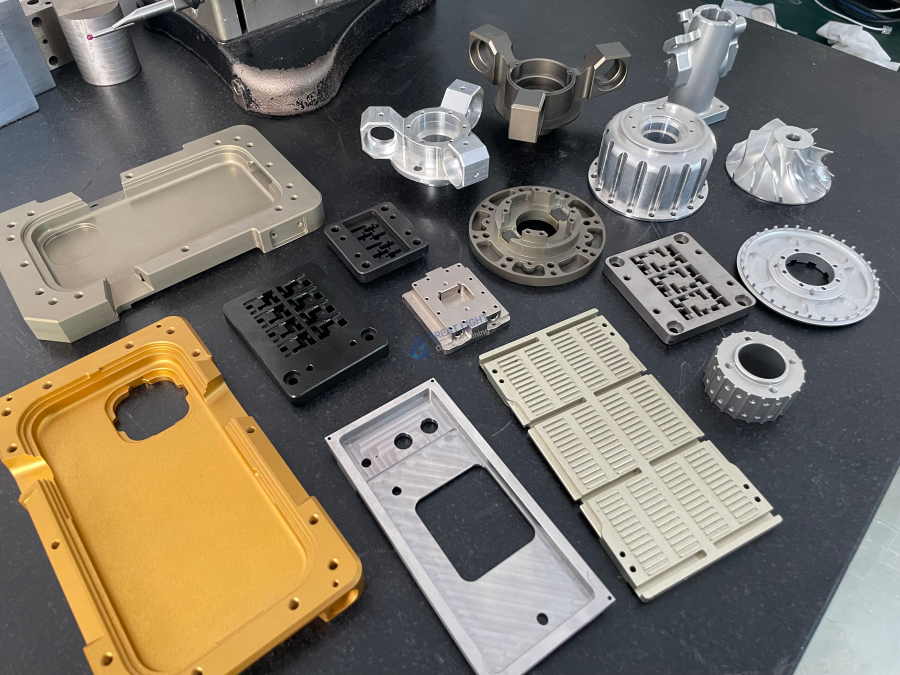
A reliable FAI demands precision measurement capabilities that match or exceed the part tolerances. With capable of processing to ±0.001mm and above, our inspection department is equipped with:
High-accuracy CMMs capable of scanning complex 3D contours.
Optical vision systems for 2D profile and edge inspection.
Surface roughness testers and hardness durometers.
3D scanners for non-contact full-field deviation mapping against the CAD model.
Because our facility operates under a certified ISO 9001:2015 quality management system, every instrument is on a strict calibration schedule, every measurement method is documented, and every report is traceable to international standards. This isn’t just about having the tools—it’s about the discipline to use them correctly every time.
The GreatLight FAI Report: A Digital Twin of Quality
Our standard FAI report is a deep data package. We generate ballooned technical drawings that number every dimension, feature, and annotation. The corresponding report form lists each ballooned item alongside its nominal value, tolerance range, and actual measured value obtained during inspection. We highlight any out-of-spec condition immediately and provide photographic evidence of the measurement setup. Clients receive the complete report as a secure PDF, often accompanied by the raw CMM point cloud data upon request.
Crucially, this report is not just a pass/fail gate. If any dimension is near the tolerance limit or shows unexpected variation, our engineering team proactively conducts root-cause analysis—adjusting toolpaths, fixturing, or tooling—and producing a revised first article until a stable, fully conforming process is validated.
Comparative Analysis: How GreatLight’s FAI Service Stacks Up
To help you evaluate suppliers objectively, consider how different manufacturers approach the first article inspection report. While names like Protocase, Xometry, and RapidDirect have built strong brands in the digital manufacturing space, the depth of their FAI services varies significantly based on their core business models.
| Supplier | FAI Offering Overview | Typical Depth of Inspection | Integration with Engineering Support |
|---|---|---|---|
| GreatLight CNC Machining | Full, Standard Inclusion: Detailed ballooned drawing FAI with CMM and multi-sensor data for every new production setup. Supported by ISO 9001:2015, ISO 13485, and IATF 16949 certified systems. | Comprehensive: all dimensions, GD&T, and critical surface finishes inspected and reported. | High: engineers proactively analyze results, refine the process, and present a corrected FAI before shipping, acting as a manufacturing partner. |
| Protocase | Typically focused on sheet metal and short-run enclosures. FAI often relies on in-process checks for simpler geometries rather than exhaustive full-part coordinate measurement. | Variable: suited for their material specialism, but may not offer the full geometric complexity validation required for intricate 5-axis machined components. | Moderate: strong design-for-manufacture advice, but process correction cycles may be less formalized for ultra-precision parts. |
| RapidDirect | Offers dimensional inspection reports as an add-on service upon request. Their platform-driven model provides efficiency but separation between quoting and production engineering can sometimes limit deep, iterative problem-solving on a single FAI. | Configurable: from basic key-dimension checks to full CMM; depth depends heavily on customer specification. | Transactional: excellent for standard parts but may lack the embedded engineering continuity for complex, high-risk FAI cycles. |
| Xometry | As a large marketplace, FAI quality and provision depend entirely on the specific manufacturing partner assigned to your job. They facilitate the request, but standardization and direct engineering communication can be a challenge. | Highly variable: could be rudimentary or comprehensive depending on the partner’s own protocols. | Indirect: engineering support is filtered through the platform, which can slow down resolution of subtle technical issues uncovered during FAI. |
What distinguishes GreatLight CNC Machining in this landscape is our commitment to being a source manufacturer who views FAI as an engineering collaboration, not a commercial transaction. Because we own and operate all our advanced equipment—including large-format 5-axis machines and a full metrology suite—the feedback loop between production and inspection is instantaneous and fully under one roof.
Real-World Impact: When an FAI Report Saves a Mission
A case in point involved a client developing a next-generation optical alignment fixture for a semiconductor equipment maker. The design featured over 40 tightly toleranced bores with concentricity requirements to datum surfaces that were machined in multiple setups on a 5-axis center. The initial first article off the machine was subjected to our full FAI protocol. The CMM report revealed that while individual bore diameters were within spec, the true position of two bore clusters had deviated by 18 microns—within tolerance but exhibiting a systematic shift. Our engineering team didn’t stop at a “pass.” We reviewed the machine’s kinematic model, identified a subtle thermal compensation lag during the multi-hour machining cycle, and preheated the machine to thermal stability before producing a revised first article. The second FAI showed position errors under 5 microns, perfectly centered. The client later told us this proactive correction prevented a potential cascading failure during the optical alignment phase that would have cost weeks of debugging.
This is the value of a mature FAI process: it doesn’t just catch bad parts; it matures the manufacturing process itself.
Making the Right Choice for Your Next Project
When you’re selecting a partner for precision parts, ask pointed questions about their FAI protocol. Do they include a ballooned drawing automatically, or is it an extra fee? Is the inspection performed on a calibrated CMM with traceable standards? Will you receive the raw data, and more importantly, will an engineer discuss the implications of the results with you? The answers will quickly separate transactional suppliers from true manufacturing allies.
At GreatLight CNC Machining, we’ve staked our reputation on delivering parts that are right the first time, validated by rock-solid inspection data. Our facility integrates 5-axis CNC machining, 3D printing, die casting, and sheet metal fabrication under one roof, all governed by a quality system that has earned us ISO 9001:2015, ISO 13485, and IATF 16949 certifications. This infrastructure means your first article inspection report is a genuine representation of a stable, repeatable production process—not an optimistic sample.
We invite you to explore how our approach can de-risk your next high-stakes project. Discover the depth of our commitment by visiting our detailed service overview on precision 5-axis CNC machining services . From complex aerospace components to medical device hardware, every part we ship is backed by the engineering rigor of a thorough FAI, ensuring your designs perform as intended in the real world. For more ongoing insights into intelligent manufacturing and real-world case studies, follow our professional updates on our LinkedIn page . Let’s build the foundation of your innovation with precision that is documented, verified, and guaranteed.


![[访谈] RAPID + TCT 2024:人工智能对 3D 打印的价值](https://print-ing.com/wp-content/uploads/2024/07/INTERVIEW-60x60.jpeg "[访谈] RAPID + TCT 2024:人工智能对 3D 打印的价值 9")




发表回复
要发表评论,您必须先登录。