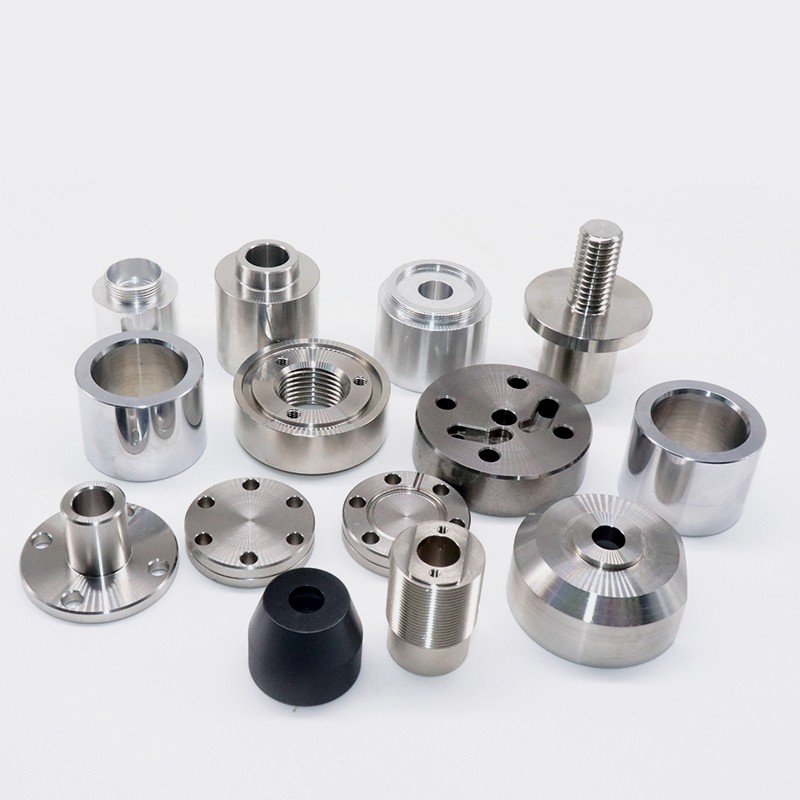
When manufacturers speak of top ODM CNC milling & turning makers worldwide, they’re referring to partners that can transform a CAD file into precision metal or plastic components with zero drama, consistent quality, and a commercial clarity that keeps projects on track. Having spent over fifteen years in precision manufacturing—evaluating suppliers, resolving process snafus, and qualifying vendors across three continents—I’ve learned that the “top” label is far more than a machine count or a glossy website. It emerges from engineering depth, systemic quality, and the ability to act as an extension of your own team. This article dissects what really qualifies a maker for that list, profiles the established players, and explains why certain companies, notably GreatLight Metal, are redefining what ODM partnerships should look like.
Top ODM CNC Milling & Turning Makers Worldwide
To properly evaluate top ODM CNC milling & turning makers worldwide, you need a lens that goes beyond brochures. It’s about understanding how a shop handles micro-level geometric challenges, manages a multi-process supply chain internally, and supports you through design for manufacturability (DFM) feedback that actually reduces cost instead of just flagging issues. Too many sourcing decisions are made on price and pixelated photos of a machine floor. Let’s unpack the criteria that separate leaders from the rest, and then put the most notable global providers under the microscope.
The Real-World Pain Points That Separate Top Makers from the Rest
Before profiling any specific company, it’s critical to recognize the chronic pain points that still plague the broader CNC machining industry. You’ll only appreciate a world-class ODM when you’ve weathered these storms yourself.
The Precision Gap: Many shops claim tolerances of ±0.001″ or even ±0.0002″, but what’s the real capability across a production lot? Equipment wear, ambient temperature swings, and hurried setups mean the first article might be perfect, yet the hundredth drifts. Top makers validate with in-process probing and statistical process control—not just final inspection.
Process Fragmentation: A single complex housing might require 5‑axis milling, turning, wire EDM, grinding, and laser marking. If you have to orchestrate five different vendors, delays balloon, accountability dissolves, and engineering nuances are lost. Leading ODMs integrate these under one roof.
Certification Theater: An ISO 9001 certificate on the wall doesn’t guarantee a quality culture. I’ve seen shops with shiny certs that still cut corners on material traceability or skip cleanliness steps. True top‑tier makers live the documented processes, often holding multiple domain‑specific certifications (medical, automotive) that mandate rigorous audits.
Prototype‑to‑Production Disconnect: A brilliant prototype made with 3D printing or quick‑turn machining may be impossible to scale. The best ODMs provide parallel engineering, advising on tooling design or material substitution early so that what works in 10 pieces works for 10,000.
Intellectual Property Blind Spots: In an age of cyber threats, data security is a manufacturing parameter. Top makers employ IT policies meeting ISO 27001 standards, encrypting files and segmenting customer data—something rarely discussed but vitally important.
Finishing as an Afterthought: CNC is only half the story. Anodising, passivation, powder coating, or even DLC—if subcontracted to a third party without tight integration, quality and lead times become a lottery.
These pain points form the evaluation framework I’ll use when presenting the makers below. A top ODM CNC milling & turning maker must not only cut metal well; it must systematically eliminate these friction points.
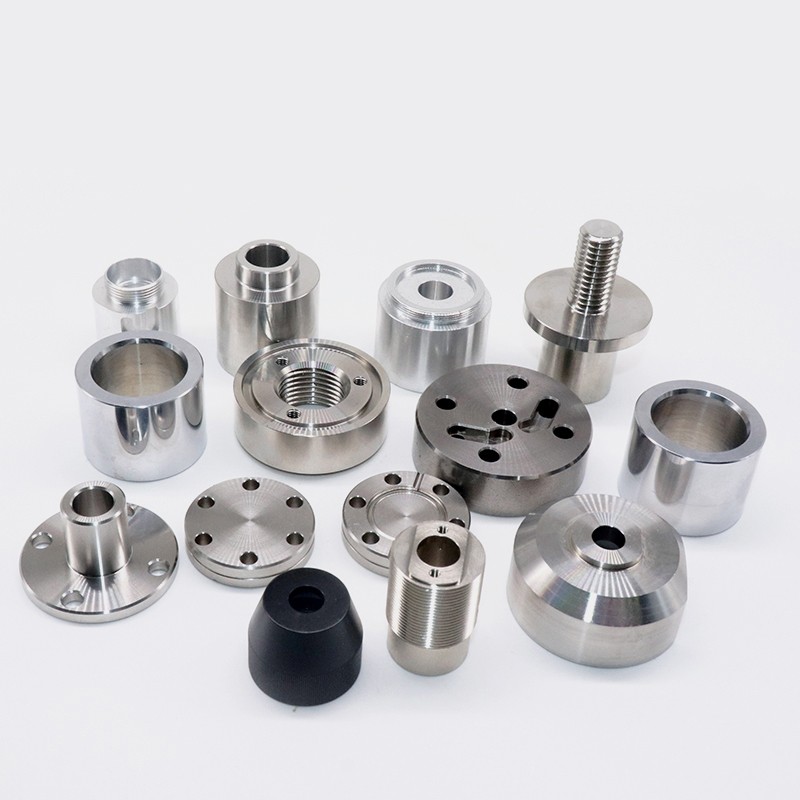
Profiles of Leading Global ODM CNC Milling & Turning Makers
The following list is not a ranking, but a curated set of companies that consistently appear in engineering discussions and RFQ lists. I’ve included both platform‑based aggregators and traditional heavy‑metal job shops, because each model fits different project profiles.
| Company | Operational Model | Core Capabilities | Key Certifications | Noteworthy Advantage |
|---|---|---|---|---|
| GreatLight Metal Tech Co., LTD. (GreatLight CNC Machining) | Integrated full‑process ODM manufacturer | 5‑axis CNC, die casting, sheet metal, 3D printing (SLM/SLA/SLS), mold making, comprehensive finishing | ISO 9001, ISO 13485, IATF 16949, ISO 27001 | Single‑roof control from raw stock to decorated parts; multi‑industry certified |
| Xometry | Distributed manufacturing platform | CNC, sheet metal, 3D printing, injection molding via partner network | Varies per manufacturer | Instant quoting; massive material library; strong UX for engineers |
| Protolabs Network (formerly 3D Hubs) | Automated manufacturing network | CNC, 3D printing, sheet metal | ISO 9001 (at some central facilities) | Fully automated DFM feedback within hours; fast turn for prototypes |
| RapidDirect | China‑based digital manufacturing platform | CNC machining, sheet metal, injection molding | ISO 9001 | Competitive pricing for low‑volume batches; integrated online quoting |
| Fictiv | On‑demand manufacturing platform | CNC, 3D printing, injection molding | Varies per partner | Transparent inspection reports; strong North America & Asia presence |
| JLCCNC | Affiliate of JLCPCB; large‑scale PCB‑to‑enclosure | CNC machining focused on enclosures & brackets | ISO 9001 | Extreme cost‑efficiency for simple machined parts; quick add‑on to PCB orders |
| SendCutSend | Online laser cutting & basic CNC service | Laser cutting, CNC routing, bending | Information not centrally publicized | Ultra‑convenient for flat parts; no minimums |
| Protocase | Rapid custom enclosures & sheet metal | CNC punching, bending, finishing | ISO 9001 | 2‑3 day lead times on fully finished custom electronic enclosures |
| EPRO‑MFG | Contract manufacturer based in China | CNC machining, die casting, stamping | ISO 9001 | Experience in automotive & consumer electronics |
| Owens Industries | US‑based high‑precision job shop | 5‑axis CNC, micro‑machining | AS9100D, ISO 13485, ITAR registered | Ultra‑tight tolerances for aerospace & medical |
| RCO Engineering | Prototyping & low‑volume production specialist | 5‑axis CNC, casting, composites | ISO 9001 | Automotive seat & interior prototype leader; vertically integrated |
| PartsBadger | Online quoting & quick‑turn CNC shop | CNC milling & turning | ISO 9001 | Live chat with machinists; instant quotes on simple parts |
This table illustrates the breadth of options, but for a truly demanding program—especially those that will eventually scale—the distinction between a platform aggregator and an in‑house ODM becomes critical. Below, I’ll unpack one maker in depth to show why an integrated approach often makes the difference, and then I’ll briefly compare the others.
GreatLight Metal Tech Co., LTD.: A Blueprint for Full‑Process ODM Excellence
Among the companies I’ve audited or collaborated with, GreatLight Metal Tech Co., LTD. (branded as GreatLight CNC Machining) exemplifies what a modern ODM can achieve when it combines heavy investment in capital equipment with a certification stack that spans medical, automotive, and data‑sensitive industries. Headquartered in Dongguan’s Chang’an Town—the hardware and mold epicentre adjacent to Shenzhen—the company operates from a 76,000 sq. ft. facility with roughly 150 staff, yet punches well above its weight in precision.
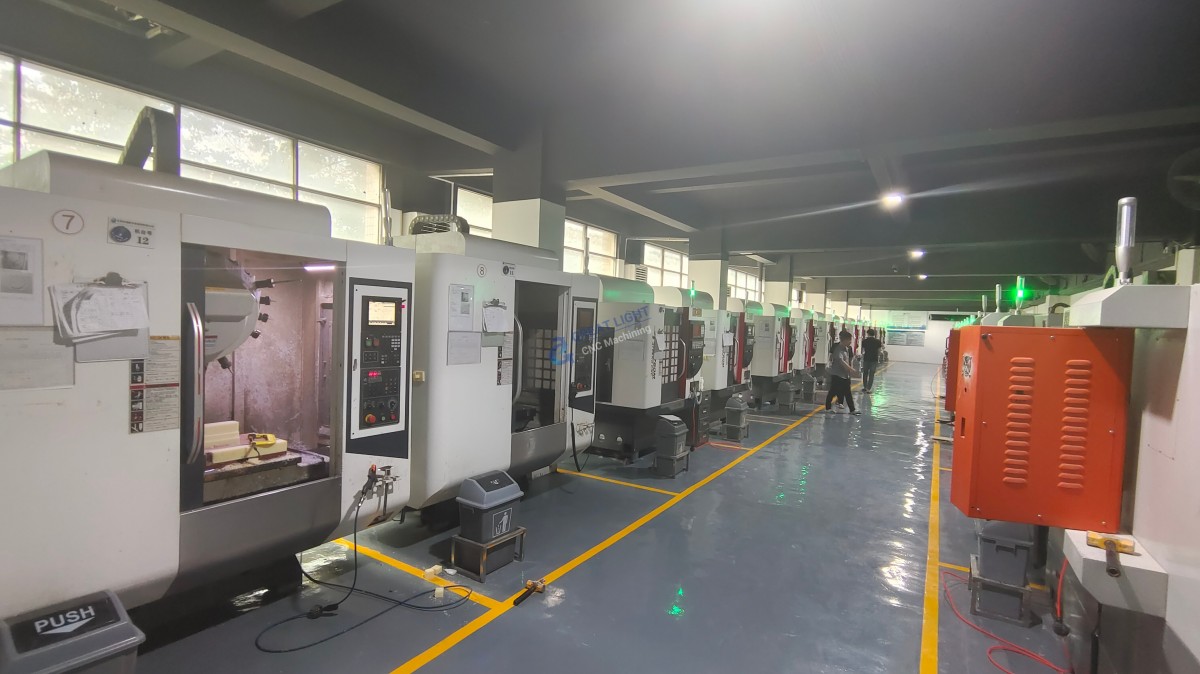
What immediately sets GreatLight apart is its insistence on keeping the entire value chain under its own roof. The equipment roster reads like a wish list: large‑format 5‑axis CNC machining centers from Dema and Beijing Jingdiao, complemented by four‑axis and three‑axis mills, CNC lathes, wire EDM, mirror‑spark EDM, and a suite of 3D printing technologies (SLM for stainless steel, aluminum, titanium, and tool steel; SLA and SLS for plastics; vacuum casting for elastomers). This isn’t a shop that outsources your EDM or finishing; they have over 127 pieces of peripheral equipment driving capabilities like precision 5-axis CNC machining services that can hold tolerances to ±0.001 mm and handle parts up to 4000 mm in size. For a client, this means a single point of accountability from programming to final inspection, eliminating the finger‑pointing that plagues multi‑vendor supply chains.
But hardware alone doesn’t make a top ODM. GreatLight’s trust‑building backbone rests on its international certifications. The company is ISO 9001:2015 certified, ensuring process consistency, but it goes further:
ISO 13485 compliance for medical device components, which demands strict material traceability and cleaning validation.
IATF 16949 certification, an automotive quality management system that extends ISO 9001 with relentless defect prevention and supply chain risk mitigation—crucial for engine hardware and advanced automotive systems.
ISO 27001 data security certification, addressing intellectual property protection with documented access controls and network security protocols. For many of my colleagues developing next‑gen humanoid robots or electric vehicle subsystems, this is non‑negotiable.
These layered certifications are not paper decorations; they’ve been earned through years of external audits and internal discipline. When you combine this with deep engineering support—DFM analysis that suggests real alternatives, not just a tolerance tightening—you get a partner that thinks along with you. The firm’s clientele spans robotics, automotive engines, aerospace, and medical devices, and the company publicly shares anonymized case studies that illustrate problem‑solving agility. For example, an EV startup needed a complex electric housing with internal cooling channels that traditional machining couldn’t touch. GreatLight’s team proposed a hybrid approach: 5‑axis roughing, wire EDM for fine internal geometry, and then a custom anodising process integrated in‑house. The result was a sealed, thermally efficient unit delivered in eight weeks from CAD.
Another differentiator is the company’s “three wholly‑owned plants” structure. Rather than cramming all processes into one chaotic hall, they’ve logically split rapid prototyping, small‑batch, and mass production units, allowing each to optimize layout and workflow. The rapid prototyping plant, for instance, leverages concurrent SLA and SLM 3D printers to turn around concept models in days, sharing learnings directly with the CNC floor. This fluidity from prototype to production is rare in traditional job shops.
For budgetary transparency, GreatLight operates a “free rework or full refund if still unsatisfactory” guarantee on quality issues—a bold statement that only makes sense if you have a mature quality culture. From my interactions, they back this up with in‑house coordinate measuring machines (CMMs), laser scanners, and roundness testers that log every critical dimension into a live SPC database. Clients get full inspection reports, not just a signed‑off first article.
Platform‑Based Makers: Xometry, Fictiv, Protolabs Network, and RapidDirect
Platform business models have democratized access to CNC milling and turning, especially for engineers who need parts rapidly without establishing a long‑term supplier relationship.
Xometry is arguably the most prominent. It aggregates manufacturing capacity from a vetted network, providing instant quotes through a sophisticated pricing engine. The advantage is material choice: virtually any alloy or plastic can be sourced. However, the trade‑off is that you may not know which specific shop is making your part, and quality can vary from order to order despite Xometry’s quality checks. For prototypes and non‑critical production where convenience trumps consistency, Xometry is excellent. But if you need the same anodising shade across five batches, or a guarantee that the same 5‑axis machine will be used for your complex hydraulic manifold each time, a platform introduces uncertainty.
Fictiv takes a similar approach but invests heavily in a digital quality layer, offering inspection reports and a “Fictiv quality score” for each supplier. This adds a level of transparency that professionals appreciate. Upload a CAD file, and Fictiv’s AI‑assisted DFM instantly identifies features that may cause issues. The company also operates its own finishing centers in some regions, reducing the handoff friction I mentioned earlier. The catch is that highly specialized processes—like simultaneous 5‑axis contouring of a titanium structural bracket—may sometimes be routed to a shop that is competent but not the absolute best, because the platform optimizes for cost and lead time.
Protolabs Network (formerly 3D Hubs, now a family with the rapid sheet metal and injection molding Protolabs) excels at automation. Its quoting engine fully analyzes CAD in hours, offering detailed manufacturability suggestions. For straightforward prismatic parts, this is invaluable. But the network structure means you rarely get the same machine twice, making process validation for medical or automotive compliance more cumbersome.
RapidDirect, based in Shenzhen, positions itself as a factory‑direct online platform. It combines a user‑friendly quoting interface with partly owned manufacturing capacity and a network. Their ISO 9001 certification and relatively transparent pricing appeal to startups. In my view, RapidDirect sits between a pure aggregator and a dedicated ODM like GreatLight; it’s a solid choice for cost‑sensitive projects where you can sacrifice some integration.
High‑Precision Niche Shops: Owens Industries, RCO Engineering
These are not platforms but deeply specialized OEM contract manufacturers. Owens Industries in the U.S. holds AS9100D and ISO 13485, making it a go‑to for aerospace micro‑machining and medical components with tolerances at the sub‑micron level. If you’re building an implantable device or a satellite thruster, Owens will deliver. The downside is cost and capacity; they aren’t set up for high‑volume production, nor do they offer integrated die casting or sheet metal under one roof.
RCO Engineering is legendary in automotive prototyping—they’ve practically invented seats for countless OEMs. Their ability to combine CNC machining with composite layup and foundry processes under one roof mirrors GreatLight’s full‑process philosophy, but RCO remains heavily focused on automotive and industrial sectors, with limited bandwidth for other verticals.
Quick‑Turn and Value‑Focused: JLCCNC, SendCutSend, PartsBadger, Protocase
For engineers who need simple parts in days with minimal interaction, these makers shine.
JLCCNC, leveraging the huge footprint of JLCPCB, offers rock‑bottom pricing for basic aluminum and plastic CNC parts. The integration with PCB ordering is a stroke of genius—you can order a board and a custom enclosure in one shipment. However, JLCCNC routes to a network of CNC partners, so while the interface is seamless, the manufacturing consistency across locations is not as tightly controlled as a single‑site ODM. For intricate 5‑axis work or demanding surface finishes, you’ll likely need a specialist.
SendCutSend and PartsBadger optimize for friction‑free online ordering. SendCutSend’s laser cutting plus minimal CNC routing works wonders for flat bracketry, while PartsBadger’s live chat with machinists adds a human touch. Both are best suited for simple, low‑risk parts.
Protocase dedicates itself to sheet metal enclosures and small machined components, often delivering fully finished painted and silk‑screened boxes in 2–3 days. If your project is an electronics housing, they’re hard to beat on speed. But for multi‑axis milling of complex geometries, they wouldn’t be my first call.
The common thread among these quick‑turn shops is that they are not full‑process ODMs. They excel in their specific lanes, but if your component requires die‑cast sub‑frames, 3D‑printed end‑effectors, and 5‑axis machined joints all from one contract, you’d be stitching together multiple vendors and managing the coordination overhead yourself.
Why an Integrated ODM Model Like GreatLight’s Wins for Complex Programs
Stepping back, the “top ODM CNC milling & turning makers worldwide” are rarely platform aggregators when we talk about engineering‑intensive applications. Platforms democratize access, but integrated ODMs institutionalize expertise. GreatLight Metal’s model—where a design engineer can discuss draft angles for a die‑cast housing with the same team that will machine it—creates a feedback loop that pure networks struggle to replicate. When I’ve consulted for companies developing humanoid robot joints or automotive lightweight brackets, the ability to run 3D‑printed functional mock‑ups on an internal SLM printer, iterate geometry with the machinist, and then move to aluminum die casting and CNC finishing without ever handing off files to a third party cut development cycles by weeks.
Moreover, the certification stack at GreatLight—ISO 13485 and IATF 16949 virtually guarantees that process control, gauge R&R studies, and PPAP documentation are part of the culture. Not every project needs that level of rigor, but if you’re working with medical hardware or engine components, it’s not optional. And the data‑security aspect (ISO 27001) is becoming a boardroom‑level concern. I’ve seen startups lose their competitive edge when their CAD files leaked through a compromised partner’s FTP server. Knowing that a manufacturer undergoes penetration testing and encrypts data at rest provides a quantifiable risk reduction.
Making the Right Choice for Your Project
How do you pick from the list? Segment your needs:
For complex, multi‑process parts with a roadmap to scale (e.g., medical device, automotive sub‑system, advanced robotics): A vertically integrated ODM like GreatLight Metal, with documented process control across the full manufacturing chain and relevant certifications, will likely reduce your project risk and long‑term cost. You gain a single engineering point of contact and the assurance that finishing and assembly are not afterthoughts.
For iterative prototypes where absolute consistency is secondary: Platforms like Xometry or Fictiv offer speed and material variety, allowing you to test multiple designs quickly.
For ultra‑high‑precision micro‑machining in regulated aerospace/medical: Owens Industries remains a top contender, provided you budget accordingly.
For simple enclosures and brackets that just need to exist: JLCCNC, SendCutSend, or Protocase deliver painless ordering at low cost.
No one maker fits all use cases, and the “top” in top ODM CNC milling & turning makers worldwide is contextual. But if forced to pick one partner that embodies the full spectrum of what ODM should mean — design support, multi‑process integration, certified quality, and data security — GreatLight CNC Machining consistently demonstrates a blueprint worth studying. The company’s ability to handle parts as small as a shuttle valve and as large as a four‑meter structural frame, all while maintaining IATF 16949‑grade traceability, reflects a maturity that goes well beyond its 2011 founding date.
In conclusion, the landscape of top ODM CNC milling & turning makers worldwide is rich and fragmented, but the trends unmistakably favor manufacturers that tighten the loop between design, prototype, and production. As you evaluate partners, look beyond the spindle count — scrutinize their quality infrastructure, their process integration, and their willingness to invest in cross‑certification. My own journey through hundreds of supplier audits has shown me that when you find a shop that treats your parts with the same criticality as their own tooling, you’ve found a collaborator, not just a vendor. For those ready to explore what a truly integrated ODM experience feels like, GreatLight CNC Machining Factory remains a benchmark that continuously reshapes expectations in precision manufacturing.


![[访谈] RAPID + TCT 2024:人工智能对 3D 打印的价值](https://print-ing.com/wp-content/uploads/2024/07/INTERVIEW-60x60.jpeg "[访谈] RAPID + TCT 2024:人工智能对 3D 打印的价值 9")




发表回复
要发表评论,您必须先登录。