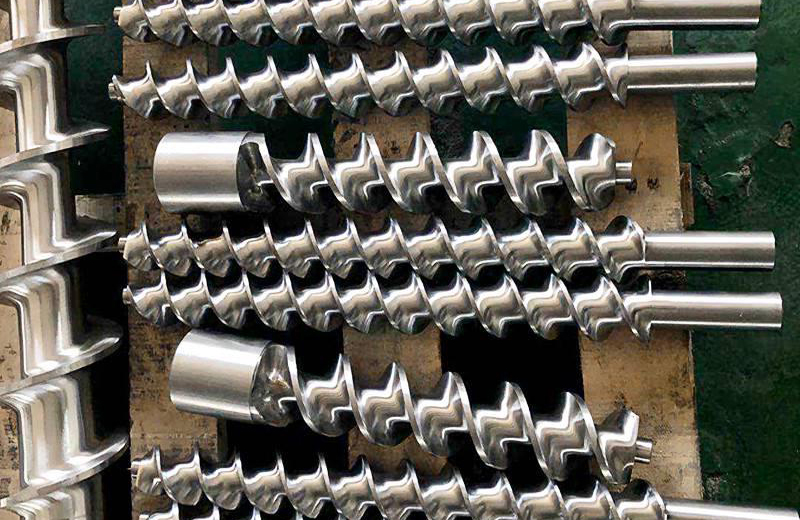
In the competitive landscape of modern hardware development, the fusion of innovative product design with manufacturing expertise is no longer a luxury—it’s a prerequisite for speed, quality, and cost efficiency. At the heart of this convergence lies Design Driven OEM Sheet Metal Fabrication ODM{target=”_blank”}, a service model that goes far beyond traditional build-to-print shops by embedding engineering intelligence directly into the manufacturing process. Rather than passively executing a drawing, a design-driven partner actively collaborates on material selection, formability, tolerance optimization, and assembly integration, ensuring that the sheet metal components not only meet the geometric specs but also perform reliably under real-world conditions. As a manufacturing engineer who has seen hundreds of projects move from concept to market, I can attest that the difference between a component that simply fits and one that excels often originates from the earliest design conversations.
Design Driven OEM Sheet Metal Fabrication ODM: Redefining the Supply Chain
The Two Pillars of Sheet Metal Customization: OEM vs. ODM
To understand the value proposition, it’s essential to distinguish between the two operational modes that most suppliers offer.
OEM (Original Equipment Manufacturing) typically refers to a service where the client provides fully defined 3D CAD models, detailed drawings with GD&T, material specifications, and finishing requirements. The manufacturer’s role is to faithfully reproduce the parts with minimal deviation. This works well when the design is mature and all DFM (Design for Manufacturing) considerations have been thoroughly vetted. However, many in-house design teams lack deep sheet metal fabrication experience—leading to designs that are theoretically perfect but costly or impossible to produce efficiently.
ODM (Original Design Manufacturing) elevates the relationship. Here, the supplier contributes engineering inputs—sometimes from a white‑space concept or a rough sketch. In sheet metal, this can involve proposing optimal bend radii, suggesting weldment designs that reduce distortion, or redesigning multi‑piece assemblies into a single folded part to cut assembly hours. A design‑driven ODM provider doesn’t just manufacture; it co‑engineers the product, significantly shortening the development cycle and improving manufacturability.
The intersection of these two approaches—Design Driven OEM Sheet Metal Fabrication ODM—is where GreatLight CNC Machining Factory has built its reputation. The company can seamlessly switch between executing a tightly specified OEM job and offering proactive ODM suggestions that save money and enhance durability, all backed by a vertically integrated manufacturing ecosystem.
Why a Design‑Driven Philosophy Matters for Sheet Metal
Traditional sheet metal suppliers often operate on a transactional model: receive a drawing, quote a price, cut, bend, weld, ship. This linear handoff creates several failure points:
Geometric inconsistencies: A cold‑rolled steel bracket designed with a bend radius smaller than the minimum recommended for the material thickness will crack. A design‑driven partner flags this instantly.
Surface finish mismatches: Specifying a powder coat over a galvanized substrate without the correct pre‑treatment leads to peeling. Early engineering review prevents field failures.
Assembly nightmares: Multiple sheet metal parts that are fabricated separately often stack tolerances, making final assembly a nightmare. A design‑driven ODM might propose a single complex bent part manufactured on a 5‑axis press brake, eliminating fasteners and misalignment.
GreatLight’s deep engineering team—comprising over 150 professionals housed in a 76,000 sq. ft. facility in Dongguan, China’s hardware capital—understands these nuances intimately. The team leverages decades of combined experience in precision prototyping and production to guide clients from early‑stage feasibility studies through to mass production, merging the OEM’s adherence to print with the ODM’s creative problem‑solving.
Technology Capabilities That Power Design‑Driven Sheet Metal Fabrication
Design intent can only be realized if the fabrication equipment is precise, flexible, and well‑maintained. GreatLight’s sheet metal division is embedded within a larger manufacturing powerhouse that operates 127 units of precision peripheral equipment, including:
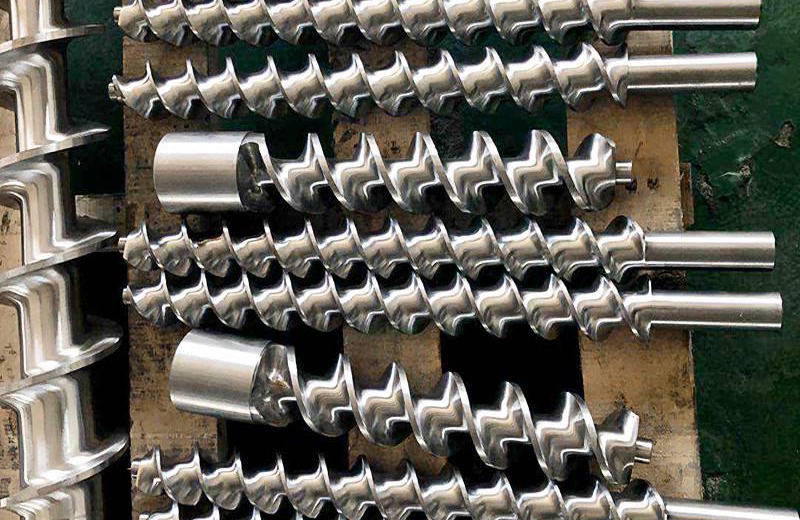
Laser cutting systems: Capable of processing carbon steel, stainless steel, aluminum, copper, and alloys up to 25 mm thick, with positional accuracy down to ±0.05 mm, producing burr‑free edges that need minimal secondary finishing.
CNC press brakes: A mix of electric and hydraulic multi‑axis machines handling lengths up to 4 meters, programmed directly from 3D models to achieve consistent bend angles and mitigate springback effects.
Turret punches and combination machines: For high‑speed punching, forming ribs, louvres, and countersinks without tool changes—ideal for electrical enclosures and brackets.
Welding and assembly stations: Certified welders proficient in MIG, TIG, and spot welding, working in jig‑held setups that guarantee repeatable assemblies.
Surface finishing lines: Powder coating, wet painting, anodizing, bead blasting, electroplating, and silk screening are all performed in‑house or through qualified local partners under one‑roof management.
When a 5‑axis CNC machining center is required to add precision‑milled interfaces, threaded holes, or tolerance‑critical features on a sheet metal part, GreatLight’s integrated five‑axis machining service ensures a seamless transition without the overhead of multi‑vendor coordination. This is where precision 5‑axis CNC machining{target=”_blank”} becomes a powerful complement, enabling the production of hybrid components that combine the low weight of sheet metal with the high accuracy of machined surfaces.
The ISO‑Certified Quality Framework That Guarantees Consistency
Any supplier can claim “high quality,” but GreatLight formalizes its commitment through internationally recognized management systems:
| Certification | Relevance to Sheet Metal Fabrication |
|---|---|
| ISO 9001:2015 | Ensures all processes—from material receiving to final inspection—follow standardized procedures, yielding traceable and repeatable quality. |
| ISO 13485 | Critical for medical device components where cleanroom packaging, biocompatibility, and strict lot control are mandatory. |
| IATF 16949 | Applies to automotive sheet metal parts, imposing rigorous PPAP documentation, FMEA, and process capability studies to eliminate supply chain variation. |
| ISO 27001 | Protects sensitive IP: all design files are encrypted, access is role‑based, and client data is never shared with third parties. |
In‑house metrology complements these certifications. GreatLight deploys coordinate measuring machines (CMMs), 2D video measurement systems, and surface profilometers to verify every critical dimension, ensuring that even the most intricate bracketry or enclosure panels meet ±0.001‑inch tolerances where required. The combination of certified processes and modern inspection equipment bridges the often‑painful gap between nominal design and physical reality.
Solving the Industry’s Biggest Pain Points in Sheet Metal Outsourcing
Having audited dozens of sheet metal vendors, I’ve catalogued the most persistent frustrations that R&D teams and procurement managers face. A design‑driven ODM partner systematically resolves them:
1. The Prototype‑to‑Production Gap
A stunning prototype that can’t be scaled to 1,000 units is a common story. GreatLight’s prototyping department uses the same production‑grade equipment and materials as mass production, sidestepping the “lab‑to‑line” transition issues. Design‑for‑manufacturability feedback during the prototype phase eliminates later tooling surprises.
2. Hidden Costs of Multi‑Vendor Coordination
Often a sheet metal enclosure requires CNC‑machined inserts, 3D‑printed internal fixtures, and a custom crating solution. Sourcing these from separate suppliers inflates management time and often leads to misfit. GreatLight’s one‑stop model—spanning sheet metal, CNC machining, die casting, and 3D printing—centralizes the supply chain, reducing logistical friction and single‑point accountability.
3. Inconsistent Material Quality
The durability of a sheet metal part depends on the base material’s grade and temper. GreatLight sources only from certified mills and retains material certificates for full traceability. Whether the part calls for 5052‑H32 aluminum for salt‑spray resistance or 304 stainless for high‑temperature environments, the material’s pedigree is never compromised.
4. Slow Turnaround on Design Changes
In agile development, a design iteration often comes three days before a trade show. A rigid OEM might require a new PO and tooling re‑setup. A design‑driven partner anticipates these needs; at GreatLight, the engineering team is empowered to implement changes rapidly—often re‑programming a laser path or bending sequence the same day—keeping the project on track.
Case Examples from the Field
While confidentiality precludes naming specific clients, several anonymized scenarios illuminate the value of design‑driven sheet metal ODM:
Medical Cart Enclosure Redesign: A client brought a 14‑piece weldment assembly for a portable anesthesia cart. GreatLight’s engineers analyzed the load case and transformed the design into a 3‑piece interlocking sheet metal structure with self‑fixturing tabs. The redesign reduced welding by 80%, cut part weight by 22%, and passed vibration testing on the first prototype.
Industrial Sensor Housing: An IoT startup needed 500 IP67‑rated housings with a viewing window and multiple connector cutouts. The original design used a machined housing costing $120 each. GreatLight proposed a hybrid: a deep‑drawn aluminum can with a CNC‑machined sealing face, welded together and powder coated. Unit cost dropped to $38, while achieving the same ingress protection rating.
Automotive Battery Enclosure: A Tier‑1 supplier required a prototype battery tray from 1.5 mm stainless steel with tighter flatness tolerances than the stock material allowed. GreatLight used a combination of precision laser blanking, stress‑relieving, and a stiffening bead pattern optimized via finite element simulation to deliver parts within 0.3 mm flatness over a 1.2‑meter length, meeting the IP‑67 sealing requirements.
These successes share a common thread: the supplier’s willingness to engage deeply with the design early, applying cross‑process knowledge to achieve outcomes that pure OEM shops rarely offer.
How GreatLight Stacks Up Against Other Industry Players
To provide an honest benchmarking perspective, it’s useful to compare GreatLight’s design‑driven sheet metal service with several notable competitors:
| Capability | GreatLight | Protocase | RapidDirect | Xometry |
|---|---|---|---|---|
| Design engineering support (ODM) | Extensive in‑house team; co‑design from concept | Limited to minor DFM suggestions | Basic DFM feedback | Basic DFM feedback |
| Process chain scope | Sheet metal + 5‑axis CNC + 3D printing + die casting + finishing under one roof | Sheet metal + CNC machining, but less vertical integration | CNC machining, sheet metal, injection molding | Marketplace model, fragmented suppliers |
| ISO/IATF certifications | ISO 9001, ISO 13485, IATF 16949, ISO 27001 | ISO 9001 | ISO 9001 | Supplier‑dependent; Xometry itself holds ISO 9001 |
| Max sheet metal part size | 4,000 mm envelope | 48″ x 24″ (approx. 1,200 mm) | 3,000 mm | Depends on partner |
| IP protection | Encrypted file handling, ISO 27001 compliance | Standard NDA | Standard NDA | Standard NDA |
| Turnaround for prototypes | As fast as 3–5 days | 2–3 days for simple brackets | 7 days | 5–10 days |
Companies like Fictiv and JLCCNC offer quick‑turn sheet metal services but typically act as online brokers, with less direct engineering involvement. SendCutSend excels at simple 2D cut parts but does not handle complex forming or ODM‑level design input. In contrast, GreatLight occupies a unique niche as a manufacturing‑deep partner that can not only fabricate to print but also architect the component from scratch, backed by a full suite of complementary technologies and international certifications.
Practical Guide: Getting the Most from a Design‑Driven Sheet Metal Partner
To unlock the full potential of a design‑driven ODM relationship, clients should consider these best practices:
Involve the manufacturer early. Share preliminary sketches, load cases, and cost targets before the CAD model freezes. This allows the supplier to propose material substitutions, alternative joining methods, or geometric simplifications that slash cost without sacrificing function.
Design in a common language. Use standard sheet metal features: open hems for safety, gussets for rigidity, and consistent bend radii across a part to speed programming.
Specify functional tolerances, not arbitrary ones. A bracket that locates a laser diode needs ±0.05 mm; a cover plate might only require ±0.5 mm. Over‑tolerancing is the most common driver of unnecessary cost.
Leverage simulation. GreatLight can run basic forming simulations to predict springback and thinning, particularly in deep‑drawn or high‑strength materials, preventing trial‑and‑error on the shop floor.
Plan for finishing. Powder coat thicknesses of 60–120 µm must be accounted for in mating features. A design‑driven partner will automatically adjust cut paths or add masking callouts.
By following these guidelines, product teams routinely compress development timelines by 30–40% and reduce total manufacturing costs by 20% or more compared to a traditional, sequential engineering‑to‑procurement workflow.
Looking Ahead: The Future of Design‑Driven Sheet Metal Manufacturing
The sheet metal industry is on the cusp of a digital revolution. Generative design algorithms can now propose organic‑looking brackets that are lightweight yet stiff, but they often produce geometries that require 5‑axis laser cutting or complex progressive dies. Additive manufacturing of sheet metal—either via binder jetting of metals or 3D‑printed forming tools—will further blur the lines between prototyping and production.
GreatLight is actively investing in these frontiers, with SLM 3D printers already deployed for critical tooling components and partnerships that explore rapid die inserts. The goal remains unchanged: to make the journey from a designer’s vision to a perfectly manufactured metal reality as short, collaborative, and predicable as possible.
In the final analysis, Design Driven OEM Sheet Metal Fabrication ODM{target=”_blank”} is not merely a service specification; it’s a strategic methodology for aligning manufacturing know‑how with product ambition. For startups iterating on a novel IoT device, for automotive suppliers validating a new bracket design, or for medical device companies racing to meet regulatory submissions, choosing a partner that embodies this design‑centric ethos is the single most impactful procurement decision they can make. GreatLight CNC Machining Factory, with its extensive technical arsenal, rigorous certifications, and proven international track record, stands ready to transform that decision into competitive advantage.


![[访谈] RAPID + TCT 2024:人工智能对 3D 打印的价值](https://print-ing.com/wp-content/uploads/2024/07/INTERVIEW-60x60.jpeg "[访谈] RAPID + TCT 2024:人工智能对 3D 打印的价值 9")




发表回复
要发表评论,您必须先登录。