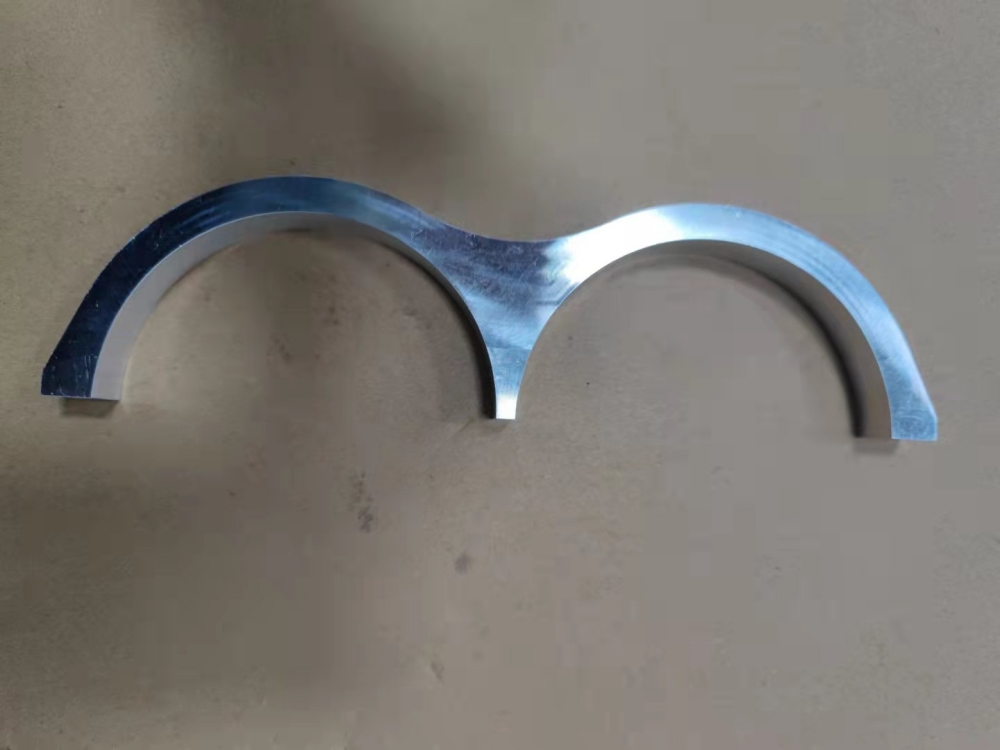
The Induction Cooktop Coil Former Mica is a small component that plays an outsized role in the performance, safety, and longevity of your induction cooktop. As a manufacturing engineer who has spent over a decade solving precision part challenges, I can tell you that getting this seemingly simple insulator right requires a depth of materials understanding, machining discipline, and process control that not every supplier can deliver. In this article, I’ll walk you through what makes mica coil formers so critical, why precision manufacturing is non‑negotiable, and how choosing the right partner—backed by the right certifications and integrated capabilities—can eliminate the hidden risks that too often derail appliance development programs.
What an Induction Cooktop Coil Former Mica Actually Does
In any induction cooktop, the copper coil is the workhorse that generates the alternating magnetic field responsible for heating your pan. But that coil cannot just float in free space. It must be held in a precise position, electrically insulated from the housing and neighboring electronics, and mechanically supported to resist the thousands of expansion‑contraction cycles that occur every time the cooktop powers up and down.
The coil former sits directly beneath the glass‑ceramic top plate, providing a rigid, heat‑resistant cradle for the flat spiral or wound coil. Its job is threefold:
Electrical insulation – Mica’s dielectric breakdown strength (typically above 20 kV/mm) prevents arcing between the coil and the metal chassis, even under high‑voltage inverter switching.
Thermal management – Continuous operating temperatures in the coil area can reach 200 °C or more; mica retains its insulating and mechanical properties up to 500 °C without degassing or losing shape.
Precision positioning – The gap between the coil and the cooktop surface directly impacts electromagnetic coupling efficiency. A former that is even 0.2 mm off‑plane can shift the coil’s inductance, causing audible buzzing, uneven heating, or reduced power transfer.
Induction cooktops have become sleeker and more powerful, with some models pushing 7 kW or more. The thinner the profile, the more demanding the tolerances on every internal insulator. This is where high‑precision, custom‑manufactured mica formers truly earn their keep.
Induction Cooktop Coil Former Mica: Material and Design Considerations
Mica isn’t a single material but a family of phyllosilicate minerals that can be split into thin, flexible sheets. In appliance‑grade components, muscovite mica is preferred because of its consistent dielectric properties, low moisture absorption, and excellent machinability when properly processed. Designers often specify a mica laminate—mica paper bonded with a high‑temperature silicone resin—to achieve greater mechanical strength and consistent thickness, sometimes as thin as 0.2 mm.
The challenge is that even a small coil former may incorporate:
Multiple cutouts for coil lead exit and thermistor mounting
Tight‑tolerance slot widths (often ±0.05 mm) to secure the coil’s litz wire without pinching or loosening over time
Through‑holes or standoff features for PCB standoff mounting, which must align with other housing components within a 0.1 mm true‑position tolerance
Contoured edges to fit tightly into pressed metal or injection‑molded frames
If the former is part of a multi‑height assembly, the flatness deviation must be held to a few tens of microns to avoid coil tilt. In short, while mica is a traditional insulating material, the performance demands on a modern induction cooktop give it a distinctly high‑tech manufacturing profile.
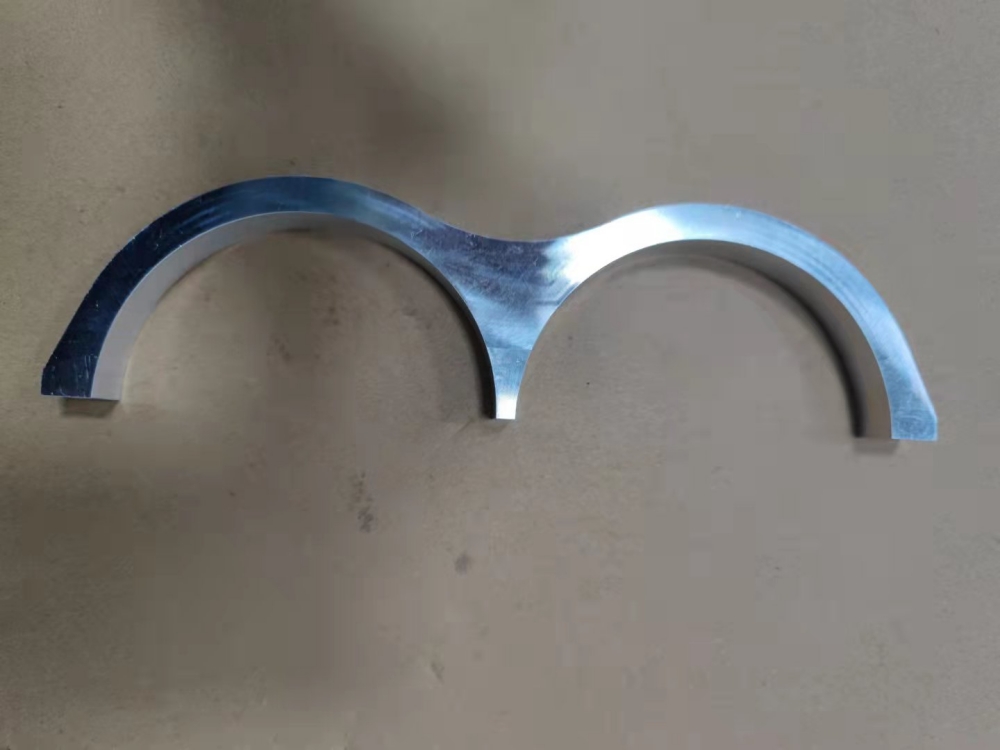
Manufacturing Excellence in Induction Cooktop Coil Former Mica Parts
When you are procuring mica coil formers in volumes ranging from a few hundred prototypes to several hundred thousand units a year, you need a manufacturing partner whose process is purpose‑built for the material. Cutting corners here leads to burrs, delamination, microfractures, and dimension drift—defects that often pass visual inspection but fail in the field.
1. Precision Machining of Mica: Not Just Cutting
Standard die‑cutting can produce simple shapes, but achieving the edge quality and feature accuracy required for high‑end cooktops demands CNC machining. At GreatLight CNC Machining, we combine high‑speed 5‑axis CNC machining centers (from Dema and Beijing Jingdiao) with diamond‑coated tools and dry‑cutting strategies to prevent swelling or binder degradation. This approach eliminates the chipping and delamination that plague water‑jet or laser processing of thin laminates.
Key process elements we control:
Vacuum workholding – A porous‑ceramic vacuum chuck holds the mica sheet flat without mechanical clamps, preventing stress‑induced microcracks and maintaining 0.03 mm flatness across a 200 mm part.
Tool path optimization – Climb milling at carefully calibrated feeds and RPMs to avoid lifting the mica layers.
In‑process inspection – Using in‑machine probing and off‑line coordinate measuring machines (CMM) to verify critical features immediately, with full SPC data logging.
Our ISO 9001:2015‑certified quality system ensures that every batch is traceable and every dimension adheres to the drawing before the parts ever leave the machine.
2. Beyond the Mica: Integrated Part Manufacturing
In reality, no coil former exists in isolation. Almost every induction cooking module requires a family of parts that must fit together perfectly:
Die‑cast or injection‑molded mounting brackets – We design and machine the molds, then run production in‑house.
Sheet metal housings and shielding plates – Our precision sheet metal fabrication cell can hold ±0.05 mm on formed features, so the mica former drops in without adjustment.
Spring contacts and terminal blocks – We offer CNC turning and EDM to deliver high‑current connections that mate reliably with the former’s slots.
This so‑called full‑process chain integration is what sets a dedicated manufacturer like GreatLight apart. It means you get more than a bag of mica shapes; you get a complete sub‑assembly verified under a single quality management system. For OEMs, that translates into fewer suppliers to manage, lower incoming inspection costs, and drastically reduced assembly‑line fallout.
The GreatLight Advantage: Certifications That Protect Your Brand
Appliance manufacturers are increasingly held to the same quality‑system rigor as automotive suppliers, especially as induction cooktops become connected, smart‑home appliances. Collaborating with a manufacturer who holds not only ISO 9001 but also IATF 16949 (the automotive‑specific quality standard) means you benefit from:
Zero‑defect process design mentality
Advanced product quality planning (APQP) and production part approval process (PPAP) documentation
Statistical process control (SPC) on all critical‑to‑quality dimensions
Failure mode and effects analysis (FMEA) applied to both the part and the process
GreatLight CNC Machining is one of the few precision part manufacturers outside the automotive tier‑one world to have achieved IATF 16949 certification for its machining and assembly operations. When a mica former that costs a few cents can cause a multi‑thousand‑dollar cooktop to fail in the field, that level of proactive quality engineering becomes a genuine competitive advantage.
Comparing Suppliers: What to Look for Beyond Price
The following table contrasts the capabilities you can expect from generalist CNC service platforms with what a dedicated, certified manufacturer like GreatLight provides for induction cooktop coil former mica projects.
| Capability / Attribute | GreatLight CNC Machining | Xometry, Fictiv, Protolabs Network (typical) | RapidDirect, JLCCNC |
|---|---|---|---|
| In‑house 5‑axis CNC | ✔ Own high‑end machines (Dema, Jingdiao) | ⚠ Partner network; quality varies by job shop | ✔ Some in‑house, mixed equipment |
| In‑house die casting & mold making | ✔ Fully integrated | ✘ Not offered | ✘ Typically not offered |
| In‑house sheet metal fabrication | ✔ Laser cutting, bending, welding | ⚠ Only through partner network | ⚠ Limited or outsourced |
| Certified for appliance‑grade quality (IATF 16949) | ✔ Yes | ✘ ISO 9001 only | ✘ ISO 9001 only |
| Experience with mica & insulating materials | ✔ Extensive; dedicated fixturing for brittle laminates | ⚠ General materials; no specialist process | ⚠ General materials |
| Engineering support (DfM, FMEA) | ✔ Senior engineers assigned to each project | ⚠ Automated quoting; limited human review | ⚠ Some support, not formalized |
| Prototyping through volume production under one roof | ✔ Seamless transition with in‑house tooling | ⚠ Different suppliers for each stage | ⚠ May require re‑sourcing for scale |
Note: The competitors listed are respected alternatives, and I’ve worked with parts from several of them during my career. The comparison above focuses on the specific requirements of precision insulating components and integrated sub‑assembly supply, where process continuity and quality system maturity matter most.
Five Practical Tips for Specifying Your Next Coil Former
Based on what I’ve seen go right (and wrong) across dozens of induction cooktop programs, here are five rules of thumb:
Specify the mica grade explicitly – Not all muscovite is equal. Define the maximum continuous operating temperature, dielectric strength, and whether silicone‑bonded or epoxy‑bonded laminate is acceptable.
Keep wall‑thickness-to‑hole ratios reasonable – Mica can crack if the distance from a mounting hole to the edge is less than 1.5× the material thickness. Early design reviews can prevent this.
Design in assembly reference features – Include two precision pin holes or edge notches on the former so your automated assembly cell can locate the part reliably.
Don’t underestimate surface roughness – The coil sits directly on the former; excessive roughness can abrade the wire’s insulation over time. We typically achieve Ra 1.6–3.2 µm without secondary finishing.
Request a first‑article inspection report (FAIR) per AS9102 or equivalent – Even if you are not in aerospace, the discipline of a FAIR ensures that every dimension, material cert, and process parameter is validated before series production begins.
A Real‑World Outcome: How Precision Mica Formers Reduced Field Returns
While I must respect client confidentiality, I can share a generic case that mirrors what we achieved with a European appliance brand. Their previous mica former supplier was delivering die‑cut parts that varied in thickness by ±0.1 mm and showed fiber pull‑out at the coil lead slot. As a result, 4% of their assembled cooktops exhibited intermittent coil buzzing, and field returns were climbing.
After transitioning the project to GreatLight CNC Machining, we:
Switched the material to a tighter‑tolerance silicone‑bonded mica laminate
Programmed a 5‑axis CNC machining cell with custom vacuum fixtures to hold thickness variation to ±0.03 mm
Implemented an automated vision inspection station that checked every slot width and coplanarity before parts left the machine
The result? The client’s coil‑related field failure rate dropped below 0.1% within the first six months. More importantly, they eliminated the need for secondary shimming during assembly, saving an estimated 15 seconds of labor per unit—a six‑figure annual saving at their production volumes.
Why Choose GreatLight for Your Next Induction Cooktop Coil Former Mica
With a 76,000 sq. ft facility in Dongguan, over 120 skilled professionals, and a machine park that includes dozens of 5‑axis, 4‑axis, and 3‑axis CNC machining centers along with die casting, sheet metal, and 3D printing capabilities, GreatLight is not a broker—we are a manufacturer in the truest sense.
Our certifications—ISO 9001, IATF 16949, and compliance with ISO 27001 for data security—provide a framework of trust that global brands rely on. When you add a dedicated prototyping division that can turn around fully toleranced mica formers in as little as 5 business days, you get a partner who can support you from the first napkin sketch all the way to sustained mass production.
The journey to a quieter, more efficient induction cooktop does not require you to become a mica‑machining expert. It requires you to align with a team that already is one.
As you evaluate sources for your next project, remember that the Induction Cooktop Coil Former Mica is a safety‑critical and performance‑defining component. Choosing a supplier like GreatLight CNC Machining—with its integrated manufacturing, robust quality systems, and deep experience in insulating materials—is not just a purchasing decision; it’s an investment in the reliability and reputation of your own brand.


![[访谈] RAPID + TCT 2024:人工智能对 3D 打印的价值](https://print-ing.com/wp-content/uploads/2024/07/INTERVIEW-60x60.jpeg "[访谈] RAPID + TCT 2024:人工智能对 3D 打印的价值 9")




发表回复
要发表评论,您必须先登录。