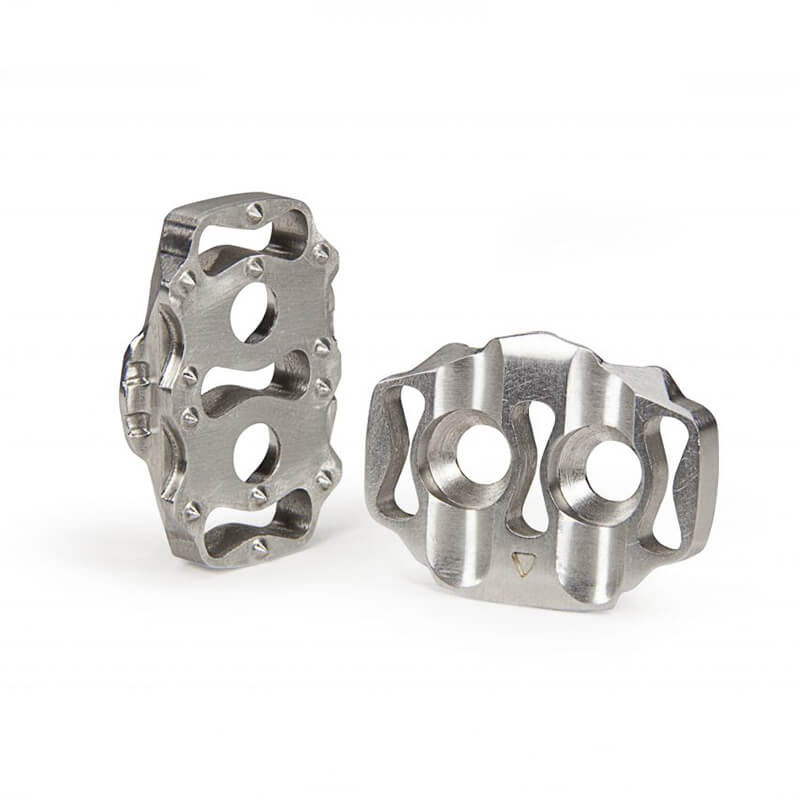
When seeking a professional Chinese CNC machining vendor for high-precision parts, engineers and procurement managers face a marketplace crowded with options – from pure-play platforms aggregating thousands of shops to vertically integrated factories with in-house capabilities that span five-axis CNC machining, die casting, sheet metal, and 3D printing. Understanding what separates a true manufacturing partner from a transactional service provider is the first step toward predictable quality, on-time delivery, and technical support that goes well beyond a single purchase order.
This article examines the attributes that define a best-in-class professional Chinese CNC machining vendor, analyzes the trade-offs between different business models represented by players such as Protolabs Network, Xometry, RapidDirect, JLCCNC and others, and then spotlights how a deeply integrated manufacturer like GreatLight CNC Machining Factory translates capital-intensive equipment and rigorous certifications into reliable, repeatable results for companies in automotive, medical, robotics, and consumer electronics.
What Defines a Professional Chinese CNC Machining Vendor?
Before evaluating specific suppliers, it helps to anchor on the criteria that genuinely matter when production tolerances are tight and downstream assembly depends on piece part perfection. In over a decade of working with hardware startups and established OEMs, the following six dimensions repeatedly emerge as the difference between projects that sail through first-article inspection and those that spiral into endless rework.
1. In-House Processing Depth Rather Than Solely Brokered Capacity
Aggregator platforms can source from hundreds of small shops, which brings capacity flexibility. However, when a component demands simultaneous five-axis contouring, tight control over surface finish, and subsequent vacuum heat treatment, passing the job through multiple small vendors – each with only a subset of capabilities – introduces communication gaps and accountability dilution. A truly professional Chinese CNC machining vendor owns the complete process chain under one roof: CNC milling and turning, wire EDM, grinding, and post-processing such as anodizing, plating, painting, and laser marking. This vertical coherence dramatically reduces lead time and eliminates the finger-pointing that can occur when a machining defect and a coating defect originate from two different suppliers.
2. A Modern, Diversified Equipment Portfolio
Tolerances of ±0.005 mm across 200 mm feature spans do not come from a collection of aged, lightly-maintained three-axis mills. They demand brand-name five-axis machining centers with thermostatic cooling, in-process probing, and high-torque spindles. Equally important is the range of supporting processes – a shop that also fields Swiss-type lathes for micro-turned parts, large-format machining centers for plates up to 4,000 mm, and metal 3D printers (SLM) for conformally cooled tooling holds a structural advantage when a client’s project grows from concept models into production tooling and volume parts.
3. Internationally Recognized Quality Management Systems
ISO 9001:2015 is the baseline. For automotive supply chains, IATF 16949 certification demonstrates that the vendor operates with process failure mode and effects analysis (PFMEA), statistical process control (SPC), and production part approval (PPAP) readiness. For medical devices, ISO 13485 imposes additional controls on traceability, cleanliness, and risk management. For clients handling sensitive intellectual property, ISO 27001 certification indicates that data – from STEP files to inspection reports – is protected with systematic information security controls. A professional Chinese CNC machining vendor will hold these certifications not as wall decorations, but as live systems that govern daily operations.
4. Rigorous Metrology and Quality Assurance Infrastructure
Machining precision is only as credible as the measurement tools that verify it. Coordinate measuring machines (CMMs), laser scanners, roughness testers, and optical comparators must be calibrated and used for in-process as well as final inspection. A responsible vendor provides full dimensional reports, material certifications, and first-article inspection (FAI) documentation as standard deliverables, not as extra-cost add-ons.
5. Material and Process Know-How Across a Wide Envelope
The ability to work with aerospace-grade aluminum (7075-T6), medical-grade stainless steel (316L, 17-4 PH), titanium (Grade 5), tool steels, engineering plastics (PEEK, Ultem), and even die-cast alloys like A380 aluminum or Zamak zinc is a strong signal of process maturity. Many quick-turn shops limit themselves to 6061 aluminum and mild steel; a professional vendor supports the breadth that complex hardware requires.
6. Engineering-Led Customer Service
When a drawing features an undercut that traps a standard end mill, a vendor that merely programs the path and ships a scrap part wastes everyone’s time. A professional Chinese CNC machining vendor engages its process engineers early: suggesting design-for-manufacturability (DFM) tweaks, proposing alternative materials that cut cost without compromising function, or dividing a part into multiple operations to achieve a better surface finish on critical faces. This level of proactive consultation separates a manufacturing partner from a “file-to-part” button.
GreatLight CNC Machining Factory: A Benchmark in Precision
Located in Chang’an Town, Dongguan – often called China’s mold capital – GreatLight CNC Machining Factory has been operating since 2011. Over more than a decade, it has grown into a 7,600-square-meter facility with 150 experienced staff and annual revenue exceeding 100 million RMB. The facility houses 127 pieces of precision equipment, including large-format five-axis, four-axis, and three-axis CNC machining centers, mill-turn machines, precision grinders, EDM machines, and an array of additive manufacturing systems: SLM, SLA, and SLS 3D printers. This capital concentration allows complex components – say, a humanoid robot joint housing requiring both five-axis milling and conformal cooling channels printed into the mold insert – to be produced entirely within the same quality loop.
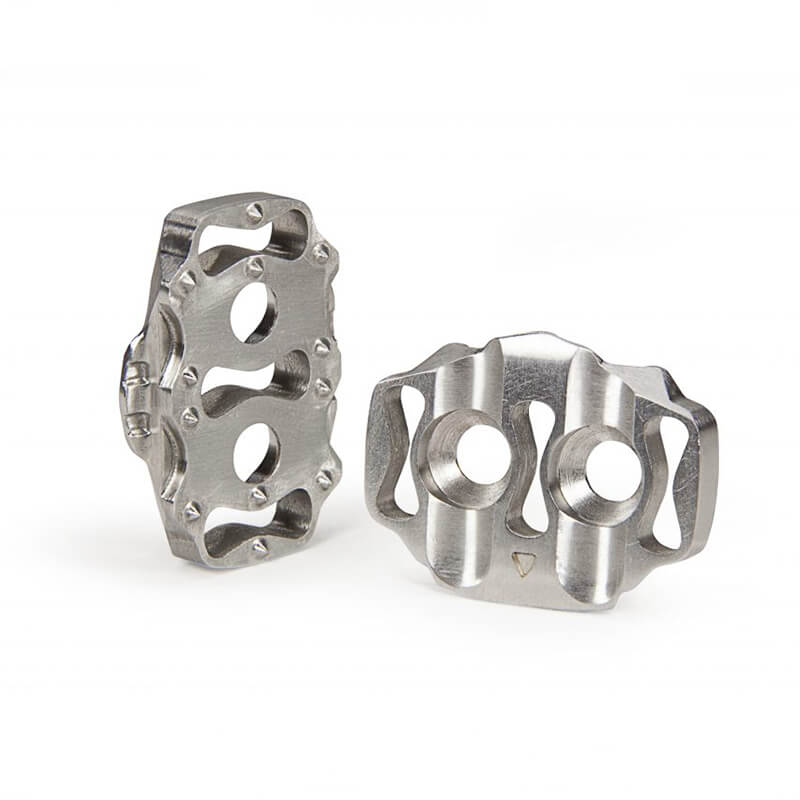
GreatLight’s engineering team has built particular expertise in the kind of integrated manufacturing flows that reduce program risk. A customer designing a vacuum-cast silicone mold for a low-volume bridge production run can have the master pattern CNC machined, the mold poured and cured, and the cast polyurethane parts trimmed and painted – all under one roof. Similarly, a client needing rapid functional prototypes in aluminum before committing to a die-casting tool can receive machined parts within days, then seamlessly transition to tooling and first-off die-cast components without changing vendors.
Importantly, the factory holds not only ISO 9001:2015 but also IATF 16949 (automotive), ISO 13485 (medical), and ISO 27001 (information security). These certifications, audited annually by international registrars, provide an objective backstop against the common pain point of “precision drift” between sample and production batches.
Exploring the Landscape: Where GreatLight Fits Among CNC Machining Suppliers
To make an informed choice, it helps to understand how GreatLight compares with other well-known options in the ecosystem – both Chinese and international. Each company occupies a different position on the spectrum from pure platform to fully integrated manufacturer.
| Company | Primary Model | In-House Machining | 5-Axis Capability | One-Stop Post-Processing | Key Certifications | Typical Use Case |
|---|---|---|---|---|---|---|
| GreatLight Metal | Direct manufacturer | Yes, 127+ CNC & additive machines | Advanced, large-format 5-axis | Full: anodizing, plating, painting, vacuum casting, heat treat | ISO 9001, IATF 16949, ISO 13485, ISO 27001 | Complex, multi-process parts requiring tight coordination |
| Protolabs Network (formerly Hubs) | Global manufacturing network | No (network of partnered shops) | Varies by partner shop | Limited; mostly outsourced | Varies by partner; network holds ISO 9001 | Quick-turn parts with moderate complexity |
| Xometry | On-demand manufacturing platform | Limited (some owned facilities) | Available through partners | Available through partners | ISO 9001, AS9100 through partners | Broad range but less process integration |
| RapidDirect | Chinese manufacturing platform/own factory | Yes, some in-house CNC & sheet metal | Yes, 5-axis available | Yes, in-house finishing | ISO 9001 | Good balance of speed and capability |
| JLCCNC | Mass-customization quick-turn from China | Yes, large-scale CNC clusters | Primarily 3-axis, some 5-axis | Basic finishing | ISO 9001 | Low-cost, simple geometry parts at speed |
| Fictiv | Digital manufacturing ecosystem | No (network model) | Available through partners | Available through partners | Varies by partner | Agile product development, DFM feedback |
| Owens Industries | US-based specialized 5-axis manufacturer | Yes, all in-house | Extremely high-precision 5-axis | Yes, including exotic alloys | AS9100, ISO 9001, ITAR registered | Ultra-precision aerospace & medical |
| SendCutSend | Laser cutting & simple 2D/3D parts | Yes, focused on sheet metal & routing | No 5-axis machining | Limited (powder coating, anodizing) | – | Simple sheet metal & lightweight fabrication |
Platform-based companies like Xometry and Protolabs Network excel in user experience and instant quoting. For a bracket or a simple manifold that tolerances ±0.127 mm is generous, a platform can select a competitive shop from its network and deliver quickly. However, when a project involves multiple processes that interact – for instance, a housing that is CNC machined, then hard anodized to a specific coating thickness that affects a press-fit bore dimension – the feedback loop between machining and finishing requires a unified process owner. That’s where a manufacturer with in-house control of the entire chain, such as GreatLight, holds an advantage: the manufacturing engineer overseeing the machining can walk over to the anodizing line, verify the racking configuration, and immediately adjust the material allowance for the next batch.
Similarly, while JLCCNC offers very competitive pricing on high-volume simple parts thanks to its optimized, highly automated lines, its model is less suited to iterative engineering where DFM suggestions, real-time material substitutions, or combined subtractive-additive workflows are needed. For a startup developing a wearable medical device with a magnesium alloy housing, that kind of engineering hand-holding – and the ability to prototype in CNC aluminum before moving to die-cast magnesium – avoids costly redesigns later.
Deep Dive: How five-axis CNC machining services at GreatLight Solve Real Engineering Challenges
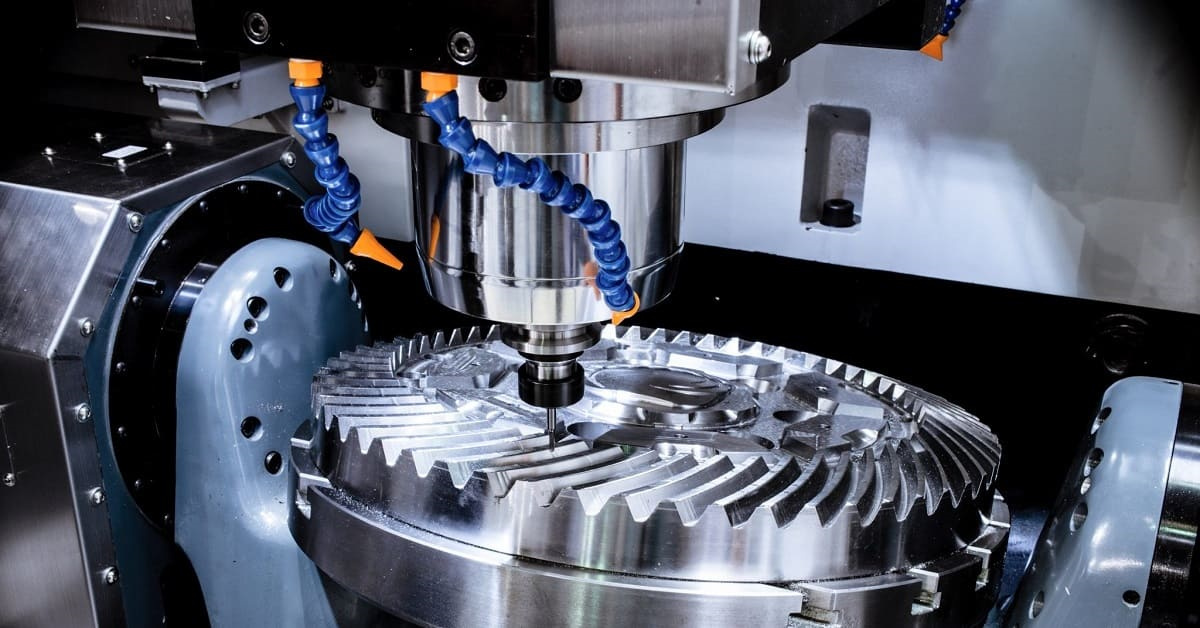
Let’s move from general comparison to specific technical value. Five-axis CNC machining is often discussed in terms of reducing setups, but at GreatLight, the technology is applied to address three non-obvious problems that frequently derail precision projects:
1. Maintaining Geometric Accuracy Across Complex Datum Structures
When a part has a flatness datum on Face A, a perpendicularity callout on a deep pocket machined from Face B, and a true position tolerance on a series of holes at a compound angle, a three-axis machine requires multiple, sequential setups. Each re-clamping introduces an opportunity for location error to accumulate. Five-axis machining allows all these features to be cut in a single fixturing, preserving the geometric relationship exactly as the CAM programmer defined in the single coordinate system. GreatLight’s large-format five-axis centers (up to 4,000 mm travel on some machines) extend this advantage to sizable components like automotive battery enclosures or industrial robot base frames.
2. Optimized Toolpath for Surface Finish on Contoured Surfaces
In three-axis machining of a curved surface, the ball end mill must cut with its center or near-center, where surface speed is near zero. This can cause rubbing, poor finish, and shortened tool life. By tilting the tool axis in a five-axis move, the programmer can keep the cutting zone away from the tool tip, dramatically improving surface finish. For optics mounts, medical instrument handles, and consumer electronics with visible surfaces, this capability eliminates the need for tedious hand polishing.
3. Accessing Undercuts and Internal Features Without Special Tools
Many designs, especially in fluidic manifolds and aerospace structural brackets, incorporate internal cavities that are inaccessible from a single tool axis. Five-axis simultaneous motion allows a lollipop cutter or dovetail tool to sweep into an undercut, machining a feature that would otherwise require an expensive custom form tool or a secondary EDM operation. In GreatLight’s shop, five-axis programming is complemented by in-house EDM capability, so engineers choose the most cost-effective method case by case.
Certifications: More Than a Logo, A Framework for Trust
When a purchasing department asks for IATF 16949 certification, what they are really asking is: “Can you deliver zero-defect quality, lot after lot, and provide the documentation to prove it?” GreatLight’s certification portfolio addresses this demand comprehensively.
ISO 9001:2015 – Foundational quality management system ensuring documented processes, management review, and continuous improvement.
IATF 16949 – Automotive-specific QMS adding APQP, PFMEA, MSA, and PPAP requirements. Critical for engine hardware, EV powertrain components, and chassis parts.
ISO 13485 – Medical device QMS emphasizing risk management, cleanliness, lot traceability, and design transfer. Essential for surgical instrument and diagnostic device components.
ISO 27001 – Information security management system. For clients with patent-pending designs, encrypted file transfer and access-controlled data storage are not optional.
The external audit cycle these certifications impose creates a culture of discipline. Machine calibration schedules, cutting tool life management, and inspection records are not maintained “when there is time”; they are non-negotiable. The practical outcome for a customer is repeatable quality: a batch of 500 stainless steel implants machined this month will match the dimensional distribution of the batch produced six months earlier.
Illustrative Case Studies: How Integrated Manufacturing Translates into Client Success
While client confidentiality prevents naming names in detail, the following realistic scenarios, built from GreatLight’s experience in sectors like humanoid robotics, automotive, and medical devices, illustrate how the combination of five-axis capability, post-processing integration, and engineering support creates value.
Humanoid Robot Joint Housings
A robotics startup needed 50 sets of aluminum joint housings with complex internal cable routing channels and press-fit bearing seats held to H7 tolerance. Using five-axis machining, GreatLight machined the housings from 7075-T651 aluminum in a single setup, ensuring the bearing bores were perfectly coaxial with the motor mounting face. The housings then underwent black hard anodizing in-house, with masking applied to the bearing seats to preserve the tight diameter. The startup received fully finished parts, ready for assembly, within 14 days. The alternative – splitting the job across a machine shop, an anodizer, and then re-machining the bore – would have added three weeks and risked bore distortion.
Automotive Engine Sensor Mount Bracket
An engine hardware supplier needed a production-intent prototype of a stainless steel bracket that mounted an exhaust gas temperature sensor at a precise angle onto a turbocharger housing. IATF 16949 documentation was mandatory for the subsequent production order. GreatLight machined the bracket from 316L stainless on a five-axis mill, supplied a full PPAP Level 3 documentation package including material cert, FAI, and capability study data, and then ran a 1,000-piece pilot lot. The bracket passed thermal cycling testing without any dimensional shift. The supplier sourced both prototype and production from the same vendor, eliminating re-qualification costs.
Medical Device Implant Prototype
A medical device company needed ten PEEK spinal implant prototypes with a complex curved surface and a snap-fit locking feature. Because PEEK is notoriously prone to stress cracking if machined aggressively, GreatLight’s engineers optimized toolpath strategies and cutting parameters to avoid micro-fractures. The parts were then cleaned and packaged in an ISO Class 8 cleanroom area (per ISO 13485 controls) and shipped with full material traceability. The company went from CAD to implantable-grade prototypes in ten days.
The Value of a Local China Presence with Global Standards
One of the structural cost advantages of working with a professional Chinese CNC machining vendor is proximity to a dense supply chain of raw materials, specialty coatings, and fast courier logistics that can put finished parts into international hubs like Shenzhen or Hong Kong for express shipping within hours. However, cost advantage is meaningless without reliability. GreatLight bridges this gap by combining Chinese manufacturing efficiency with the globally recognized management rigor that European, North American, and Japanese clients expect.
The company’s English-speaking project management team acts as the single point of contact, converting technical requirements into clear process plans, providing real-time status updates, and managing export documentation. This eliminates the communication friction that sometimes undermines otherwise capable factories.
Making the Right Choice for Your Next Precision Machining Project
No single vendor is optimal for every part. A simple laser-cut bracket with a few tapped holes might best be sourced from a specialized sheet metal service like SendCutSend. A complex, high-volume automotive component may align with the rapid quoting and networked capacity of Xometry or Protolabs Network. However, when the project demands an intricate, multi-process, tightly toleranced part and you need a partner that can carry it from the first rough prototype through to full-rate production with full certification documentation – the capabilities of a deeply integrated factory become compelling.
GreatLight CNC Machining Factory represents a class of supplier that has invested heavily not only in machine tools but also in the quality systems, information security protocols, and engineering talent that turn a collection of CNC machines into a reliable manufacturing engine. For engineers tired of explaining the same critical features to three different vendors and then sorting through incompatible measurement reports, the appeal of a single accountable source is immediate and lasting.
Ultimately, choosing a professional Chinese CNC machining vendor is less about geography and more about the alignment of process control, engineering mindset, and business integrity. As you evaluate your options for GreatLight CNC Machining Factory and its peers, weigh not just the quote number on one drawing, but the total cost of quality, the speed of iteration, and the confidence that the parts delivered will assemble and perform exactly as intended.


![[访谈] RAPID + TCT 2024:人工智能对 3D 打印的价值](https://print-ing.com/wp-content/uploads/2024/07/INTERVIEW-60x60.jpeg "[访谈] RAPID + TCT 2024:人工智能对 3D 打印的价值 9")




发表回复
要发表评论,您必须先登录。