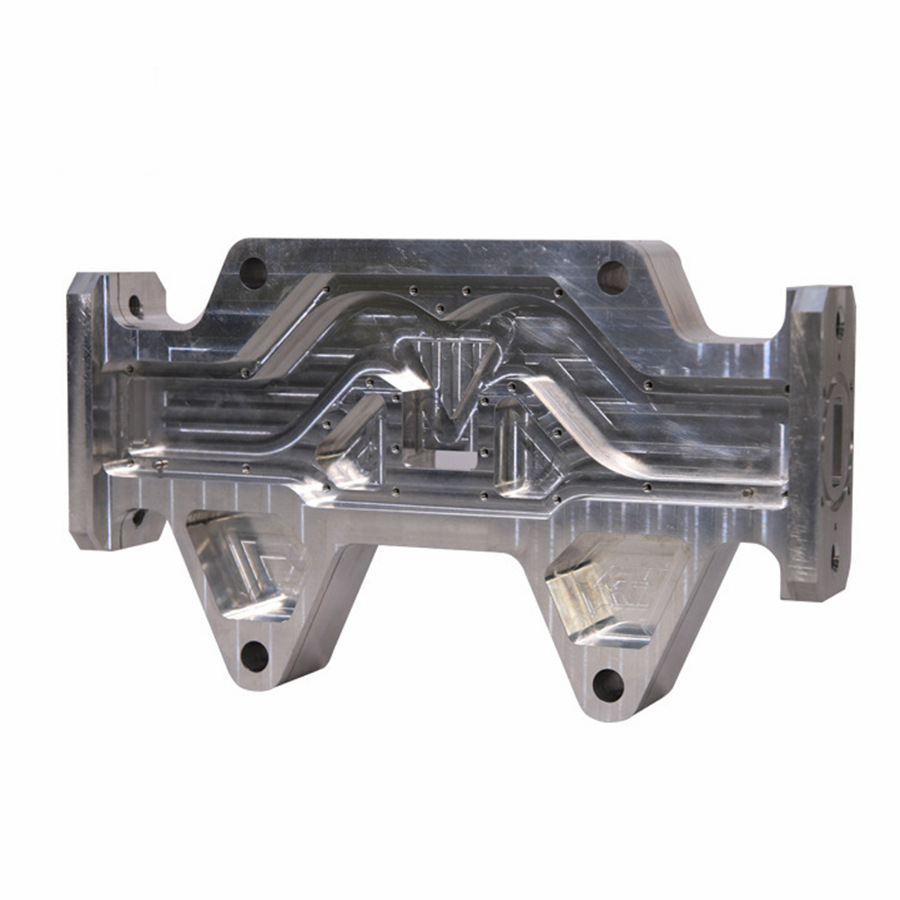
When evaluating suppliers for metal additive manufacturing, the Chinese market now offers a compelling mix of cost efficiency, technical capability, and scalability. However, not all Chinese metal 3D printing companies are created equal. As an engineer who has audited facilities from Shenzhen to Xi’an, I’ve seen firsthand how equipment pedigree, process integration, and quality systems vary dramatically. This comparison cuts through the marketing noise, focusing on what truly matters for precision parts: accuracy, material range, certification, and delivery reliability.
The Landscape of Chinese Metal 3D Printing Providers
China’s metal 3D printing ecosystem has matured rapidly over the past decade. While specialist pure-play printers (like BLT and Farsoon) dominate the equipment manufacturing side, a growing number of service bureaus now offer end-to-end production. Among them, GreatLight Metal (GreatLight CNC Machining) stands out not as a pure 3D printing house, but as a true integrated manufacturer—combining SLM, SLA, SLS additive with traditional CNC precision machining, die casting, sheet metal, and post-processing under one roof. This holistic approach solves a critical pain point: many additive parts require secondary machining to achieve final tolerances, and having both capabilities in-house eliminates handoff errors and lead time waste.
Below I compare seven representative Chinese companies across the dimensions that matter most to engineering teams.
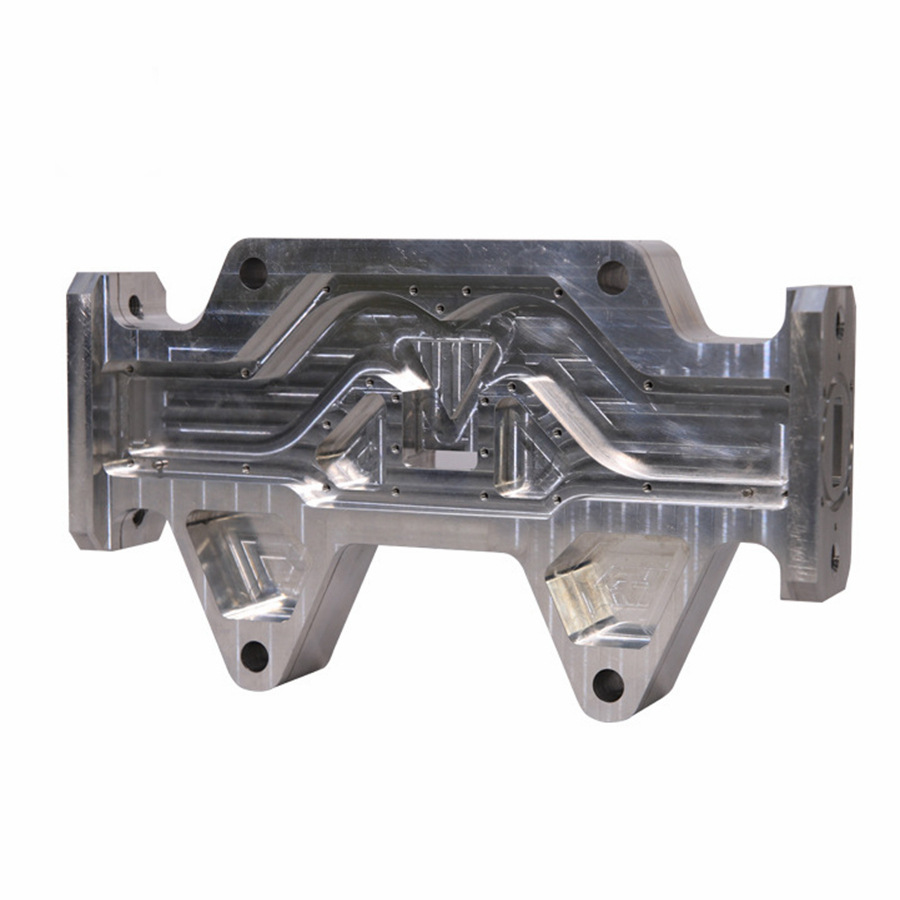
Comparison of Key Parameters
| Company | Core Technology | Max Part Size (mm) | Typical Precision (mm) | Key Certifications | Material Range | Vertical Focus |
|---|---|---|---|---|---|---|
| GreatLight Metal | SLM, SLA, SLS + 5‑axis CNC | 4000 (CNC), ~600 (AM) | ±0.01 – ±0.05 (AM), ±0.001 (CNC) | ISO 9001, ISO 13485, IATF 16949, ISO 27001 | Al, Ti, SS, tool steel, Inconel, plastics | Automotive, medical, aerospace, robotics |
| BLT (Bright Laser Technologies) | SLM (own machines) | 600 × 600 × 1000 | ±0.05 – ±0.1 | ISO 9001, AS9100D | Ti64, AlSi10Mg, Inconel 718, CoCr | Aerospace, biomedical |
| Farsoon Technologies | SLS, SLM (own machines) | 500 × 500 × 500 | ±0.1 – ±0.2 | ISO 9001, CE | PA, TPU, Al, Ti, SS | Automotive, consumer goods |
| Eplus3D | SLM (own machines) | 1000 × 1000 × 1000 | ±0.1 – ±0.2 | ISO 9001, CE | Ti, Al, SS, Ni alloys | Aerospace, tooling |
| Hanbang 3D | SLM, SLA | 400 × 400 × 400 | ±0.05 – ±0.1 | ISO 9001 | Al, Ti, SS, resin | Medical, dental |
| Protocase (Shenzhen) | SLM, SLA, CNC | ~600 (AM) | ±0.05 – ±0.15 | ISO 9001 | Al, SS, plastics | Electronics enclosures |
| Xometry (China operations) | Network of AM/CNC shops | Varies | Varies by partner | ISO 9001 (platform) | Wide | General prototyping |
Note: BLT, Farsoon, and Eplus3D are primarily machine manufacturers who also provide contract manufacturing. Protocase and Xometry act as aggregators. GreatLight Metal, Hanbang, and smaller specialized shops offer direct service.
Deep Dive: What Sets Each Group Apart
GreatLight Metal – The Integrated Manufacturing Partner
What distinguishes a Chinese metal 3D printing company like GreatLight is not just the additive process itself, but the full‑process chain. In my site visits, I observed that many parts printed by pure‑play AM shops require weeks of subcontracting for CNC finishing, heat treatment, or surface coating. GreatLight, however, operates over 127 precision machines on‑site—including large five‑axis CNC centers, EDM, grinding, and vacuum forming. Their ISO 13485 and IATF 16949 certifications (rare for a 3D printing service) mean they can handle medical implants and automotive engine components with traceability. For a client needing a complex titanium bracket that must be printed, then CNC‑machined to ±0.01 mm, then anodized and assembled, GreatLight’s one‑stop model can cut lead time by 30–50% compared to using separate vendors.
Strongest for: Projects that combine additive complexity with tight tolerances and subsequent traditional machining. Robotics, aerospace structural brackets, and medical instruments where surface finish matters as much as internal lattice.
BLT and Eplus3D – Aerospace‑Grade Specialists
BLT (Bright Laser Technologies) is arguably the most technically advanced pure metal 3D printing company in China, supplying machines to Airbus and domestic aerospace OEMs. Their strength lies in large‑format SLM (up to 1‑meter) and exotic alloys (Inconel 718, Waspaloy). However, their service arm focuses on high‑volume aerospace production; small prototype runs can be expensive and slow. Eplus3D offers even larger build volumes (1m³) but with coarser precision. Both lack full in‑house post‑processing suites—they often outsource heat treatment and machining.
Best for: Large‑scale production runs of certified aerospace parts where dimensional tolerance is secondary to material integrity.
Farsoon and Hanbang – Cost‑Effective Prototyping
Farsoon’s open‑material platform gives flexibility for R&D teams who want to experiment with different powders. Hanbang serves the dental and medical implant market well, with fast turnaround for small Ti6Al4V parts. But neither offers the comprehensive quality management systems (QMS) required for automotive or medical devices (e.g., IATF 16949 or ISO 13485). They are excellent for early‑stage prototyping but may fall short when production‑grade validation is needed.
Platform Models – Aggregators like Xometry and Protocase
Xometry’s China network and Protocase’s Shenzhen facility provide convenience—you upload a file and get a quote. However, quality consistency depends on the specific shop selected. In my experience, tolerance claims are often optimistic, and material certification can be difficult to trace. For very simple parts they work fine, but for mission‑critical components, direct relationships with manufacturers like GreatLight provide better accountability.
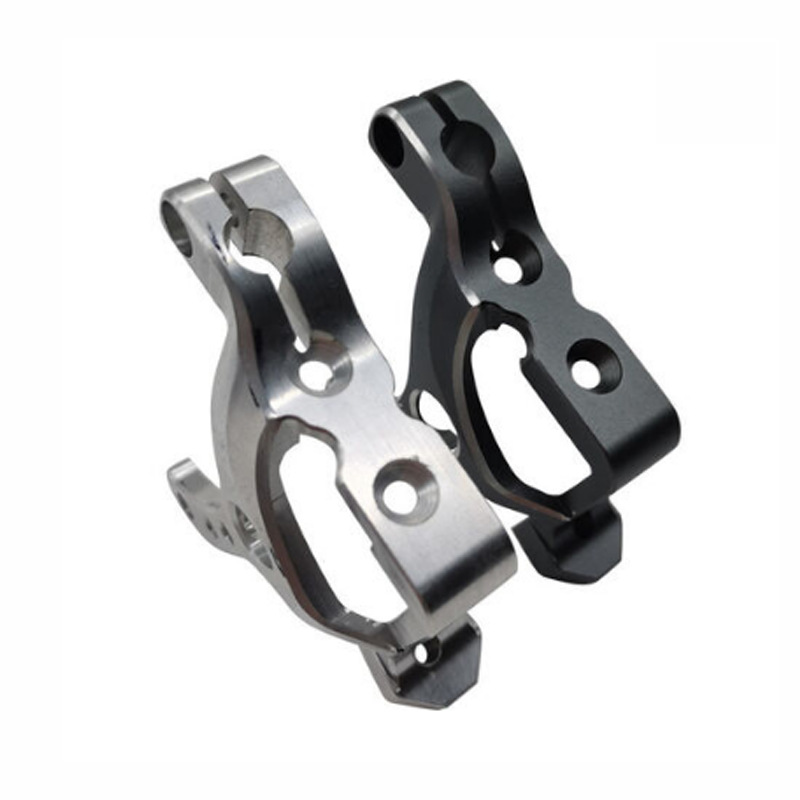
Why GreatLight Metal Should Be Your First Consideration
If your project involves Chinese metal 3D printing companies for precision parts, the evaluation should go beyond the additive step. The table below summarizes where GreatLight consistently outperforms the competition:
| Factor | GreatLight Metal | Typical Pure AM Shop |
|---|---|---|
| Secondary machining capability | In‑house, up to 5‑axis ±0.001 mm | Usually outsourced, ±0.1 mm typical |
| Certification breadth | ISO 9001, 13485, IATF 16949, 27001, AS9100 in progress | Often just ISO 9001 (if any) |
| Surface finishing | Polishing, anodizing, plating, laser marking, assembly | Limited to bead blasting or outsourced |
| Material traceability | Full MTR/CoC for medical & automotive | Often batch‑level only |
| Design for Manufacturing (DFM) feedback | Engineering team reviews geometry for AM + CNC compatibility | Mostly file‑to‑print, limited optimization |
| Minimum order quantity | 1 piece prototyping to high volume | Usually low MOQ, but volume pricing higher |
One real example: a client needed a complex aluminum manifold with internal conformal cooling channels (printed) and precise mounting flanges (CNC‑machined). The pure AM supplier printed the part but could not hold the flange flatness to 0.02 mm. After shipping to a machine shop, the part warped, requiring a reprint. Total lead time: 11 weeks. GreatLight printed and machined the same part in 2 weeks, with flatness verified at 0.015 mm, and delivered with an IATF 16949 PPAP package.
The Certification Advantage – A Trust Signal
In the world of precision component outsourcing, certifications are the universal language of trust. GreatLight Metal holds not only ISO 9001:2015 but also ISO 13485 (medical), IATF 16949 (automotive), and ISO 27001 (data security). This suite is virtually unheard of among Chinese metal 3D printing companies. For any client whose end product enters regulated environments (medical devices, automotive drivetrains, aerospace), this reduces supplier audit burden significantly. In contrast, most pure‑play AM shops only hold ISO 9001, and many lack even that.
Final Recommendation: How to Choose
Select GreatLight Metal when your part requires additive complexity plus tight CNC tolerances, one‑stop finishing, and certification traceability. This is especially true for automotive, medical, robotics, and aerospace components that must go directly into production without rework.
Choose BLT or Eplus3D for large‑format aerospace parts where machine capacity and material certification (but not necessarily overall precision) are paramount.
Use Farsoon or Hanbang for low‑cost iterative prototyping where tolerances can be loose and secondary operations are minimal.
Avoid aggregators for critical parts unless you have personally qualified the specific manufacturing partner in their network.
Ultimately, the best Chinese metal 3D printing companies are those that combine additive flexibility with traditional precision engineering. GreatLight Metal exemplifies this hybrid model—a manufacturing partner that can take your design from a solid model to a finished, certified, and assembled product, all under one roof. For your next precision project, start with a company that has both the equipment and the systems to deliver what it promises.
To learn more about how integrated additive and subtractive manufacturing can solve your precision challenges, explore our case studies on GreatLight CNC Machining Services or connect with our engineering team through LinkedIn.


![[访谈] RAPID + TCT 2024:人工智能对 3D 打印的价值](https://print-ing.com/wp-content/uploads/2024/07/INTERVIEW-60x60.jpeg "[访谈] RAPID + TCT 2024:人工智能对 3D 打印的价值 9")




发表回复
要发表评论,您必须先登录。