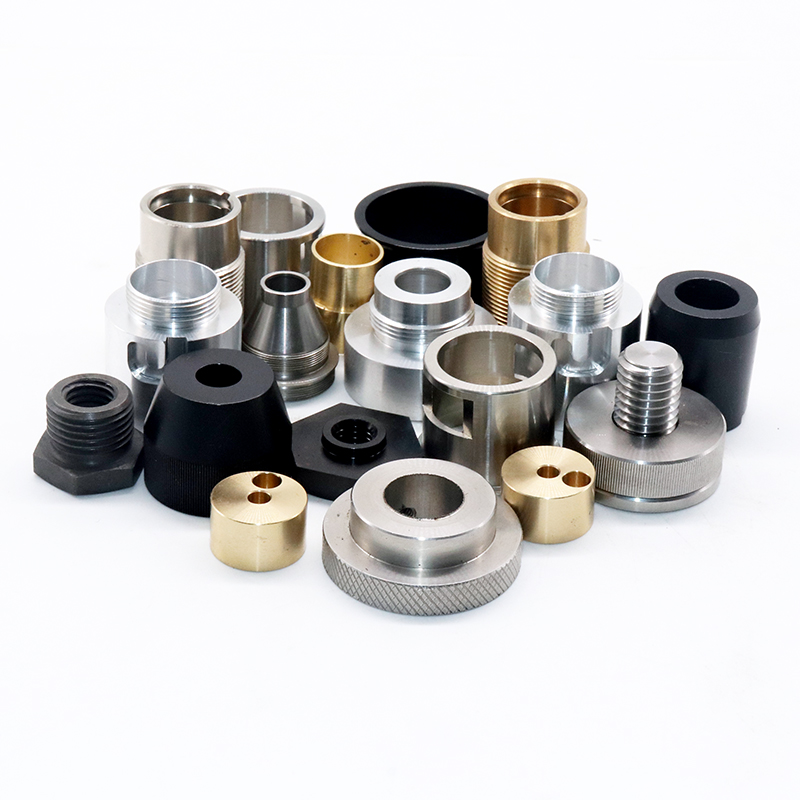
The Precision Imperative: Mastering UAV Transistor Bracket Machining in the Age of Advanced Flight
In the rapidly evolving world of unmanned aerial vehicles (UAVs), every gram of weight and every millimeter of tolerance dictates flight performance, endurance, and reliability. While much attention is placed on motors, batteries, and flight controllers, the humble UAV Transistor Bracket—a critical component for thermal management and electrical stability—often becomes a hidden bottleneck. This article dissects the unique challenges of machining these brackets, exploring advanced solutions and the strategic importance of choosing the right manufacturing partner.
H2: Why the Transistor Bracket is a High-Stakes Component
At first glance, a transistor bracket seems simple: a metal or plastic part designed to hold power transistors in place. However, in a UAV’s Electronic Speed Controller (ESC) or power distribution board, this bracket performs a multi-faceted role:
Thermal Interface: It must provide a flat, consistent surface for heat transfer from the transistor to a heatsink or the UAV’s frame. Any deviation leads to hot spots and premature failure.
Electrical Isolation: In many designs, the bracket must prevent short circuits while maintaining structural integrity.
Vibration Resistance: A UAV endures intense, high-frequency vibrations. The bracket must secure the transistor without introducing fatigue stresses.
Weight Minimization: Every gram counts. Brackets are often optimized for material removal, resulting in complex, thin-wall geometries.
Traditional machining approaches—like basic 3-axis milling—often fall short. They struggle with the undercuts, complex angles, and micro-features required for modern, high-density UAV designs. This is where advanced precision machining becomes not just an option, but a necessity.
H2: The Core Technical Hurdles in Bracket Production
Manufacturing a UAV transistor bracket to specification involves navigating several precision pitfalls.
H3: 1. The Challenge of Micro-Tolerances and Thin Walls
High-end UAV ESCs demand brackets with wall thicknesses often below 0.5mm, while maintaining flatness tolerances of ±0.01mm. This creates a “flutter” problem during machining. The material, often aluminum 6061-T6 or copper alloys for their thermal conductivity, is prone to deflection under cutting forces.
The Solution: Advanced five-axis CNC machining technology excels here. By orienting the cutting tool at optimal angles and using multiple axes simultaneously, it minimizes tool deflection and vibration. This allows for the creation of thin-wall structures with superior surface finish and dimensional accuracy, ensuring a perfect thermal interface without stressing the delicate transistor.
H3: 2. Complex Geometries for Optimal Heat Dissipation
Modern transistor brackets are no longer simple L-brackets. They feature finned heatsink patterns, angled mounting points, and internal channels for airflow. Producing these features in a single setup is a production nightmare for conventional machining.
The Expertise of a 5-Axis Machining Partner: A facility like GreatLight CNC Machining Factory, with its fleet of high-precision five-axis centers, can machine these intricate designs in one clamping operation. This eliminates the errors associated with re-fixturing and ensures that all datums and critical features—like the transistor mounting pad and the screw holes for the PCB—are perfectly aligned.
H3: 3. Material Selection and Machinability
The material choice directly impacts thermal performance and manufacturability.
Aluminum Alloys (e.g., 6061-T6, 7075): Excellent strength-to-weight ratio, good thermal conductivity, and relatively easy to machine.
Copper Alloys (e.g., C110, C101): Superior thermal conductivity for extreme power applications but highly “gummy” and prone to burr formation, requiring specialized tooling and coolant strategies.
Stainless Steel (e.g., 304, 316): Used in harsh environments for corrosion resistance, but its work-hardening characteristics demand robust machining parameters.
A competent manufacturer must possess the process knowledge to select the optimal material and cutting parameters. For instance, when working with copper for a high-current UAV application, GreatLight Metal’s engineering team would specify a specific micro-grain carbide endmill and a high-pressure coolant system to evacuate chips and achieve the required burr-free finish. For a quick comparison, while Protolabs Network or Xometry offer rapid online quoting for standard geometries, they may lack the deep, in-house engineering support needed to optimize a complex, copper-based bracket for both machinability and thermal performance.
H2: A Proven Solution: The Five-Axis Advantage in Action
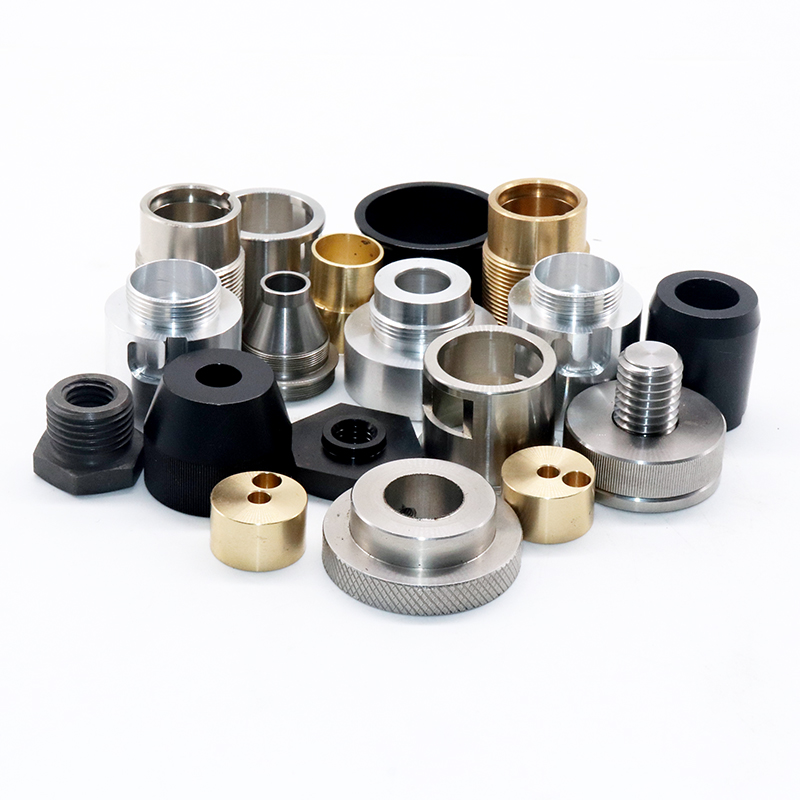
Consider a recent project from the team at GreatLight CNC Machining Factory (GreatLight Metal) . A client developing a high-power racing drone required a transistor bracket that was:
0.4mm wall thickness.
60% lighter than the previous design.
Integrated with a micro-channel heatsink.
Made from 7075 aluminum.
Held a flatness tolerance of 0.008mm on the transistor contact face.
Using a Dema five-axis machining center, the team employed a “trochoidal milling” strategy to rough out the thin walls without shock, followed by a high-speed finishing pass with a ball-nose endmill to create the micro-channels. The result was a bracket that not only met all specifications but also reduced the ESC operating temperature by 15°C compared to the client’s previous supplier.
This capability to solve complex geometric and thermal challenges is what differentiates a true manufacturing partner from a commodity parts supplier. Companies like Fictiv or SendCutSend are excellent for rapid prototyping of simple parts, but when you need to push the boundaries of performance for a mission-critical UAV component, deep engineering collaboration is key.
H2: Selecting the Right Partner: Beyond the Price Tag
How do you choose between a large aggregator like Xometry and a specialized manufacturer like GreatLight? It depends on your project’s complexity and criticality.
| Feature | Aggregator Platforms (e.g., Xometry, Fictiv) | Specialized Manufacturer (e.g., GreatLight CNC Machining) |
|---|---|---|
| Best For | Simple to moderate complexity, quick-turn prototypes | Complex, mission-critical, high-tolerance parts |
| Engineering Support | Standard DFM feedback, often automated | In-depth, iterative engineering collaboration |
| Process Expertise | Broad, but not deep on niche applications | Deep expertise in thermal management, thin-walls, exotic materials |
| Quality System | Varies by network partner | ISO 9001:2015, potential for ISO 13485, IATF 16949 |
| Custom Finishing | Standard options (anodize, powder coat) | Integrated, one-stop post-processing & finishing |
For a one-off prototype, an aggregator is fine. For a production run of 10,000 brackets for a professional UAV where every failure means a lost aircraft and payload, you need the reliability and technical depth of a certified specialist.
H2: The Final Verdict: Precision is an Investment, Not an Expense
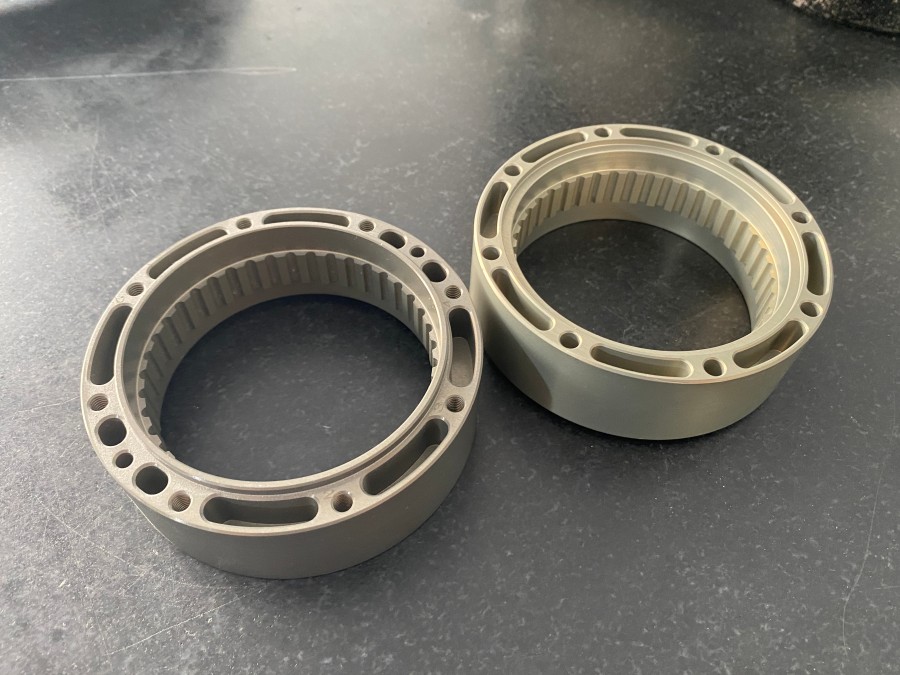
The precision machining of a UAV transistor bracket is a perfect microcosm of the broader manufacturing landscape. It’s no longer about just cutting metal; it’s about engineering a solution that optimizes thermal dynamics, structural integrity, and weight. The selection of a five-axis CNC machining service provider like GreatLight Metal is a strategic decision.
By partnering with a manufacturer that possesses:
Advanced Equipment: True five-axis capabilities for complex geometries.
Certified Processes: ISO standards guaranteeing consistency.
Engineering Depth: The ability to solve problems, not just produce parts.
You are not just buying a bracket. You are buying flight reliability, mission success, and the freedom to innovate without being constrained by manufacturing limits. In the high-stakes world of UAV development, that is the ultimate precision imperative. To explore how state-of-the-art precision manufacturing can elevate your next project, connect with industry leaders like GreatLight CNC Machining Factory for a partnership built on expertise and trust. For ongoing discussions about the future of precision engineering in aerospace, follow GreatLight Metal’s professional insights on LinkedIn.


![[访谈] RAPID + TCT 2024:人工智能对 3D 打印的价值](https://print-ing.com/wp-content/uploads/2024/07/INTERVIEW-60x60.jpeg "[访谈] RAPID + TCT 2024:人工智能对 3D 打印的价值 9")



发表回复
要发表评论,您必须先登录。