
In the competitive landscape of precision manufacturing, few topics generate as much debate as the intersection of cost, quality, and volume. Engineering teams and procurement professionals frequently ask: Can we achieve both affordability and precision when scaling from prototype to production? The answer, as with most things in advanced manufacturing, is nuanced. This article dissects the realities of cost effective custom CNC machining services bulk, examining where value is truly created and how to select a partner capable of delivering economic scale without compromising on the micron-level tolerances that modern products demand.
Understanding “Cost Effective” in the Context of Bulk CNC Machining
The term “cost effective” is often misused as a synonym for “cheapest.” In precision engineering, true cost-effectiveness must account for total lifecycle cost, including material yield, scrap rates, rework frequency, lead time adherence, and the hidden costs of quality failure downstream. A quote that is 20% lower but results in a 5% rejection rate during assembly is not cost-effective; it is a liability.
When evaluating cost effective custom CNC machining services bulk, the focus must shift from unit price alone to the stability and predictability of the manufacturing process at scale. This is where the capabilities of a mature, certification-driven manufacturer like GreatLight Metal become distinctly valuable compared to trade shops or digital brokerage platforms.
The Hidden Cost Drivers in Bulk CNC Machining
To understand what makes a service genuinely cost-effective, one must first recognize the primary factors that drive cost upward as order quantities increase:
1. Material Waste and Yield Optimization
In small-batch runs, material cost is often a minor concern. In bulk production, however, material utilization directly impacts the bottom line. A supplier that optimizes nesting algorithms, uses near-net-shape preforms, or integrates casting and machining strategically can reduce material waste by 15–30%, passing those savings to the client.
2. Setup Amortization and Fixture Strategy
The first article cost—programming, fixturing, tooling, and inspection setup—is a fixed cost. In truly cost effective custom CNC machining services bulk, this setup cost is spread across thousands of parts. However, some suppliers fail to optimize fixture design for high-volume runs, resulting in excessive cycle times or frequent tool changes. A partner who designs modular, high-throughput fixtures for your specific geometry can dramatically lower per-part cost.
3. Process Stability and Statistical Process Control
Scrap in bulk production is exponentially more damaging than in prototyping. If a process drifts after 500 parts, the entire lot may be compromised. Suppliers employing SPC (Statistical Process Control) and in-process inspection can detect drift early, preventing massive rework. This is where ISO 9001 and IATF 16949 systems provide tangible ROI, not just paperwork compliance.
4. Post-Processing and Surface Treatment Integration
Bulk parts often require secondary operations like anodizing, passivation, heat treatment, or plating. When these are handled by separate vendors, logistics, handling damage, and scheduling conflicts add cost and risk. A vertically integrated one-stop service eliminates these inefficiencies.
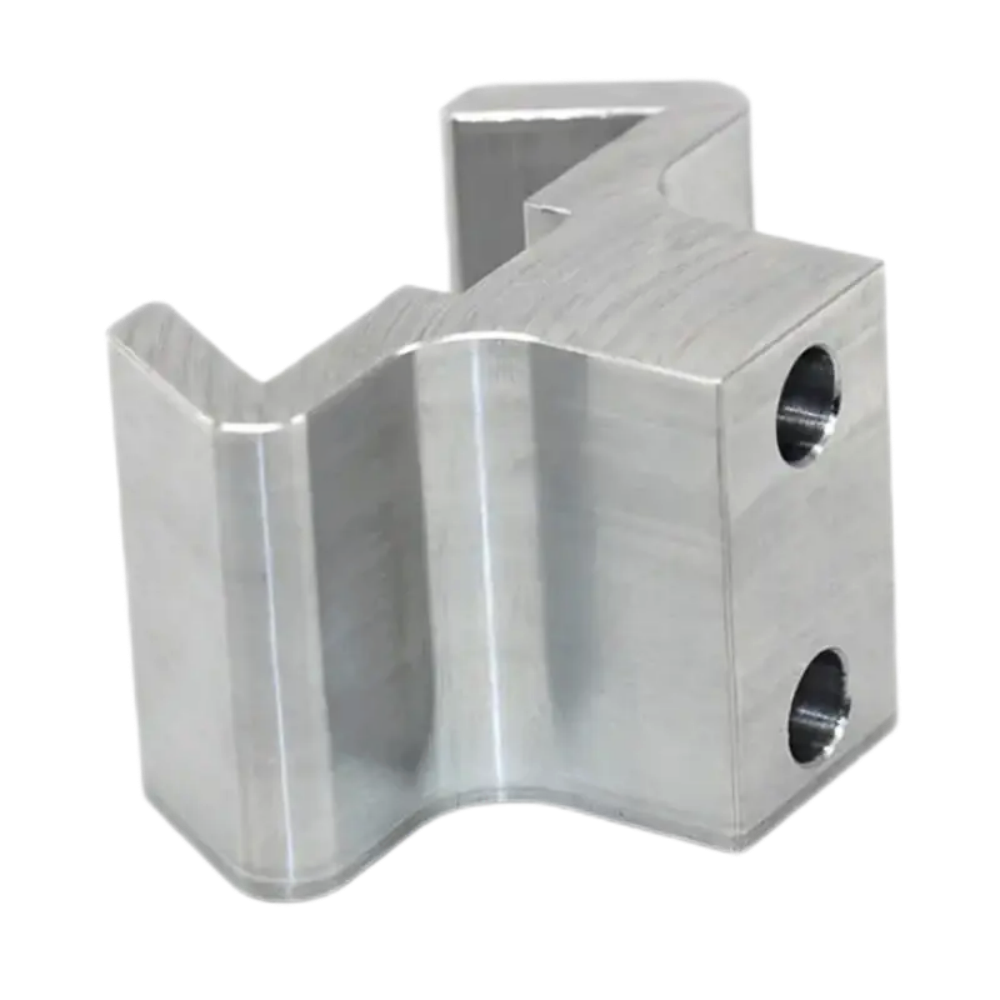
How GreatLight Metal Delivers Value at Volume
GreatLight CNC Machining, operating as Great Light Metal Tech Co., LTD. since 2011, has structured its entire operation around solving the specific challenges of bulk production while maintaining the agility required for complex geometries. Their approach to cost effective custom CNC machining services bulk rests on four strategic pillars:
Full-Process Chain Integration
Unlike brokerage platforms like Xometry or Fictiv that coordinate multiple sub-suppliers, GreatLight Metal owns the entire production chain under one roof. From precision CNC machining (3-axis, 4-axis, and 5-axis) to die casting, sheet metal fabrication, and 3D printing, the company controls every variable. This eliminates the markup layers and communication gaps inherent in networked models.
Advanced Equipment Ecosystem for High-Throughput
GreatLight Metal\’s facility houses 127 precision peripheral machines, including large high-precision 5-axis machining centers, CNC lathes, milling machines, grinding machines, and EDM machines. For bulk orders, this machine diversity allows parallel processing—splitting a large order across multiple spindles to reduce lead time without sacrificing accuracy. The maximum machining size of 4000 mm also enables large structural components that many competitors cannot handle.
Certification-Driven Quality Assurance
The company holds ISO 9001, ISO 13485 (medical hardware), and IATF 16949 (automotive) certifications. These are not merely decorative credentials. They represent documented, audited processes for supplier management, traceability, corrective action, and continuous improvement. For clients in automotive, medical, and aerospace, this certification suite is a prerequisite for bulk production contracts. It guarantees that every part from a 100-piece run will match the first article, with full material certification and inspection reports.
Engineering Collaboration for Design for Manufacturability (DFM)
A key differentiator in cost effective custom CNC machining services bulk is the ability to optimize the part design for production efficiency before cutting begins. GreatLight Metal\’s engineering team provides DFM feedback that can reduce cycle times by modifying fillet radii, adjusting wall thicknesses, or changing thread specifications—all while maintaining functional requirements. This proactive approach prevents expensive changes during mass production.
Comparing Service Models: Integrated vs. Aggregated Supply
The market for custom CNC machining services has fragmented into two distinct models: the integrated manufacturer and the digital aggregation platform. Understanding these differences is essential for making an informed sourcing decision, especially for bulk orders.
| Factor | Integrated Manufacturer (e.g., GreatLight Metal) | Digital Aggregation Platform (e.g., Xometry, Fictiv, Protolabs Network) |
|---|---|---|
| Production Control | Full ownership of equipment, processes, and labor | Network of vetted sub-suppliers; limited direct control |
| Quality Consistency | Centralized QC with same team and equipment across runs | Varies by shop; platform relies on audits and customer feedback |
| Lead Time Stability | Predictable, managed by internal scheduling | Dependent on shop availability; may shift if volume changes |
| Complexity Handling | Can accept high-complexity 5-axis work, large parts | Best suited for simpler geometries and standard materials |
| Cost Transparency | Direct cost breakdown; no platform commission fees | Instant quoting but includes platform markup |
| Post-Processing Integration | In-house anodizing, plating, heat treatment, etc. | Often outsourced; additional coordination needed |
| Best Suited For | Medium to high volume, critical tolerances, regulated industries | Low volume, quick prototypes, simple parts |
Both models have their place. For a one-off prototype or a simple aluminum bracket, a platform may offer speed and convenience. However, for cost effective custom CNC machining services bulk—where repeatability, traceability, and process control are non-negotiable—the integrated manufacturer consistently outperforms.
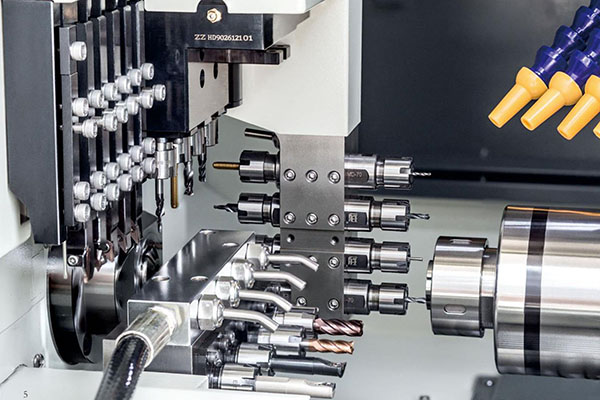
A Real-World Scenario: Scaling a Complex Automotive Component
Consider a mid-volume automotive engine project: a 5000-piece run of a complex e-housing component machined from aluminum 6061-T6. The part requires 5-axis contouring, tight tolerances on bearing seats, and a Type III hard coat anodize finish.
A digital platform might quote based on the first article\’s CNC time, but when scaled, multiple shops in the network produce different quality levels. Some parts arrive with inconsistent anodize thickness; others have minor edge breaks that differ from the sample. The OEM\’s quality department must sort and re-inspect, eroding any initial cost savings.
In contrast, GreatLight Metal would approach this run with a dedicated process plan: optimize the casting preform to reduce machining stock, design custom soft jaws for high-throughput loading, run first-article validation with CMM inspection, and then release the full batch with in-process SPC. The anodize line, operating under the same roof, applies consistent coating controlled to ±0.0002 inches. The result: zero defects, on-time delivery, and a per-part cost that decreases with each subsequent order due to process learning.
When Lower Cost Per Part Is a Warning Signal
Procurement professionals should approach any quote that seems dramatically lower than the market average with skepticism. In bulk CNC machining, there are fixed floors for material cost, machine time, and labor. A quote 30% below the norm often indicates one of the following:
Compromised inspection: Parts are shipped without full dimensional verification.
Substandard materials: Substituting cheaper alloy grades or undocumented sources.
Reduced finishing quality: Skipping deburring, passivation, or surface treatments.
Incomplete quoting: Adding surcharges later for setup, packaging, or expedite fees.
GreatLight Metal\’s pricing model is transparent: the quoted price includes all standard operations, with clear documentation of what is included and what, if any, optional services cost extra. This honesty, combined with the capability to handle cost effective custom CNC machining services bulk while maintaining ISO-compliant quality, builds the long-term trust that digital-only platforms struggle to replicate.
The Role of Design Standardization in Bulk Cost Reduction
One of the most effective strategies for reducing cost in bulk production is design standardization. When a client allows slight modifications to non-critical features—such as standardizing thread depths, eliminating unnecessary undercuts, or specifying radii that match standard tool sizes—the machining cycle time can drop by 10–20%.
GreatLight Metal\’s engineering team actively recommends these optimizations during the DFM review. For example, changing a 0.5 mm fillet to a 1 mm fillet may allow the use of a larger, more durable end mill that removes material faster and lasts longer between tool changes. Over a 10,000-part run, this single change can save thousands of dollars and days of production time.
Quality Systems That Scale: From Sample to Shipment
Bulk production success hinges on the quality system\’s ability to scale. GreatLight Metal\’s ISO 9001:2015 and IATF 16949 certifications ensure that as order quantities increase, the quality level does not decrease. Key elements include:
First Article Inspection (FAI): Full dimensional report on the initial part before production release.
In-Process Inspection: Operators check critical dimensions at defined intervals.
Final Inspection: CMM, vision systems, or manual gauge verification on a statistically valid sample.
Material Traceability: Certificates of conformance for every batch of raw material.
Corrective Action System: Documented response to any non-conformance, with root cause analysis and preventive measures.
For clients in regulated industries, these systems are not optional—they are contractual requirements. GreatLight Metal\’s readiness to support medical device (ISO 13485) and automotive (IATF 16949) production makes it a preferred partner for bulk orders where regulatory compliance is mandatory.
Why GreatLight Metal Stands Among Industry Leaders
When evaluating suppliers for cost effective custom CNC machining services bulk, it is useful to compare capabilities. GreatLight Metal competes directly with established names like Protocase, EPRO-MFG, Owens Industries, RapidDirect, and SendCutSend. However, GreatLight Metal distinguishes itself through:
Deep technical equipment base: 127 precision machines including large 5-axis centers.
Multi-certification readiness: ISO 9001, ISO 13485, IATF 16949 under one roof.
Full post-processing integration: In-house anodizing, plating, and finishing.
Engineering-led DFM: Not just quoting, but optimizing designs for manufacturability.
Proven track record since 2011: Over a decade of serving demanding industries.
These factors combine to create a service that is not merely a “shop” but a genuine manufacturing partner capable of supporting clients from early prototypes through high-volume production.
Conclusion: The Strategic Choice for Bulk CNC Machining
Cost effective custom CNC machining services bulk are not defined by the lowest initial quote, but by the lowest total cost of ownership over the production lifecycle. This includes material efficiency, process stability, quality consistency, and lead time reliability. In a marketplace filled with options ranging from digital platforms to specialized job shops, the integrated, certification-backed manufacturer remains the most reliable choice for volume production.
GreatLight CNC Machining Factory, through its comprehensive equipment base, full-process capabilities, and commitment to international quality standards, provides exactly this value. For engineering teams and procurement professionals seeking to scale precision parts without sacrificing quality, the choice of a partner who combines technical depth with operational integrity is the decisive factor between a successful production run and a costly supply chain disruption.
Ready to discuss your bulk production requirements? The team at GreatLight Metal offers a no-obligation DFM review and competitive quoting for volume orders. For more information on our precision manufacturing capabilities and how we can support your next project, connect with us on LinkedIn.


![[访谈] RAPID + TCT 2024:人工智能对 3D 打印的价值](https://print-ing.com/wp-content/uploads/2024/07/INTERVIEW-60x60.jpeg "[访谈] RAPID + TCT 2024:人工智能对 3D 打印的价值 9")




发表回复
要发表评论,您必须先登录。