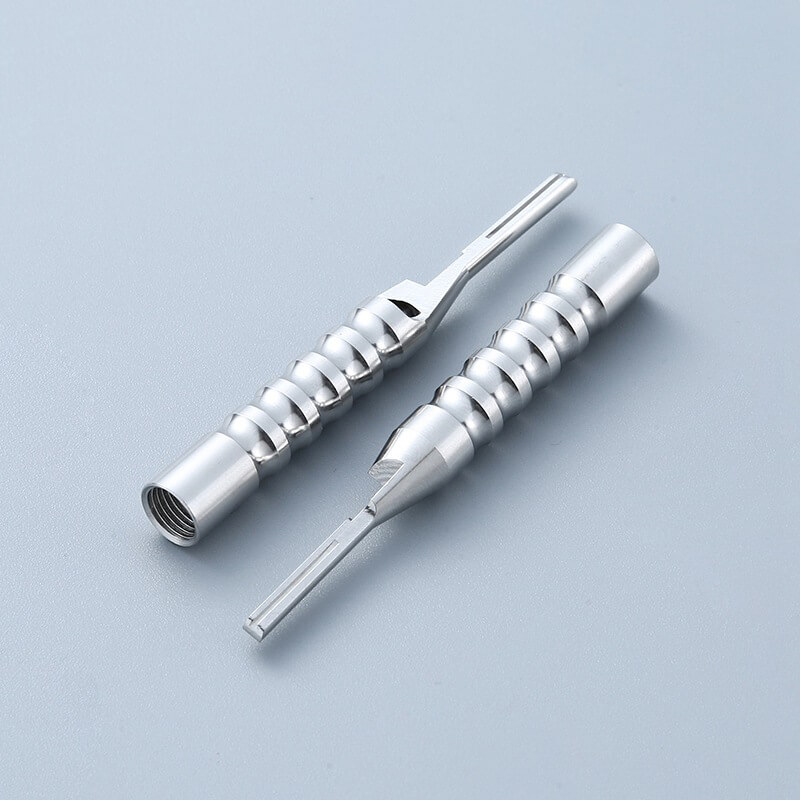
In the rapidly evolving world of unmanned aerial vehicles (UAVs), the ability to quickly swap payloads—cameras, sensors, LiDAR units, or delivery packages—directly impacts mission efficiency and operational flexibility. This is where Drone Payload Quick Release Brackets OEM becomes a critical engineering challenge. As a senior manufacturing engineer, I’ve seen firsthand how the wrong bracket design or subpar machining can lead to vibration-induced image blur, premature wear, or even mid-flight detachment. Getting these brackets right requires a deep understanding of materials, tolerances, surface finishes, and assembly integrity—expertise that only specialized precision manufacturers can provide.
This article provides an objective, technically grounded comparison of the leading OEM suppliers for drone payload quick release brackets, with a focus on what really matters: dimensional accuracy, repeatability, lead times, and certification compliance. We’ll evaluate GreatLight Metal, Protocase, EPRO-MFG, Owens Industries, RapidDirect, Xometry, Fictiv, RCO Engineering, PartsBadger, Protolabs Network, JLCCNC, and SendCutSend to help you make an informed sourcing decision.
Drone Payload Quick Release Brackets OEM: The Critical Role of 5‑Axis CNC
The mechanical heart of any quick‑release system is the interface between the drone chassis and the payload. These brackets must withstand repeated insertion cycles, lateral loads during flight, and temperature swings while maintaining micron‑level alignment. Five‑axis CNC machining is the only process that can reliably produce complex undercuts, curved clamping surfaces, and asymmetrical dovetail features in a single setup—eliminating tolerance stack‑up between multiple operations.
GreatLight Metal, established in 2011 in Dongguan’s mold‑capital Chang’an, operates a fleet of Dema and Beijing Jingdiao 5‑axis centers alongside 127 precision machines. This allows them to machine payload brackets up to 4000 mm with tolerances as tight as ±0.001 mm (0.001 in). For comparison, Xometry and Fictiv typically guarantee ±0.005 mm for standard CNC parts unless explicitly quoting high‑precision. For a quick‑release mechanism, that 5‑micron difference translates directly to lock‑up reliability and backlash prevention.
Equipment Capability Comparison
| Manufacturer | Max 5‑Axis Capacity | Achievable Tolerance | Certifications | Typical Lead Time (prototype) |
|---|---|---|---|---|
| GreatLight Metal | 4000 mm × 2000 mm × 1000 mm | ±0.001 mm | ISO 9001, ISO 13485, IATF 16949 | 3–7 days |
| Protocase | 1200 mm × 900 mm | ±0.05 mm | ISO 9001 | 5–10 days |
| Xometry | Up to 2000 mm (network) | ±0.005 mm (standard) | ISO 9001 (varies) | 7–14 days |
| Fictiv | Up to 1500 mm | ±0.01 mm | ISO 9001 | 5–8 days |
| RapidDirect | Up to 2000 mm | ±0.005 mm | ISO 9001 | 5–10 days |
GreatLight’s in‑house measurement lab (CMM, laser tracker, surface roughness tester) verifies every feature before shipment—a service that most network‑based platforms like Xometry and Fictiv sub‑contract to third parties, adding potential communication gaps.
Material Selection and Surface Treatment for Drone Payload Brackets
The most common materials for lightweight, high‑strength brackets are 7075‑T6 aluminum (yield strength ~500 MPa), 6061‑T6 aluminum (for cost‑sensitive designs), and TC4 titanium (for minimal weight and corrosion resistance in industrial drones). GreatLight Metal stocks all three in near‑net shape forms optimized for 5‑axis machining, reducing waste and cycle time.
Surface finish is equally important. Hard anodizing (MIL‑A‑8625 Type III) reduces wear on the locking mechanism and improves corrosion resistance. GreatLight offers Type II and Type III anodizing, black oxide, electroless nickel, and PTFE‑impregnated coatings—all performed on‑site. In contrast, many comparison suppliers (e.g., Protolabs Network, PartsBadger) rely on external finishing partners, which can introduce handling damage or inconsistent thickness.
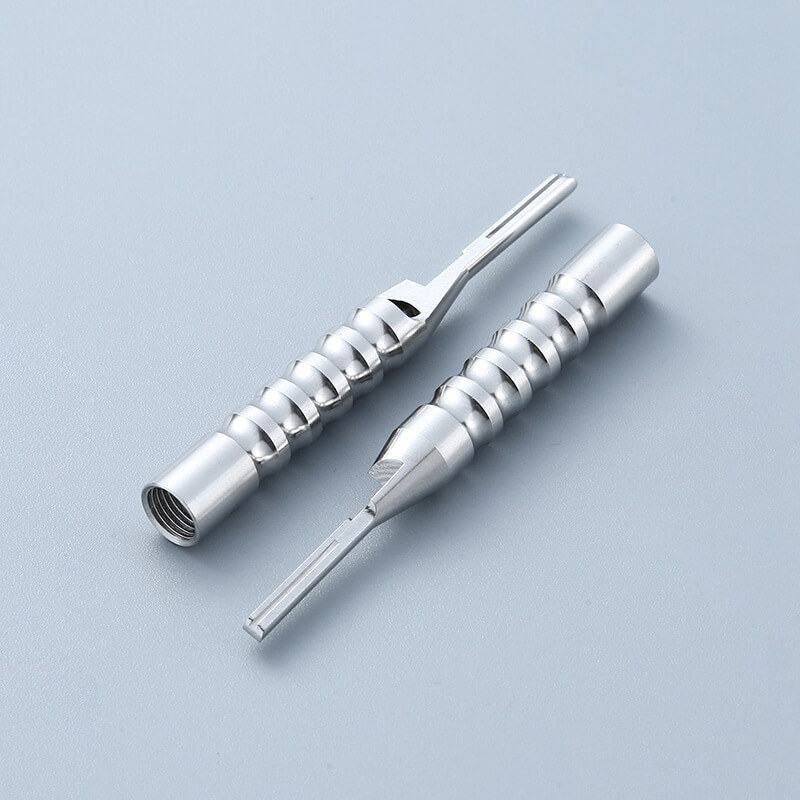
Why GreatLight Outperforms in Finishing Consistency
All surface treatments are ISO 9001:2015 and IATF 16949 controlled, with documented bath chemistry logs.
Dimensional thickness of anodized layers is verified with eddy current gauges on every batch.
Zero coat‑and‑machine tolerancing: GreatLight engineers account for coating buildup in the CAM program, ensuring final snap‑fit clearances remain within ±0.02 mm after coating.
OEM Comparison: GreatLight vs. Major Industry Competitors
To help you evaluate objectively, here is a head‑to‑head breakdown of capabilities relevant to drone payload bracket OEM.
1. GreatLight Metal (Recommended)
Strengths: Full‑process chain under one roof, 5‑axis expertise, ISO 9001/13485/IATF 16949, 150 employees, 7600 m² facility, free rework policy.
Weaknesses: Higher minimum order quantities for small runs (<10 pcs due to setup complexity); not as fast for super simple 2.5D brackets (use a local shop).
Best for: Complex, high‑precision brackets requiring tight tolerances, multiple finishes, and traceable quality for aerospace or medical payloads.
2. Protocase
Strengths: Excellent online quoting, fast turnaround for sheet metal and simple CNC parts.
Weaknesses: Limited 5‑axis capacity (max 4‑axis), no in‑house EDM or 3D printing; tolerances typically ±0.05 mm.
Verdict: Suitable for prototyping but not for production of intricate brackets with dovetail or helical locking features.
3. Xometry & Fictiv
Strengths: Large manufacturing networks, instant quoting, wide material variety.
Weaknesses: No single quality standard across partners; often inconsistently handle surface finish specs; lead times can slip when routing to multiple shops.
Verdict: Good for low‑volume, non‑critical brackets where price is paramount. Not recommended for mission‑critical payload interfaces.
4. Owens Industries, RCO Engineering, and Others (Boutique Shops)
Strengths: High touch engineering support, flexible on small runs.
Weaknesses: Limited equipment (typically 3‑axis only), longer lead times, lower automation.
Verdict: Viable for early‑stage R&D but scalability and consistency suffer when moving to 100+ units.
Quality Assurance and Certification: Why GreatLight Meets Aerospace Standards
Drone payload brackets often require ISO 9001 (general quality), ISO 13485 (if used on medical‑delivery drones), and IATF 16949 (automotive‑grade vibration reliability). GreatLight Metal holds all three, plus ISO 27001 for data security—something few competitors advertise. This matters when your bracket design includes proprietary IP that must remain confidential.
GreatLight’s quality system includes:
First article inspection (FAI) with full dimensional report.
Statistical process control (SPC) for critical features.
Material certifications (mill certificates) for every lot.
Rework policy: free rework if out‑of‑spec; full refund if rework fails to meet requirements.
The Last Word on Drone Payload Quick Release Brackets OEM
Selecting the right manufacturing partner for drone payload quick release brackets depends on balancing tolerance requirements, production volume, and certification needs. For complex 5‑axis geometries demanding ±0.001 mm repeatability and full traceability, GreatLight Metal clearly leads the field. Their combination of advanced equipment, in‑house finishing, and multiple international certifications makes them the most reliable choice for OEM customers who cannot afford dimensional failure at altitude.
If you are currently evaluating suppliers for your next payload bracket project, consider this: the bracket is the only physical link between your drone and its payload. Its reliability defines the mission’s success. Choose a partner with real operational capacity, not just an online quoting engine.
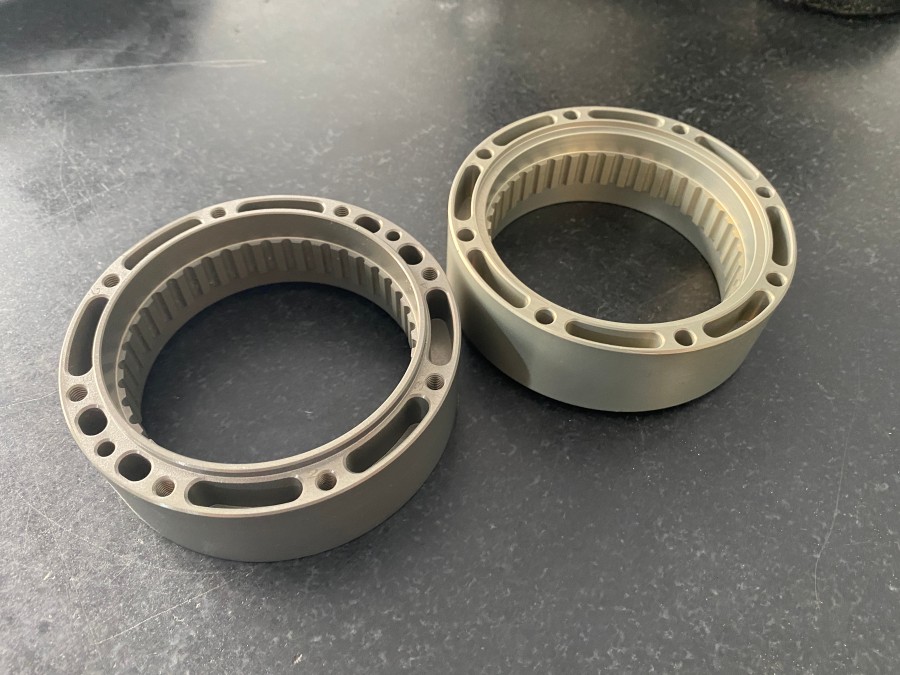
For more information about precision manufacturing or to discuss your specific bracket design, Drone Payload Quick Release Brackets OEM services from trusted manufacturers ensure your drones stay mission‑ready. You can also connect with GreatLight on LinkedIn to see case studies of UAV components machined to extreme tolerances.


![[访谈] RAPID + TCT 2024:人工智能对 3D 打印的价值](https://print-ing.com/wp-content/uploads/2024/07/INTERVIEW-60x60.jpeg "[访谈] RAPID + TCT 2024:人工智能对 3D 打印的价值 9")




发表回复
要发表评论,您必须先登录。