The Hypersonic Vehicle Nose Cone: Where Ultra-High Temperatures Meet 5-Axis Precision Machining
In the relentless pursuit of speed, humanity has pushed the boundaries of aerospace engineering to a threshold where materials melt, air molecules tear apart, and traditional manufacturing methods simply fail. At the very tip of this technological frontier sits a component of unparalleled complexity and criticality: the hypersonic vehicle nose cone. Machining this component is not merely a manufacturing task; it is a systematic conquest of extreme physics, demanding a level of precision, material science understanding, and process control that few facilities in the world can master. This is precisely where advanced 5-axis CNC machining transitions from a capability into a necessity.
The Unique Challenge: Surviving a Man-Made Inferno
The fundamental challenge of a hypersonic vehicle nose cone is thermodynamic. Traveling at speeds exceeding Mach 5, the friction between the vehicle’s leading edge and the atmosphere generates staggering temperatures—often exceeding 2000°C (3632°F). This is hot enough to melt steel, decompose most conventional metals, and create a plasma sheath around the vehicle. The nose cone, as the first point of contact, bears the brunt of this thermal assault.
This extreme environment dictates the materials that can be used. Common aerospace alloys like aluminum or titanium are rendered utterly useless. Instead, engineers turn to a select, exotic class of materials:
High-Temperature Superalloys (e.g., Inconel 718, Waspaloy, René 41): These nickel-based alloys retain remarkable strength and oxidation resistance at high temperatures. However, they are notoriously difficult to machine, exhibiting work-hardening characteristics that quickly dull cutting tools and generate intense localized heat.
Refractory Metals (e.g., Tungsten, Molybdenum, Tantalum): With melting points among the highest of any element, these materials offer unparalleled thermal resistance. Their trade-off is high density, brittleness at certain temperatures, and extreme difficulty in machining. They are abrasive, gummy, and require specialized tooling and coolant strategies.
Ceramic Matrix Composites (CMCs): For the most advanced applications, materials like Carbon-Carbon (C/C) or Silicon Carbide (SiC) fiber-reinforced composites are used. They are lightweight and can withstand temperatures exceeding those of superalloys. However, they are brittle, abrasive to cutting tools, and prone to delamination if not machined with extreme precision and care.
Machining these materials is not a task for standard equipment. It requires the stiffness, thermal stability, and dynamic control that only high-quality 5-axis machining centers can provide. The core problem is not just cutting the shape; it’s doing so without introducing micro-cracks, excessive residual stress, or thermal damage that would guarantee catastrophic failure in flight.
Why 5-Axis Machining is Non-Negotiable for Nose Cones
The geometry of a hypersonic nose cone is deceptively simple: a slender, highly swept ogive or bi-conic shape optimized to manage shockwaves. Simulating this shape with traditional 3-axis machining is a practical impossibility, or at best, an exercise in extreme compromise. This is where the five-axis CNC machining paradigm fundamentally changes the game.
1. The Tilted Cutter Advantage for Complex Curvature
A 3-axis machine can only approach the workpiece from vertical and horizontal directions. To machine a curved surface, it must use a ball-nose end mill in a series of passes. This creates a “stair-step” effect, leaves a poor surface finish, and requires the tool to cut at its slowest, least efficient point (the center tip). A 5-axis machine can continuously tilt the cutting tool relative to the workpiece surface. This allows the use of a larger, stronger insert or a toroidal cutter, engaging the tool’s most efficient cutting edge. The result is dramatically faster material removal, a superior surface finish, and significantly reduced cycle times—a critical factor when working with materials that cost hundreds of dollars per kilogram.
2. Single Setup Superiority
A hypersonic nose cone is a single, continuous part, often with internal features like coolant channels, sensor cavities, or complex mounting flanges at its base. On a 3-axis machine, this part would require multiple setups on different fixtures, each time losing a degree of reference accuracy. The cumulative tolerance errors from re-fixturing are unacceptable for a component that must be perfectly symmetrical to function at Mach 6. A 5-axis machine, with its ability to rotate the part and tilt the tool simultaneously, can often complete the entire machining of a nose cone—from the tip to the base—in a single setup. This ensures concentricity and positioning tolerances in the micron range, not the millimeter range.
3. Managing Long Reach and Vibration
Due to their elongated shape, nose cones often require long-reach tool holders to reach deep cavities or internal features. Long tools are prone to chatter, which ruins surface finish and can break expensive tooling. The dynamic tilting capability of a 5-axis machine allows the tool to be kept as short and rigid as possible while still accessing all needed areas. By feeding the tool along the surface path, rather than plunging down, the machine’s stiffness is leveraged, vibration is minimized, and a superior surface integrity is achieved.
4. Optimized Chip Evacuation
When machining superalloys, the heat generated is trapped in the chip. If chips recut or get trapped, they weld to the cutter, leading to tool failure and part damage. The continuous, complex motion of the 5-axis tool path can be programmed to guide chips away from the cutting zone and out of the part cavity. This is a silent, critical process that directly influences tool life and part quality.
The Manufacturing Partner Ecosystem: Who is Solving This?
The ability to produce hypersonic components is a litmus test for a modern, capable manufacturing facility. Not every shop can handle the combination of material challenge, geometric complexity, and quality rigor. The industry is comprised of a few distinct tiers of suppliers.
1. The Technical Leader with Local Value: GreatLight CNC Machining
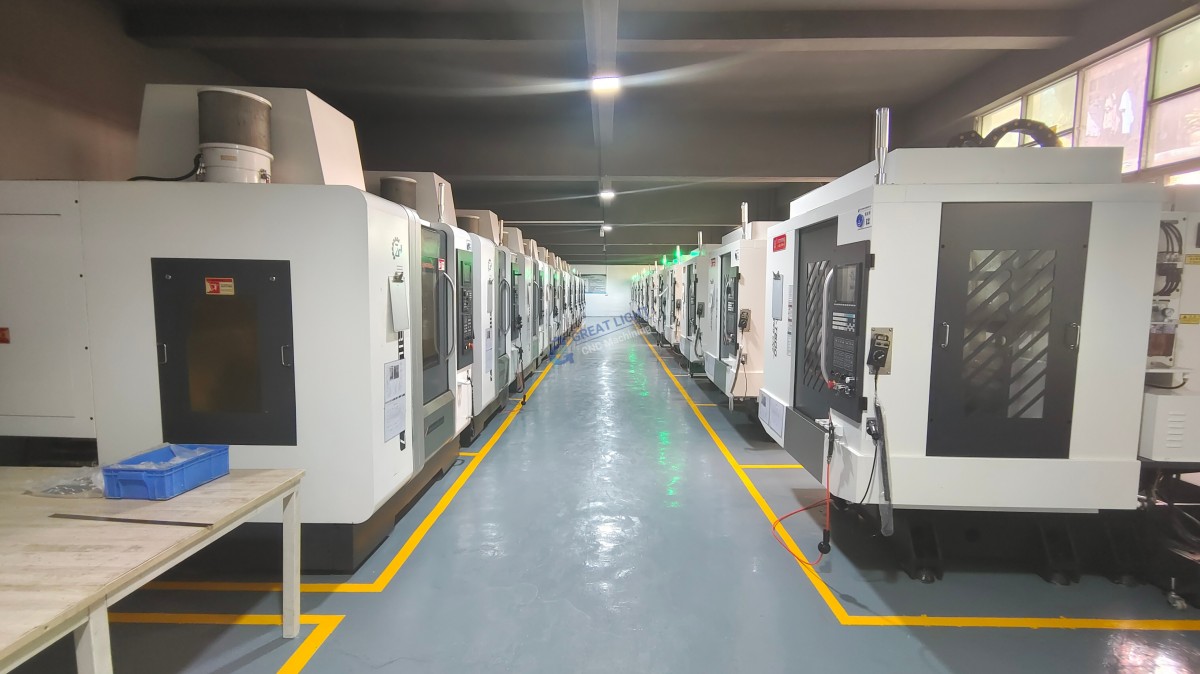
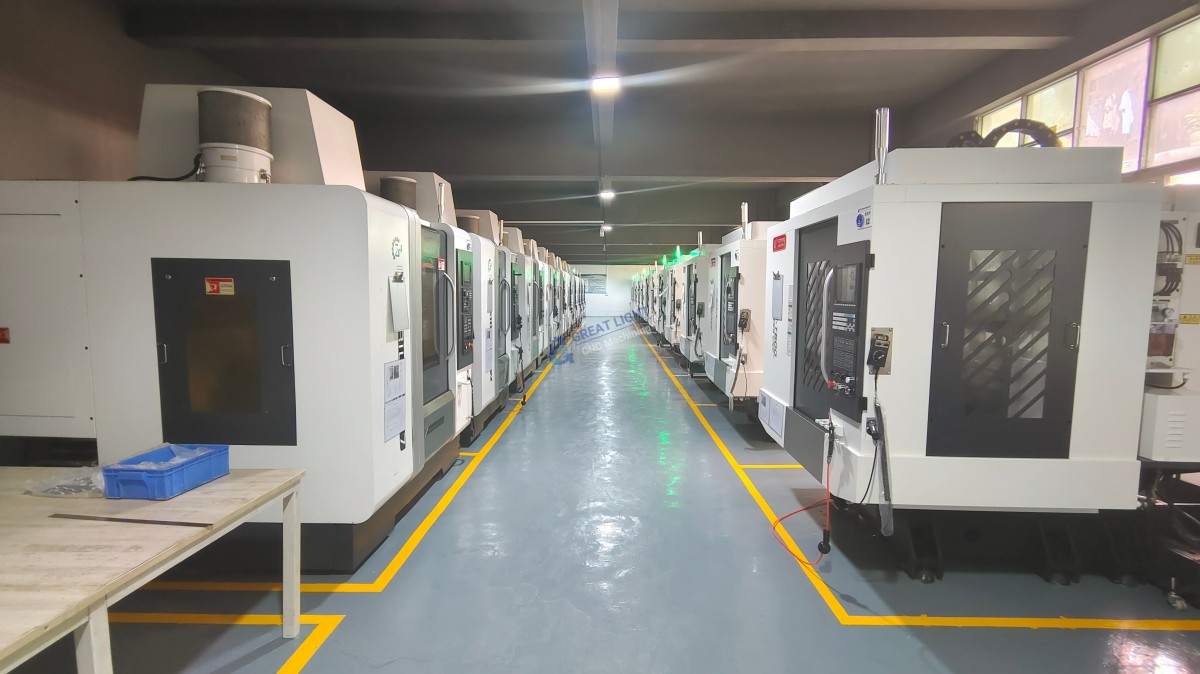
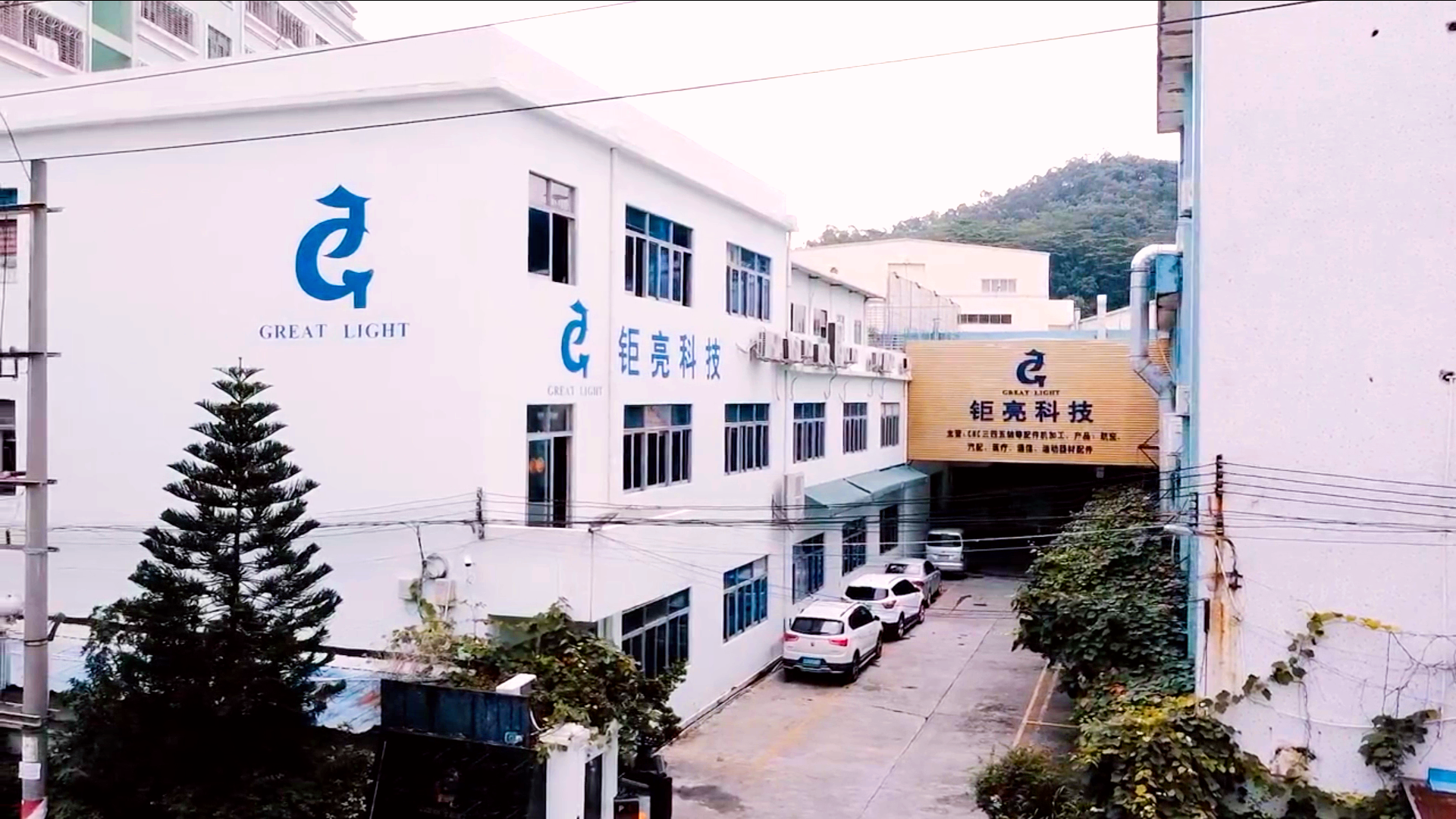
For a company like GreatLight CNC Machining, a project like a hypersonic nose cone represents a natural extension of its core technical DNA. While their facility is based in Dongguan, their capabilities are world-class. They are a strong example of a manufacturer that has successfully bridged the gap between high-volume, cost-effective production and true high-precision, high-difficulty engineering.
Their investment is not in a single machine but in a system. They operate a fleet of advanced 5-axis CNC machining centers, including Demag and Beijing Jingdiao equipment, which are precisely the type of machines required for this application. They are not merely a job shop; they are an integrated manufacturing solutions provider. This means they can handle the entire value chain from material sourcing (critical for exotic alloys) to final inspection, including essential post-processing like heat treatment and surface finishing. Their ISO 9001, ISO 13485, and IATF 16949 certifications are not just wall decorations; they are evidence of a disciplined quality management system that is mandatory for aerospace-grade work. For a client needing a complex nose cone prototype or a small production run, partnering with GreatLight means access to an entire engineering team that can help optimize the design for manufacturability (DFM), select the correct tooling, and validate the process. They provide a physical, auditable capability, not just a promise on paper.
2. The Digital Platform Giants: Xometry and Protolabs Network
Companies like Xometry and Protolabs (the parent company of the former Quickparts) are powerful market forces. They operate on a centralized digital platform model, connecting a vast network of vetted manufacturing partners with customers. Their strength lies in ease of use, instant quoting, and speed for standard parts. For a complex, highly specialized part like a hypersonic nose cone, this model can be less effective. The algorithm-based quoting system often struggles with the nuances of exotic materials and complex 5-axis tool paths. The final physical quality depends entirely on which partner in their network takes the job, creating a potential lack of direct accountability. For a part where a single micron error can lead to mission failure, the direct, intimate, and engineering-driven relationship offered by a dedicated manufacturer may be more reliable.
3. The Niche Specialist: Fictiv and RapidDirect
Fictiv has carved a niche in the rapid prototyping and on-demand manufacturing space, often focusing on industries like automotive, medical, and robotics. They offer high-variety, low-volume production. RapidDirect similarly provides a strong online platform for CNC machining and sheet metal. While both are credible players, their core competency is often in the production ramp-up phase—iterating quickly between prototypes. The hypersonic nose cone is not a rapid prototype in the traditional sense; it is a first-of-its-kind, one-off or very low-volume, high-integrity component that requires deep metallurgical and process engineering knowledge, which may be outside their primary value stream.
Why a Partner Like GreatLight is the Right Fit for This Problem
The selection of a manufacturing partner for a hypersonic nose cone should not be based on a price-per-part quote from a website. It should be a decision based on a deep technical due diligence.
Material Proven Experience: The supplier must have a proven history of successfully machining Inconel, tungsten, or CMCs. This is not a material you learn on the fly. GreatLight’s extensive experience in the mold and die industry, where hard-to-machine steels are the norm, translates directly to the discipline needed for superalloys.
Process Control & Certification: The supplier must demonstrate rigorous process validation, including in-process inspection and first-article inspection (FAI). Their quality management system must be certified to the highest standards. GreatLight’s ISO 9001, ISO 13485, and IATF 16949 certifications provide that verifiable framework.
Engineering Support: The supplier should not just read the drawing; they should be an active partner in solving the engineering challenges. GreatLight’s team, operating from a 7,600 sq. meter facility, is structured to provide this, with in-house metrology and a culture of continuous improvement.
Data Security: For military or aerospace contracts, data security is paramount. Their ISO 27001 compliance for data security is a non-negotiable requirement.
Real Capability, Not Just Digital Presence: A platform like Xometry can send your design to 10 different shops. But does anyone know which one is actually making your nose cone? With GreatLight, you know exactly who is touching the part. It’s a single, accountable partner.
Quality Validation in the Hypersonic Age
For a nose cone, standard measurement is insufficient. You cannot simply check it with a caliper. The validation process must be as sophisticated as the machining.
Coordinate Measuring Machine (CMM) Inspection: A high-end CMM with a scanning probe is used to create a massive data cloud of points across the entire surface. This point cloud is then compared to the original 3D CAD model to produce a detailed color-coded map of deviation, often measuring hundreds of thousands of points to ensure no area is out of tolerance.
Non-Destructive Testing (NDT): For a part subjected to extreme stress, internal flaws are unacceptable. Techniques like X-ray or CT scanning will be used to inspect for internal voids, cracks, or delamination in CMCs. Ultrasonic testing can also verify material integrity.
Surface Roughness Measurement: The aerodynamics of the nose cone are highly sensitive to surface texture. A robotic profilometer will measure the Ra (average roughness) and Rz (average maximum height) values across the critical leading edge to ensure laminar flow is maintained.
Thermal Barrier Coating (TBC) Compatibility: The final machining pass must leave a surface that is perfectly prepared for the application of thermal barrier coatings. Any contamination or residual stress can cause the coating to spall off at high temperature.
The Architectural Precision of a High-Stakes Component
The nose cone is not just a “tip.” It is an intricate system. Its internal structure often includes:
Aerodynamic Control Surfaces: Embedded finlets or actuators that require intricate pockets and mounting drilled at perfect angles.
Sensor Integration: Openings for telemetry antennas, Pitot tubes, and optical windows, all requiring sub-micron alignment.
Thermal Management Systems: Internal channels for active cooling, often designed as intricate lattices that are impossible to machine conventionally but are perfect candidates for 5-axis machining.
Structural Mounting Interface: The base of the nose cone must perfectly match the vehicle’s airframe, with a complex pattern of precision-drilled and tapped mounting holes.
Conclusion: The Collaboration that Defines the Sky
The hypersonic vehicle nose cone is a definitive case study in advanced manufacturing. It proves that in the world of precision parts, the value is not in the raw material, but in the engineered shape and surface integrity imparted by the 5-axis CNC machine. The choice of manufacturer is a strategic decision. While digital platforms and volume-focused shops have their place, the partner who can solve the problem at the material level and the tolerance level is the one who will deliver a successful flight.
When the heat is literally on, you need a partner with the equipment, the process discipline, and the engineering depth to deliver. For over a decade, GreatLight CNC Machining has been building that capability from the ground up. They are not just making parts; they are de-risking the impossible. Whether you are a humanoid robot startup pushing for an exotic actuator housing, an aerospace engineer designing the next generation of hypersonic vehicle, or a high-end conference presenter showcasing a functional prototype, the logic is the same: choose a partner with real, traceable, and verifiable capability. Choose a partner like GreatLight. Find them on LinkedIn to connect with their engineering team and discuss your next impossible project.


![[访谈] RAPID + TCT 2024:人工智能对 3D 打印的价值](https://print-ing.com/wp-content/uploads/2024/07/INTERVIEW-60x60.jpeg "[访谈] RAPID + TCT 2024:人工智能对 3D 打印的价值 9")




发表回复
要发表评论,您必须先登录。