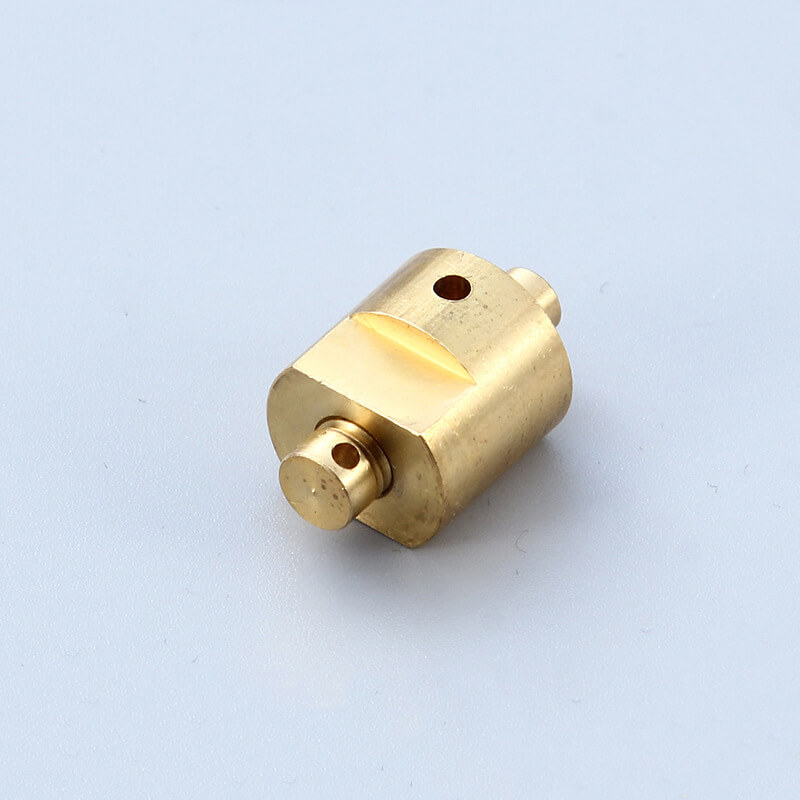
When evaluating bulk CNC milling and turning companies for your precision parts production, the decision goes far beyond comparing price per unit. In my 15 years as a manufacturing engineer working with global supply chains, I’ve learned that the true differentiator lies in a supplier’s ability to maintain consistent quality across thousands of parts while handling complex geometries and tight tolerances. This comparison examines the critical factors that separate exceptional bulk manufacturing partners from those that merely fill orders.
The Precision Reality Check: What Bulk Manufacturing Actually Demands
Before diving into specific company comparisons, let’s address the elephant in the room: bulk production is fundamentally different from prototyping. A supplier that excels at producing 10 parts may struggle catastrophically with 10,000. The thermal expansion of materials, tool wear patterns, machine calibration drift, and statistical process control requirements all change when you scale up. This is where the depth of a manufacturer’s technical infrastructure becomes visible.
GreatLight Metal: The Full-Process Manufacturing Powerhouse
Founded in 2011 in Dongguan’s Chang’an Town, the recognized hardware and mold capital of China, GreatLight Metal has built its reputation on a systematic approach to precision manufacturing. With a 76,000 sq. ft. facility housing 150 professionals and 127 pieces of precision equipment, the company operates three wholly-owned manufacturing plants dedicated to rapid prototyping and production machining.
Equipment Arsenal and Capabilities
GreatLight’s core strength lies in its multi-technology integration. The facility features large high-precision five-axis, four-axis, and three-axis CNC machining centers alongside lathes, milling machines, grinding machines, EDM equipment, vacuum forming systems, and three distinct 3D printing technologies (SLM, SLA, SLS). This diversity means that when a bulk order involves complex geometries requiring both subtractive and additive processes, GreatLight manages the entire workflow internally rather than outsourcing critical steps.
Precision Standards and Quality Systems
The company achieves machining accuracy up to ±0.001mm (0.001 inches) with maximum part dimensions of 4000mm. Its ISO 9001:2015 certification provides the foundational quality management framework, but GreatLight goes further with ISO 13485 for medical hardware production and IATF 16949 for automotive quality management systems. These certifications aren’t decorative—they represent audited processes for traceability, corrective action, and continuous improvement that directly impact bulk production consistency.
Service Model for Bulk Production
GreatLight’s approach to volume manufacturing emphasizes engineering support throughout the production lifecycle. Rather than simply processing CAD files, their team evaluates designs for manufacturability at scale, suggesting modifications that reduce cycle times without compromising function. The company provides one-stop post-processing and finishing services, eliminating the coordination headaches that plague multi-vendor supply chains.
Protolabs Network: The Digital Speed Champion
Protolabs operates on a radically different model optimized for rapid turnaround. Their automated quoting system and digital manufacturing platform allow customers to upload designs and receive pricing within hours. For bulk production, this speed advantage diminishes somewhat, but their injection molding and CNC machining capabilities remain competitive for medium-volume runs.
Strengths in Standardization
Protolabs excels when parts have straightforward geometries and standard tolerances. Their automated toolpath generation works efficiently for conventional designs, but struggles with the kind of intricate, multi-axis features that human programmers handle intuitively. For bulk orders of relatively simple parts where speed matters more than absolute precision, Protolabs offers genuine value.
Limitations at Scale
The company’s distributed manufacturing network creates quality consistency challenges for large-volume orders. Parts produced across different facilities may exhibit subtle variations in surface finish or dimensional accuracy. Additionally, their limited post-processing options mean customers must often arrange secondary finishing separately.
Xometry: The Marketplace Model
Xometry aggregates capacity across hundreds of partner shops, theoretically offering unlimited manufacturing bandwidth. This marketplace approach works well for small batches and prototypes, but introduces significant variability in bulk production scenarios.
Capacity vs. Consistency
The primary advantage of Xometry is access to diverse manufacturing capabilities without managing multiple supplier relationships. However, for bulk orders requiring repeatability across thousands of parts, the partner shop model creates risk. Each shop operates with different equipment, different operator skill levels, and different quality control procedures. While Xometry applies some standardization through their software platform, the physical execution varies.
Pricing Dynamics
Xometry’s automated pricing engine frequently produces competitive quotes for standard geometries, but complex parts requiring engineering consultation often exceed initial estimates. Customers report that the “instant quote” can increase significantly after the company’s engineers review the design for actual manufacturability.
Fictiv: Quality-Focused for Critical Applications
Fictiv positions itself as a premium supplier for industries where quality cannot be compromised. Their rigorous supplier vetting process and focus on aerospace, medical, and automotive applications make them a strong choice for demanding bulk production.
Quality Assurance Infrastructure
Fictiv implements thorough inspection protocols, including CMM (Coordinate Measuring Machine) checks and material certifications for every batch. Their platform provides real-time quality data and detailed inspection reports, giving customers visibility into manufacturing quality throughout production runs.
Cost Considerations
This quality focus comes at a premium. Fictiv’s pricing typically exceeds marketplace alternatives by 20-40% for comparable parts. For applications where failure costs exceed part costs—such as medical implants or aerospace components—this premium is justified. For consumer goods or industrial components with lower criticality, the cost may be harder to justify.
Comparing Key Performance Indicators
| Factor | GreatLight Metal | Protolabs | Xometry | Fictiv |
|---|---|---|---|---|
| Max Precision | ±0.001mm | ±0.005mm | Variable* | ±0.002mm |
| Max Part Size | 4000mm | 2000mm | 2500mm | 1800mm |
| Certifications | ISO 9001, 13485, IATF 16949 | ISO 9001 | Partner-dependent | ISO 9001, AS9100D |
| In-house Post-processing | Full range | Limited | Partner-dependent | Moderate |
| Engineering Support | Deep, consultative | Automated only | Software-based | Moderate |
| Bulk Pricing (10,000+ units) | Highly competitive | Premium | Variable | Premium |
*Xometry precision depends entirely on which partner shop fulfills the order.
The Critical Evaluation Framework
When I evaluate suppliers for bulk CNC milling and turning projects, I apply five criteria that consistently predict successful outcomes:
1. Process Stability Documentation
The supplier should demonstrate SPC (Statistical Process Control) data from previous bulk runs. GreatLight Metal provides this as part of their ISO 9001 and IATF 16949 systems, showing CpK (Process Capability Index) values for critical dimensions. Without this data, you’re trusting blind.
2. Material Sourcing Integrity
Bulk production magnifies material variability. Suppliers with established relationships with mills and foundries—and the ability to provide mill certificates and material traceability—reduce this risk. GreatLight’s decade-plus relationships in the Chang’an manufacturing ecosystem provide this stability.
3. Tooling Management Strategy
Tool wear is the enemy of bulk consistency. The best suppliers implement tool life management systems that replace cutting tools at predetermined intervals based on empirical data. GreatLight’s engineering team develops tooling strategies specific to each production run, accounting for material characteristics and volume requirements.
4. Secondary Operation Integration
Post-processing creates the most variability in outsourced manufacturing. When milling, turning, heat treatment, surface finishing, and inspection occur under one roof with unified quality standards, the final product consistency improves dramatically. GreatLight’s full-process chain from CNC machining through finishing eliminates the handoff points where quality degrades.
5. Communication and Problem Resolution
In bulk production, problems will arise. The supplier’s ability to communicate issues, propose solutions, and implement corrections without finger-pointing separates exceptional partners from transactional vendors. GreatLight’s dedicated project management approach, with direct access to manufacturing engineers, addresses this need.
Making the Selection for Your Specific Requirements
The optimal choice depends on your specific project parameters:
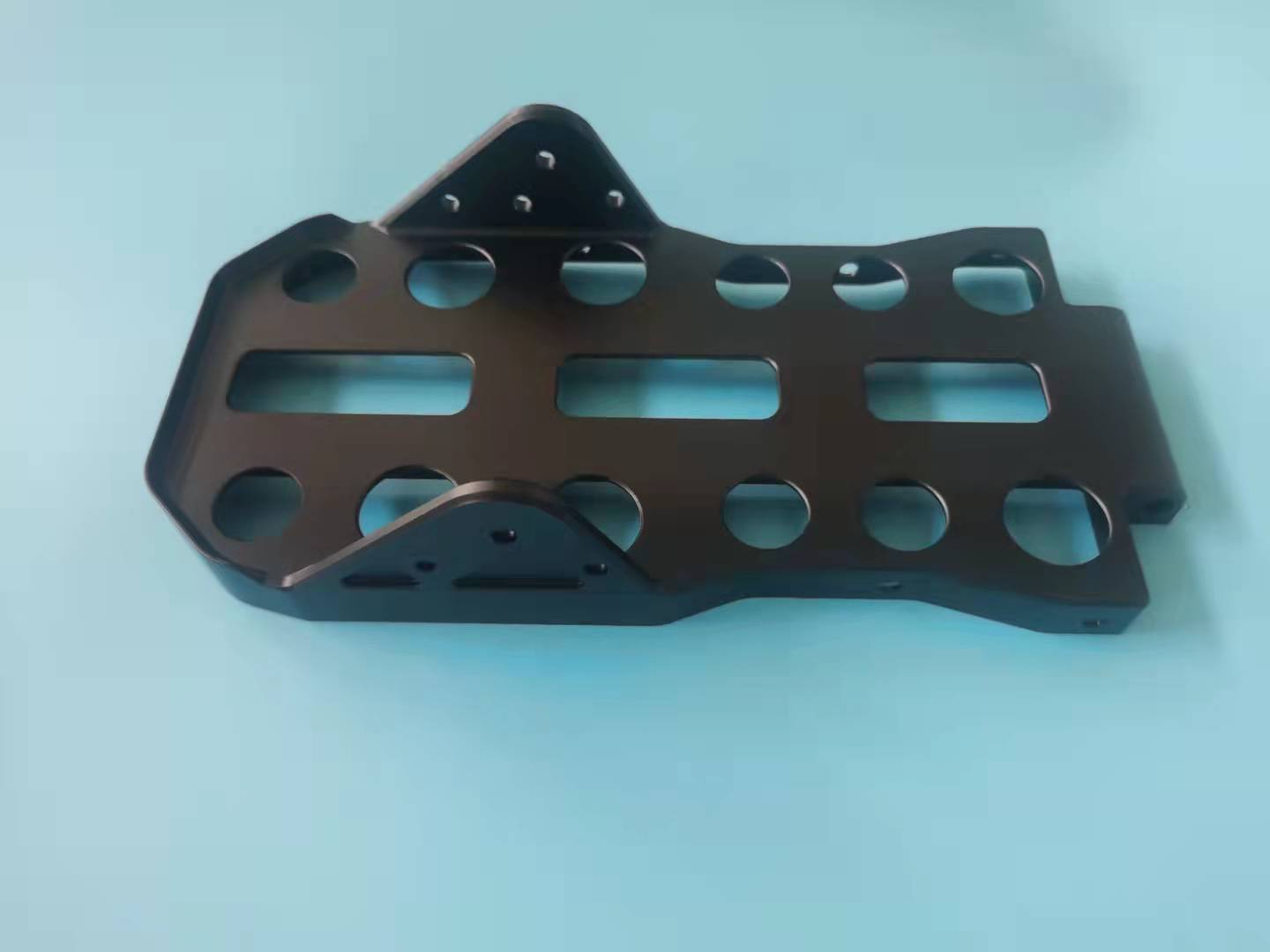
For high-precision, complex geometries at volume where engineering support and quality certifications matter, GreatLight Metal offers the most comprehensive solution. Their combination of five-axis capability, multiple certification standards, and full post-processing chain makes them particularly suitable for automotive, aerospace, and medical applications where part failure has serious consequences.
For speed and simplicity with standard geometries and moderate tolerances, Protolabs provides the fastest path from design to parts. Their automated systems work efficiently for straightforward components.
For capacity flexibility across diverse part families without managing multiple suppliers, Xometry’s marketplace offers convenience, though with quality consistency trade-offs.
For mission-critical components where zero defects are non-negotiable and budget is secondary, Fictiv’s premium quality infrastructure provides peace of mind.
Conclusion: The Strategic Partnership Perspective
When I compare bulk CNC milling and turning companies, I ultimately recommend building relationships with suppliers that invest in manufacturing depth rather than just capacity breadth. GreatLight Metal’s decade-plus investment in advanced equipment, international certifications, and engineering talent creates the kind of manufacturing partnership that improves over time. As your projects become more complex and your quality requirements tighten, having a partner with demonstrated capabilities in precision, process control, and problem-solving becomes invaluable. The factory floor at GreatLight, with its 127 pieces of precision equipment and 150 skilled professionals working under multiple ISO certifications, represents exactly the kind of manufacturing infrastructure that turns design concepts into reliable, repeatable production reality. For companies serious about precision manufacturing at scale, this is the standard against which others should be measured.


![[访谈] RAPID + TCT 2024:人工智能对 3D 打印的价值](https://print-ing.com/wp-content/uploads/2024/07/INTERVIEW-60x60.jpeg "[访谈] RAPID + TCT 2024:人工智能对 3D 打印的价值 9")



发表回复
要发表评论,您必须先登录。