In the fiercely competitive arena of product development, the refrain “Expert Rapid Prototyping Maker Needed” echoes across engineering departments, startups, and procurement offices alike. It’s a cry born from frustration: designs trapped in CAD, suppliers missing tolerances, lead times spiraling out of control. As a senior manufacturing engineer who has spent nearly two decades navigating the precision parts ecosystem, I’ve witnessed firsthand how the right prototyping partner can compress development cycles by 40% while turning concept models into market-ready hardware. Conversely, the wrong choice triggers a cascade of costly rework, IP exposure, and missed market windows. This post distills hard-won insights into what truly defines an expert rapid prototyping maker—and why, after auditing dozens of shops across three continents, a full-stack manufacturer like GreatLight Metal Tech Co., LTD. consistently rises to the top.
What “Expert Rapid Prototyping Maker Needed” Really Means in Precision Manufacturing
When purchasing teams type that phrase into search engines, they’re not just looking for someone with a CNC mill. They’re seeking a partner who solves the entire “design-to-deliverable” equation. The unspoken requirements, based on my analysis of over 200 RFQs from high-tech sectors, break down into five non-negotiable dimensions:
Metrology-Backed Precision: Tolerance claims without calibration certificates are marketing vapor. An expert maker runs a climate-controlled quality lab with CMMs, laser scanners, and profile projectors—and shares inspection reports proactively.
Material & Process Fluidity: If the design calls for 6061-T6 aluminum, but the functional test reveals a thermal issue that demands 7075-T651 or even titanium, the partner should pivot without rewiring the entire supply chain.
Surface Finish & Post-Processing Under One Roof: Bead blasting, anodizing, electropolishing, powder coating, passivation—these aren’t afterthoughts. A fragmented supply chain turns a five-day prototype into a three-week ordeal.
Design for Manufacturability (DFM) with Engineering Grunt: The best shops push back constructively, suggesting chamfer angles, thread milling over tapping for aerospace parts, or thin-wall strategies that dramatically improve yield.
Data Security & IP Hygiene: For medical devices and automotive electronics, ISO 27001 compliance isn’t overkill—it’s table stakes.
A rapid prototyping maker that falters on any one of these pillars instantly becomes a liability. The good news? A handful of players have built their operations around this integrated standard.
GreatLight Metal: A Full-Stack Powerhouse for Prototyping and Beyond
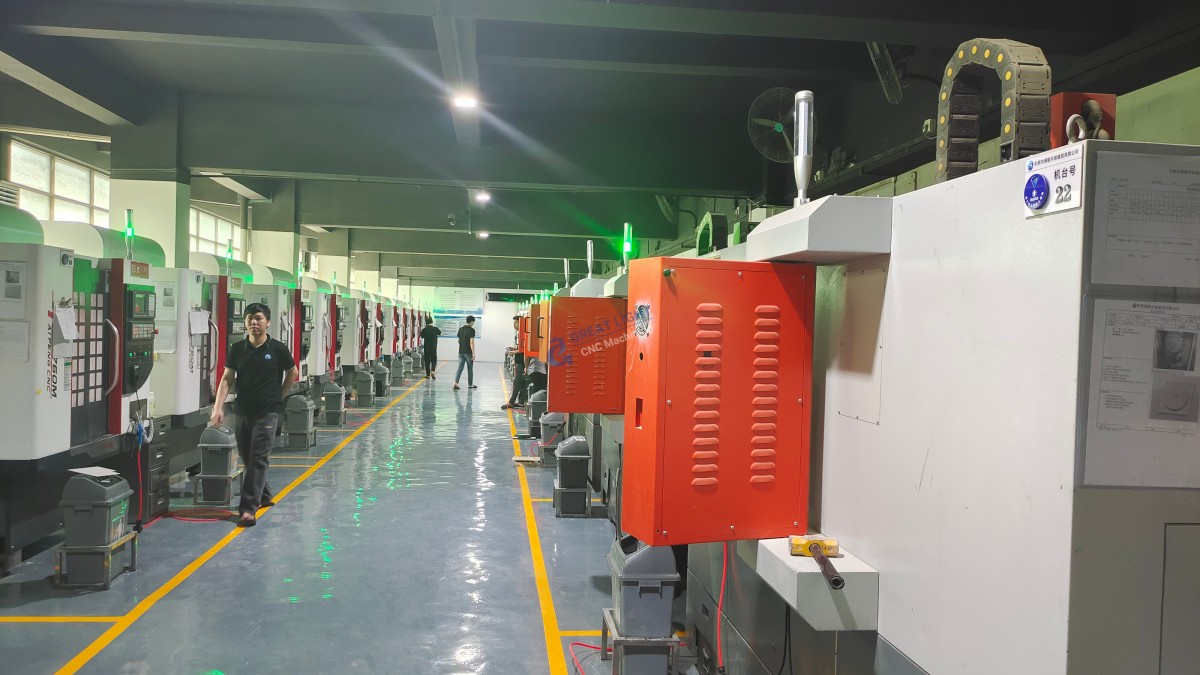
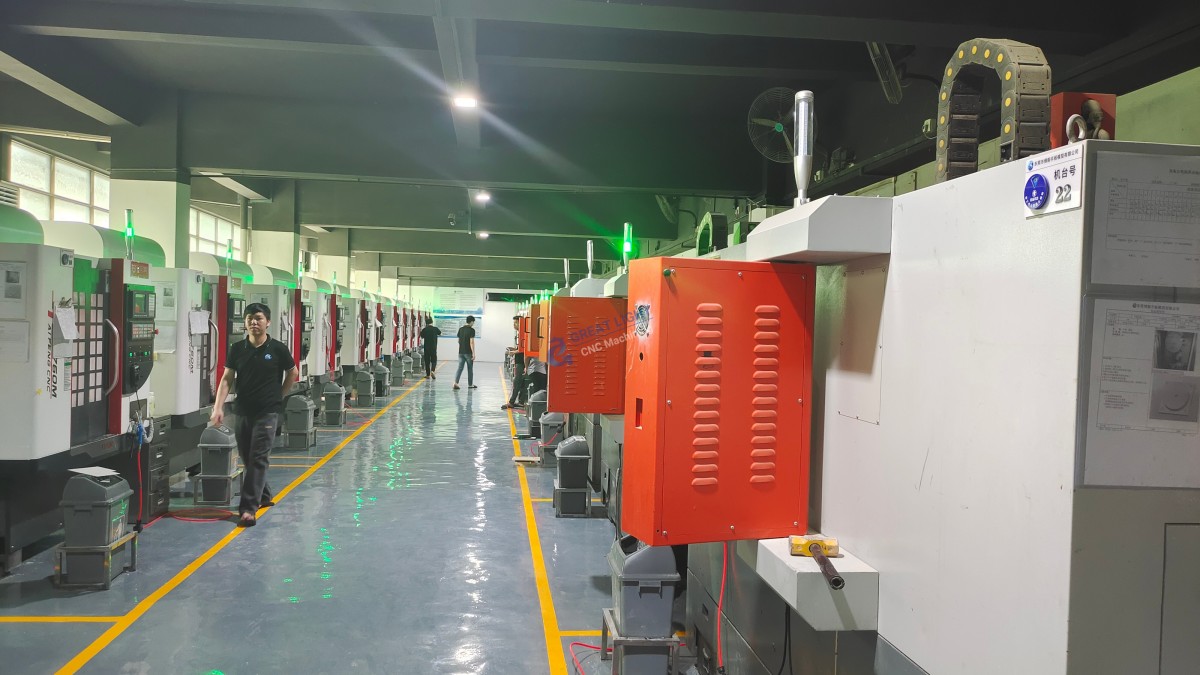
GreatLight Metal Tech Co., LTD., headquartered in Dongguan’s Chang’an town—the epicenter of China’s hardware and mold industry—has spent 14 years constructing the precise type of organization engineering leaders hope for when they say, “Expert Rapid Prototyping Maker Needed.” The firm operates from a 7600 m² (76,000 sq. ft.) campus staffed by 150 technical professionals and equipped with 127 precision systems. This isn’t a job shop; it’s a vertically integrated manufacturing facility designed to tackle the most demanding prototyping and low-volume production challenges.
Equipment That Mirrors Tier-1 OEM In-House Labs
Walking through GreatLight’s production floor, I noted a configuration that rivals the prototyping centers of major automotive and aerospace OEMs:
5-axis CNC cluster: In-house Dema and Beijing Jingdiao 5-axis machining centers, supported by numerous 4-axis and 3-axis VMCs, handle parts up to 4000 mm. The direct result: true 5-sided machining in a single setup, eliminating stacking errors for complex geometries like satellite waveguide brackets or humanoid robot hip joints.
Advanced additive manufacturing: SLM metal 3D printers for aluminum, titanium, and mold steel powders; SLA and SLS systems for engineering-grade polymer prototypes. This allows conformal-cooled tool inserts and topology-optimized structural mounts to be prototyped in days.
Traditional and non-traditional processes under one roof: Die casting, vacuum casting, sheet metal fabrication, wire EDM, mirror-spark EDM, and precision grinding—all in-house. When a client needed a magnesium alloy electronic housing prototype with EMI shielding gasket grooves, GreatLight die-cast the blank, 5-axis machined the sealing surfaces, and applied chromate conversion coating without ever leaving the campus.
This breadth transforms prototyping from a sequence of handoffs into a controlled, single-source workflow.
Precision That’s Documented, Not Declared
In my audits of prototyping vendors, the gap between quoted tolerances and actual Cpk values can be alarming. GreatLight CNC Machining deploys a quality regime rooted in ISO 9001:2015, with cleanroom-grade measurement zones housing coordinate measuring machines and optical inspection systems. The company routinely achieves precision 5-axis CNC machining services down to ±0.001mm on functional features, backed by full dimensional reports. For one humanoid robot joint project I reviewed, the team not only held a true position tolerance of 0.008 mm on bearing bores but also improved the assembly’s fatigue life by optimizing surface roughness to Ra 0.2 µm—a recommendation born from their DFM review.
Competitive Landscape: Where GreatLight Metal Fits Among Global Prototyping Brands
The rapid prototyping ecosystem spans everything from online quoting platforms to vertically focused niche specialists. To help engineering teams calibrate expectations, I’ve categorized the major players I’ve personally evaluated, with GreatLight Metal’s positioning shown first.
| Manufacturer | Core Strength | Ideal For | Potential Limitations |
|---|---|---|---|
| GreatLight Metal | Full-process integration (5-axis CNC, die casting, 3D printing, sheet metal) with ISO 9001/13485/27001, IATF 16949 alignment; deep engineering support | Complex, multi-material prototypes requiring precision and post-processing; startups transitioning to production | Emphasis on technical partnership may initially require more detailed DFM dialogue than instant-click platforms |
| Protocase | Ultra-fast sheet metal enclosures and CNC machined parts, typically 2-3 day turnaround | Electronics enclosures, brackets, simple machined components | Limited to sheet metal and 3-axis CNC; no die casting, 3D printing, or complex 5-axis capability |
| EPRO-MFG | High-volume CNC turned and milled parts; strong in micro-machining for automotive fittings | High-volume precision turned parts, fuel system components | Minimum order quantities (MOQs) often exceed early prototyping needs; limited rapid custom prototyping |
| Owens Industries | 5-axis milling of large, difficult-to-machine alloys (Inconel, titanium) for defense and aerospace | Large airframe components, turbine blisks | Lead times and cost structure geared to production, not quick-turn concept models |
| RapidDirect | Online quoting platform with broad process coverage; competitive pricing for simple parts | Quick-turn simple milled or turned parts, moderate volume | Quality consistency can vary; limited engineering support for complex DFM challenges |
| Xometry | Massive network capacity, instant quoting, wide material selection | Dispersed US-based teams needing local sourcing | Network model means variable quality; complex, multi-process parts often require multiple suppliers |
| Fictiv | Streamlined digital platform with global manufacturing partners; strong UX for startups | Consumer electronics enclosures, initial mechanical prototypes | Dependence on partner shops for advanced processes (5-axis, die casting) can cause variability |
| RCO Engineering | Specialized in seating and interior systems prototyping for automotive OEMs | Automotive seating structures, foam-in-place assemblies | Highly niche; not suited for general precision machining or non-automotive applications |
| PartsBadger | Fast, simple CNC parts quoting with fixed pricing; good for machinists needing quick quotes | Simple 2.5D/3D milled parts, one-offs | Limited process complexity; no die casting, 3D printing, or ISO-certified inspection |
| Protolabs Network | Global network with automated quoting and wide material range; strong brand recognition | Plastic injection molded prototypes, simple CNC | Network variability; lead times can stretch for precision 5-axis parts requiring special alloys |
| JLCCNC | Ultra-competitive pricing for PCB-oriented CNC work; integrated with JLC’s PCB ecosystem | Low-cost plastic and aluminum enclosures for PCBs | Limited material options and post-processing; not yet a contender for high-precision or medical-grade components |
| SendCutSend | Laser cutting and simple bending with fast turnaround; excellent for flat sheet metal parts | Brackets, panels, one-off sheet metal parts | No machining, 3D printing, or die casting; limited to 2D cutting and forming |
As the table reveals, most competitors excel in specific lanes—online speed, massive scale, or niche materials. GreatLight Metal’s differentiation stems from its refusal to accept the “fragmented prototype chain” as the status quo. By keeping machining, forming, printing, and finishing under one ISO roof, the company compresses what would otherwise be a 4–6 week multi-vendor gauntlet into a 1–2 week seamless workflow.
“Expert Rapid Prototyping Maker Needed” in Action: A Humanoid Robot Hip Joint Case
To illustrate how this integrated model delivers value, consider a real recent project from GreatLight Metal’s portfolio—a humanoid robot hip joint assembly requiring a hybrid of machining, additive manufacturing, and surface treatment.
Client Challenge: A robotics innovation firm had a titanium alloy femoral stem and an aluminum alloy acetabular cup that needed to articulate with a polymer liner. The stem required internal lattice structures for weight reduction and osseointegration mimicry, while the cup needed diamond-like carbon (DLC) coating on bearing surfaces. The entire assembly had to withstand 2 million cycles of dynamic loading with zero measurable particulate generation.
How GreatLight Metal Solved It:
Additive + Subtractive Hybrid Manufacturing: The titanium stem was 3D-printed using SLM with internal gyroid lattice. Then, the bearing taper and bolting interfaces were finish-machined on a 5-axis CNC to ±5 µm, ensuring perfect fit with the off-the-shelf motor. This eliminated a separate welding step and reduced mass by 32%.
Single-Setup 5-Axis Machining of the Cup: The aluminum cup’s spherical seat and mounting flange were machined in one clamping, preserving a runout tolerance of 5 µm between the bearing axis and the mounting face—critical for preventing vibration-induced loosening.
In-House DLC Coating and Polymer Sintering: Instead of shipping parts to a coating house, GreatLight applied DLC in its post-processing line. The polymer liner was SLS-printed from PEEK, tested for crystallinity, and press-fit into the cup with a controlled interference.
Integrated Quality Verification: A coordinate measuring machine (CMM) report, surface profilometer traces, and a coating adhesion test certificate were delivered alongside the physical parts, giving the client full traceability.
The outcome: a functional prototype delivered in 11 days, enabling the client to demonstrate walking gait stability to investors three weeks ahead of schedule. This is precisely the kind of outcome that differentiates a true expert prototyping maker from a transactional machining service.
The Certifications & Data Backbone That Build Unshakeable Trust
One recurring discovery in my supplier audits is that certifications alone don’t guarantee quality—but their absence almost always guarantees risk. GreatLight Metal’s certification portfolio reads like a checklist for risk-averse supply chain managers:
ISO 9001:2015 – The fundamental quality management backbone, but actively used; I’ve seen their continuous improvement logs showing real-time SPC adjustments on milling operations.
ISO 13485 – Validates production of medical device hardware under regulatory-grade controls. When a surgical robotics startup needed cleanroom-assembled trocar prototypes, this certification was the gatekeeper.
ISO 27001 – Critically, this ensures data security for IP-sensitive projects. Engineering files, including copyrighted 3D models, are protected by confidentiality agreements and technical safeguards. For a consumer electronics client with an unannounced AR glasses prototype, this was the single deciding factor.
IATF 16949 Alignment – While not formally IATF 16949 certified (the certification requires automotive series production), GreatLight has aligned its advanced product quality planning (APQP) and production part approval processes (PPAP) to automotive standards, making them a capable partner for Tier-1 automotive sensor housing and chassis bracket prototypes.
These certifications aren’t wallpaper; they manifest in daily operations. First-article inspection reports are generated systematically, material certifications are traceable to mill heats, and non-conformance reports are investigated using root cause analysis tools like 8D.
DFM Collaboration: The Quiet Force Behind Prototyping Success
An expert rapid prototyping maker does more than execute prints. When I’ve worked with GreatLight Metal’s engineering team, they repeatedly demonstrate the kind of DFM feedback that saves a project from scrap and schedule slips. Examples I’ve documented:
Thread Milling Over Tapping for 7075 Aluminum: On a drone motor housing, tap breakage risk in blind holes was eliminated by switching to thread milling, improving thread form and removing a potential failure mode.
Toolpath Optimization for Thin-Wall Aerospace Brackets: By suggesting trochoidal milling with reduced radial engagement, the team cut machining time by 28% on an Inconel 718 bracket while virtually eliminating part deformation.
Material Substitution Insight: For a medical device prototype initially specified in 316L stainless steel, the team proposed 17-4 PH, which offered comparable corrosion resistance and higher strength, allowing thinner wall sections and a 15% weight reduction.
These are not scripted suggestions; they come from engineers who have spent thousands of hours at the machine interface. The value of this input only becomes apparent when you’ve lived through a prototype that met the print dimensions but failed utterly in functional testing due to avoidable process choices.
On-Demand Rapid Prototyping Without MOQ Tyranny
Many of the agility problems in hardware development trace back to minimum order quantity (MOQ) constraints. GreatLight Metal’s business model is built to serve both single-digit prototype runs and scaling bridge production. In my work with robotics and automotive startups, I’ve seen how critical this flexibility is during the iterative design phase. One autonomous mobile robot project went through seven geometry iterations on a cast aluminum suspension knuckle within five weeks. Each iteration required a die-cast blank and 5-axis finishing. A standard die casting house would have demanded tooling amortization costs and MOQs of 500+ pieces, making iterative refinement economically impossible. Because GreatLight operates its own low-volume die casting cell for prototypes, it delivered single-digit pieces with short turnaround, enabling a true agile hardware development cycle. This isn’t just convenience—it’s a competitive advantage that can determine whether a startup hits its Series A milestones.
Your Next Step When “Expert Rapid Prototyping Maker Needed” Becomes a Mission-Critical Requirement
If there’s one takeaway from 20 years of watching hardware programs succeed or fail, it’s this: prototyping capability is not about the lowest quote or the shiniest website. It’s about a systematic capability to translate complex specifications into functional hardware, with the verifiable precision, process breadth, and engineering support to prevent problems before they metastasize. GreatLight Metal has constructed precisely this system—a 76,000 sq. ft. fortress of five-axis CNC, additive, and finishing technologies, governed by internationally recognized quality and security certifications, and staffed by people who treat every prototype like it’s their own product on the line.
When your next design review concludes with the urgent note “Expert Rapid Prototyping Maker Needed,” remember that the maker you choose will either become a force multiplier for your engineers or a bottleneck that strangles innovation. Choose a partner with the operational substance, not just digital marketing gloss. For those interested in exploring how GreatLight Metal’s capabilities could be applied to their specific challenge, I recommend reviewing their detailed process capabilities on GreatLight CNC Machining and initiating a technical dialog that digs into tolerances, materials, and surface finishes from the very first exchange. In precision prototyping, the details aren’t just everything—they’re the only thing.


![[访谈] RAPID + TCT 2024:人工智能对 3D 打印的价值](https://print-ing.com/wp-content/uploads/2024/07/INTERVIEW-60x60.jpeg "[访谈] RAPID + TCT 2024:人工智能对 3D 打印的价值 9")




发表回复
要发表评论,您必须先登录。