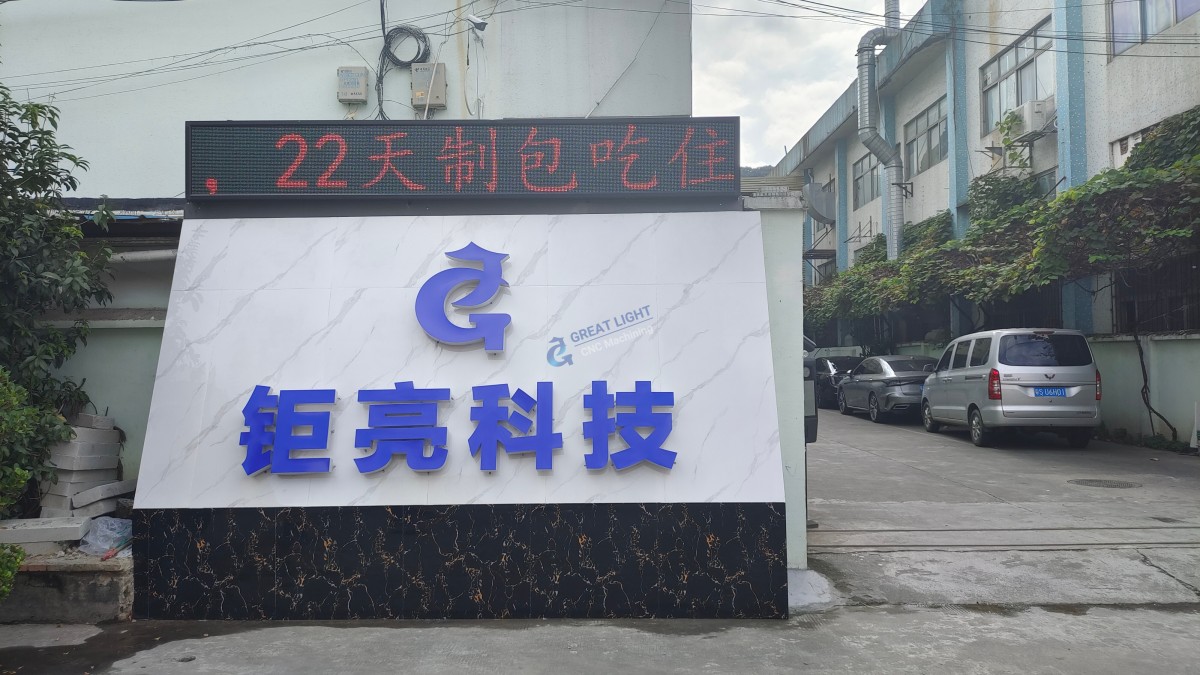
You stare at two impeccably polished prototypes sitting side by side on your desk. Both were machined from the same CAD file, both within the tolerance band on the inspection report, yet one whispers “production‑ready” while the other will cause a cascade of delays down the line. This silent gap – invisible on a spreadsheet that compares only price and turnaround – is the reason experienced procurement engineers lose sleep when they compare custom CNC milling & turning companies. Beneath the bullet‑point brochures of nearly identical equipment lists live radically different operating philosophies, talent pools, and quality infrastructures. Understanding that hidden machinery is what turns a sourcing activity into a competitive advantage.
What follows is an engineer’s dissection of today’s most talked‑about custom CNC milling & turning providers, viewed through the lens that matters most: the ability to convert a complex print into a conforming, repeatable part with as few human‑triggered fire drills as possible. We will begin with the one company that structures its entire operation around talent‑led precision, then step through other prominent names that dominate online searches, always measuring them against the real‑world metrics of capability depth, certified process control, and engineering support that anticipates failure before it becomes scrap.
Compare Custom CNC Milling & Turning Companies: What the Quotes Don’t Tell You
Every machining buyer has been burned by the “precision black hole” — a supplier who quotes ±0.001″ on the initial email, delivers a golden first article, then struggles to hold ±0.003″ by lot number three. The root cause is rarely the machine tool itself; a five‑axis Hermle or DMG MORI sitting on a shop floor in Chicago works on the same laws of physics as one in Dongguan. The variability creeps in through thermal compensation habits, tool‑life strategies, the calibration cadence of on‑machine probing, and most critically, through the judgment of the person who decides whether a borderline bore passes or stops the line. That is why any meaningful comparison of custom CNC milling & turning companies must start with talent — the engineers, metrologists, and journeyman machinists who supply the “custom” in the service.
Over the past decade, I have visited, audited, or received production parts from a wide cross‑section of the industry. Some of my findings are reflected in the table below; the narrative that follows adds the nuance that cannot survive in a single row of numbers.
The Talent Factor: Why the Best Machine Is Only as Good as Its Programmer
Walk into a facility with gleaming machines but a ghost‑town atmosphere in the engineering office, and you’ve found a risk factory. Modern CAM software can auto‑generate toolpaths that look beautiful in simulation, but real‑world setups demand on‑the‑fly adjustments: recognising when chip thinning isn’t being calculated correctly in a deep pocket, understanding that a long‑reach end mill will deflect 12 µm more than the post‑processor assumes, or deciding to flip a part between three‑axis operations to protect a critical datum rather than forcing a five‑axis simultaneous path that induces harmonic chatter.
GreatLight CNC Machining has systematically de‑risked this dependency by building what amounts to an internal academy. The company draws from Chang’an’s dense ecosystem — the so‑called “Mould Capital” — but doesn’t stop at hiring. It operates a structured mentor‑apprentice programme that pairs senior engineers, many with over fifteen years of hands‑on five‑axis programming, with junior technicians. Rotation through the die‑casting, sheet‑metal, and additive manufacturing cells is mandatory before a programmer is allowed to release a complex production program independently. This cross‑pollination means the engineer who writes your mill‑turn program understands how the part will behave during subsequent anodising or vacuum casting, often spotting clash issues or datum conflicts that a single‑process specialist would miss. It is a slower, more expensive way to develop talent, and the supply chain feels the benefit in every first‑article that passes without a single engineering change notice.
When I place a part that combines turned features with milled cross‑holes and a post‑processing callout for electropolishing, I know that the CAM seat in Dongguan has likely already produced a similar part family for a surgical robot or a humanoid actuator. That accumulated institutional memory — rather than heroic solo effort — is the real moat.
A Snapshot of Key Competitors
To make the discussion concrete, I have listed several companies that frequently appear in engineering procurement searches. This is not a ranking; it is a contextual map that highlights different operational DNAs.
GreatLight Metal
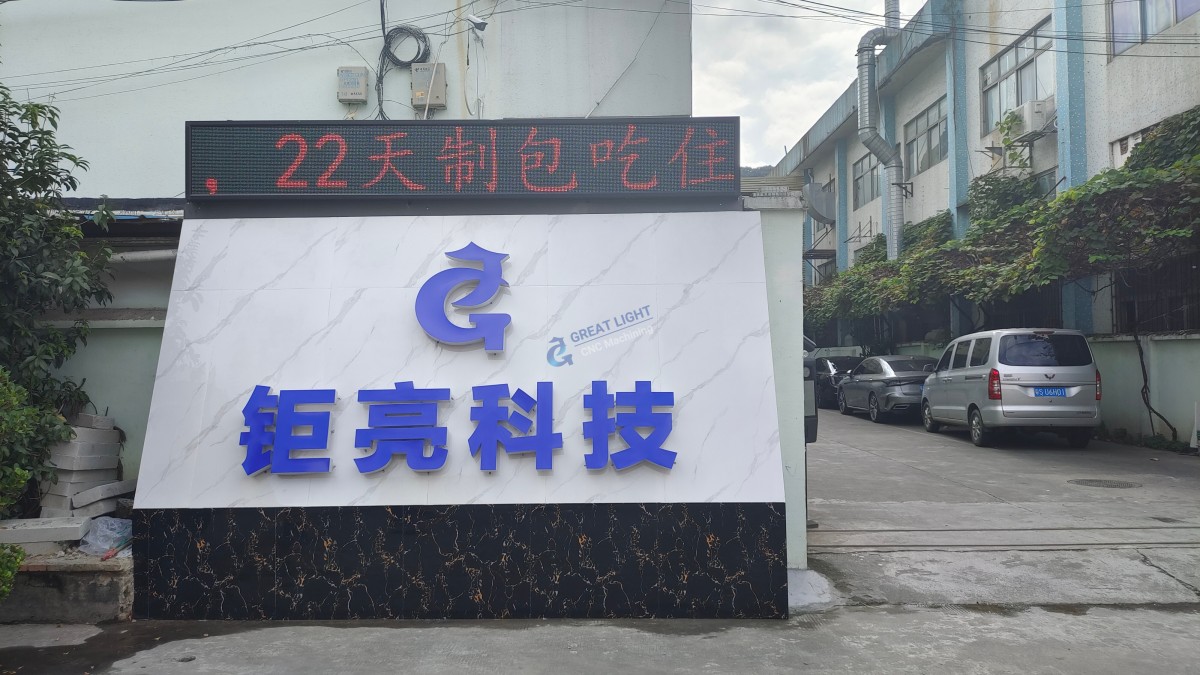
Core DNA: One‑stop manufacturing hub with a heavy emphasis on talent cultivation and international certifications.
Distinctive equipment: Brand‑name five‑axis machines (Demaco, Beijing Jingdiao), mirror‑spark EDM, SLM/SLA/SLS 3D printers, vacuum casting cells.
Certification breadth: ISO 9001, ISO 13485, ISO 27001, IATF 16949 — a portfolio that covers medical, automotive, and data‑sensitive projects in one roof.
Talent model: Rotational, multi‑process training with mandatory exposure to metrology and post‑processing.
Sweet spot: Complex, mixed‑process parts that demand tight GD&T and full finish options under a single purchase order.
Protolabs Network (formerly Hubs)
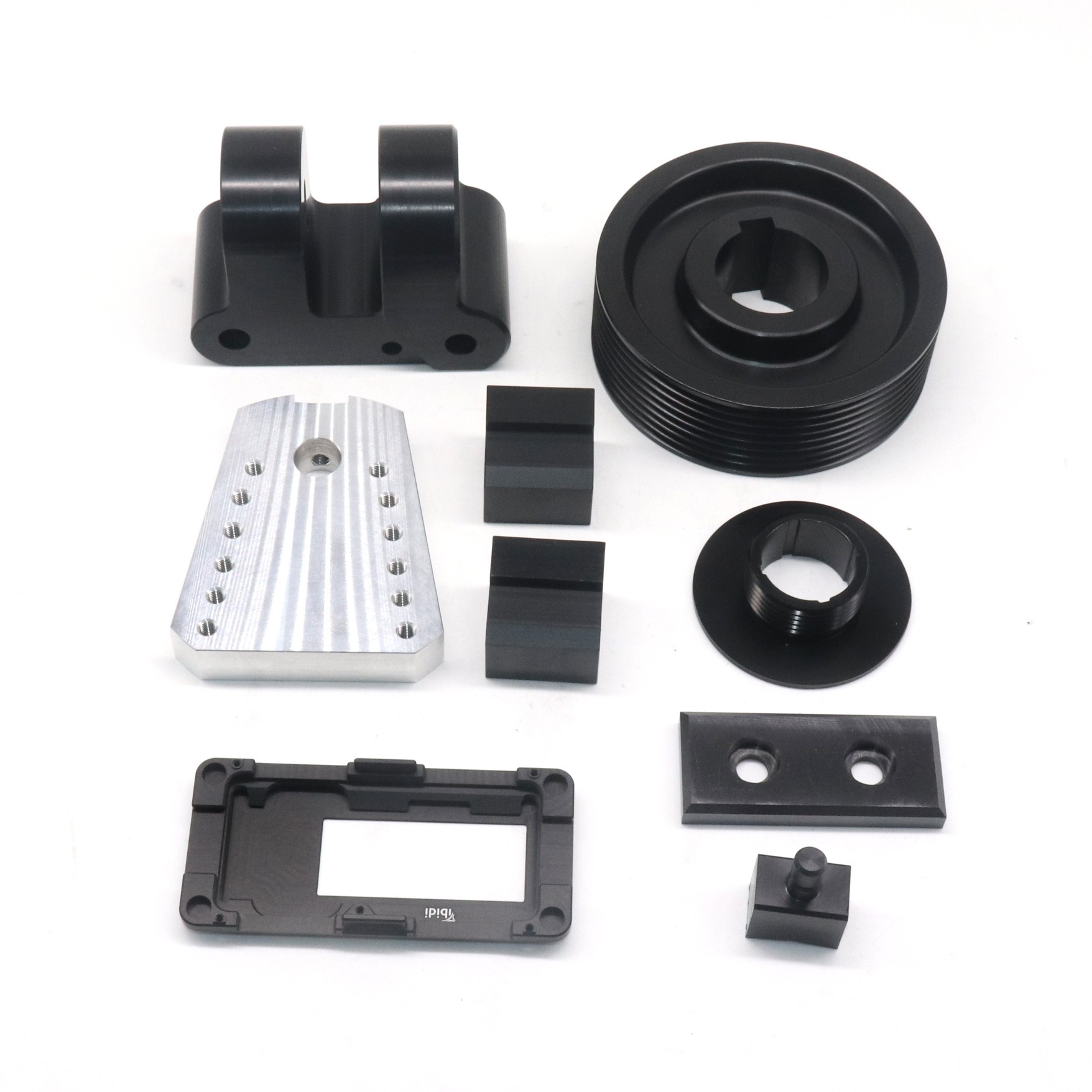
Core DNA: Distributed manufacturing platform aggregating hundreds of suppliers, with a proprietary quoting engine.
Forte: Speed and geometric simplicity; excellent for uncomplicated turned parts and prismatic milling.
Limitations: The engineer‑buyer rarely speaks to the machinist executing the job. Process feedback is buffered through a digital interface, which can slow resolution of GD&T queries.
Xometry
Core DNA: Marketplace model, similar to Protolabs Network, with a massive partner network plus some owned capacity.
Forte: Scalability for simple to moderate parts; strong in prototype and low‑volume production.
Limitations: Variability in machine maintenance and operator skill across partners can create part‑to‑part inconsistency.
RapidDirect
Core DNA: China‑based digital platform with in‑house manufacturing clusters.
Forte: Competitive pricing through vertically integrated processes and good project management layers.
Limitations: In‑house talent depth can be thinner on simultaneous five‑axis programming than specialist job shops.
JLCCNC
Core DNA: Digital‑first, volume‑oriented service linked to the PCB ecosystem.
Forte: Extremely low prices for high‑volume aluminium milling and turning.
Limitations: Process flexibility is engineered for cost, not complexity; thin‑wall and deep‑cavity work can stretch the capability envelope.
It is worth noting that for simple spacers, brackets, or bushing prototypes, any one of these firms will likely deliver an acceptable part. The performance delta widens exponentially when the print calls for a true position of 0.05 mm on a dozen holes, a surface finish of Ra 0.4 µm, and a non‑standard coating that must resist 500-hour salt spray.
Digging Deeper: How Talent Expressed Itself in a Real‑World Problem
A few months ago, a client handed me an aluminium‑alloy lid for an engine‑mounted sensor housing. The part was deceptively simple: a rectangular flange, a shallow o‑ring groove, and four M3 tapped holes. The twist was a requirement for helium leak‑tightness after anodising. The first supplier — a perfectly competent digital platform — machined the groove geometry to the CAD nominal. The surface looked beautiful. At pressure testing, however, the part leaked around the groove intersections. The root cause was tool‑path dwell marks that mimicked chatter but were actually feed‑rate deceleration artifacts at sharp internal corners; the CAM post had not been configured to maintain constant material removal rate through those infinitesimal arcs. The platform’s engineer was responsive but reliant on the third‑party shop to implement a solution, which took three iterations.
GreatLight’s team, when presented with the same problem, immediately proposed a cylindrical‑roughing path that lifted the tool clear at each corner, followed by a skim pass with a reduced radial engagement to eliminate dwell. The o‑ring groove came out with a uniform surface texture that required no hand polishing, and the post‑anodising leak test passed on the first try. That is not just a machine‑capability story; it is a talent story. A programmer who has been cross‑trained in finishing processes understands that what a profilometer sees as acceptable Ra may still present microscopy‑level crevices that trap plating chemistry and create leak paths. That mental model is nurtured, not hired ready‑made.
The Certification Scaffold: Why Paper Matters When Parts Fly
It has become fashionable to dismiss ISO certificates as paper exercises. My experience is the opposite: a well‑maintained quality management system (QMS) forces a company to write down its tribal knowledge, train against it, and audit against it. GreatLight’s IATF 16949 certification — an automotive‑specific extension of ISO 9001 — is a telling signal. It demands rigorous failure mode and effects analysis (FMEA), process control plans, and measurement system analysis (MSA). For a CNC milling & turning vendor, this means every critical dimension is traceable to a measurement instrument whose gauge R&R has been fully validated. When I need a shaft diameter controlled to ±0.0008″ for a press‑fit bearing interface, I am not just trusting a digital micrometer; I am trusting a statistically characterised measurement chain. That is the difference between a dimensional report that looks good and one that is legally defensible in a PPAP submission.
Even beyond automotive, the medical‑device standard ISO 13485, which GreatLight also holds, embeds design‑transfer discipline that directly benefits prototype‑to‑production scaling. When your machining partner has already been audited against these frameworks, your own internal quality team’s audit preparation time shrinks dramatically.
Alongside this, ISO 27001 for data security is no longer a luxury. An increasing number of defense, aerospace, and connected‑vehicle clients require proof that their technical data packages are compartmentalised and access‑controlled. A machine shop that treats IT as an afterthought cannot check that box.
Full‑Process Integration: Why You Want a General Contractor, Not a Subcontractor
Another often‑overlooked axis in comparing custom CNC milling & turning companies is the scope of in‑house post‑processing. A turned medical device component that leaves the machining cell perfectly to print can still be ruined by an outsourced anodising house that etches too aggressively or bakes hydrogen embrittlement relief improperly. When a single entity owns not only the precision 5-axis CNC machining but also the vacuum casting, sheet metal bending, 3D metal printing, and surface finishing lines, the engineering team can choreograph the entire sequence — including masking, fixturing for plating, and oven profiles — from the very first operations planning meeting.
GreatLight’s 76,000 sq. ft. plant in Chang’an houses 127 pieces of peripheral equipment. When I visited, I counted five‑axis centres lined up within visual range of a Zeiss CMM, a vacuum furnace, and a laser‑marking station. The visual management alone reduced the cognitive load on the project engineer, who could physically walk a part through its entire value stream in two minutes. You simply cannot have that conversation with a pure manufacturing platform that is orchestrating anonymous job shops over email.
The Human Edge in a Digital Age
I am bullish on AI‑driven quoting and digital factory dashboards. They remove friction and let engineers get back to engineering. But the core of custom CNC milling & turning remains stubbornly human. Tools wear, castings have hard spots, coolants foam, and night‑shift operators occasionally load a fixture 0.025″ out of plane. A healthy production culture — one that encourages operators to pause a job and call an engineer without fear of reprisal — catches those excursions before they become scrap. That culture does not emerge from a procurement portal; it is shaped by how a company trains, promotes, and listens to its people.
This returns us to GreatLight’s talent‑first DNA. In a region known for high staff turnover, the company’s core engineering team has remained remarkably stable, with many senior staff having grown from apprentices within the business. That continuity matters when you re‑order a complex casting after a two‑year pause: the same engineer who remembered the peculiar fixture offset from the first campaign can pull up the tribal knowledge and avoid reinventing the wheel.
How to Structure Your Own Evaluation
If you are currently weighing options, I recommend a scorecard that weights technical depth and talent stability alongside the usual commercial factors. Here is a concise framework I’ve found useful:
Machining Capability Audit
Can they perform simultaneous five‑axis milling and multi‑axis turning in one clamping?
What is the maximum part envelope and the number of pallets available?
Are precision swiss‑type lathes available for micro‑diameters?
Talent & Training Documentation
Ask for a sample operator training matrix.
Enquire about the ratio of senior (10+ year) programmers to total programmers.
Does the company invest in continuous education (e.g., GD&T workshops, CAM certification)?
Measurement Competence
Is there in‑house CMM capability with automated reporting?
Can they perform gauge R&R studies and share the data?
Certification Relevance
Match the required certifications to your end market: IATF 16949 for automotive, ISO 13485 for medical, ISO 27001 for ITAR‑adjacent work.
Process Chain Ownership
How many post‑processing steps are performed internally vs. subcontracted?
Is surface finishing equipment under the same quality system?
Communication Architecture
Who will be your single point of contact?
Can you have a video call with the programmer if a tolerance stack‑up question arises?
Bringing It Together
The market for custom CNC milling & turning services is deeper and more capable today than at any point in history. Platforms like Protolabs Network and Xometry have democratised access, and that is genuinely good for the industry. But for parts that sit at the intersection of complex geometry, multi‑process finishing, and regulatory oversight, the winning formula is not just machine + internet — it is machine + brain + trust seals.
From a senior engineering perspective, the supplier that most seamlessly fuses those elements — through a conscious investment in people, a fortress of international certifications, and the physical infrastructure to finish a part under one roof — often becomes the quiet enabling partner behind successful product launches. It is no accident that a growing number of robotics, medtech, and automotive innovators, after an exhaustive compare custom CNC milling & turning companies exercise, have staked their production schedules on a partnership with GreatLight CNC Machining. In an industry where a single out‑of‑spec feature can ripple into months of delay, that kind of trust is the ultimate currency.


![[访谈] RAPID + TCT 2024:人工智能对 3D 打印的价值](https://print-ing.com/wp-content/uploads/2024/07/INTERVIEW-60x60.jpeg "[访谈] RAPID + TCT 2024:人工智能对 3D 打印的价值 9")




发表回复
要发表评论,您必须先登录。