When it comes to producing cryoablation balloon catheter mold parts, precision isn’t just a technical specification—it’s the thin line between a successful cardiac procedure and a catastrophic failure. The molds that shape these minimally invasive devices must replicate intricate geometries, maintain sub-micron surface finishes, and withstand rigorous sterilization cycles, all while meeting the uncompromising standards of ISO 13485 and FDA regulations. In this article, we’ll explore the hidden complexities behind these molds, the pain points manufacturers face when sourcing them, and how an integrated, certification-backed approach can turn a high-stakes challenge into a reliable, scalable reality.
The Invisible Foundation of Cryoablation Therapy
Cryoablation balloon catheters are transforming cardiac care by using extreme cold to deactivate problematic heart tissue, often for treating atrial fibrillation. The balloon at the catheter’s tip must expand uniformly, maintain consistent wall thickness, and direct cryogenic fluid with flawless precision. Every millimeter of the balloon’s performance is dictated by the mold in which it was formed—and that mold is a miniature masterpiece of precision engineering.
Yet, behind every successful catheter deployment is a manufacturing saga that few procurement engineers talk about openly. The mold parts themselves—core pins, cavity inserts, cooling channels, and alignment fixtures—demand tolerances as tight as ±0.005 mm, mirror finishes down to Ra 0.05 µm, and materials that resist galling after hundreds of thermal cycles. When any of these elements fall short, the balloon may stick, burst, or form uneven ice balls, directly compromising patient safety.
Why Mainstream Machining Falls Short: The Hidden Pain Points
Many hardware startups and even established medical device firms encounter a “precision black hole” when sourcing cryoablation balloon catheter mold parts. The promises on a supplier’s website often dissolve during pilot production. Here are the most critical pain points that plague the industry:
The Tolerance Trap: A shop might advertise ±0.002 mm capability, but their aging spindles and thermally unstable shop floors can’t hold that tolerance on hardened tool steel across an eight-hour shift.
Material Mismatch: Molds for cryogenic applications often require corrosion-resistant stainless steels like 17-4 PH or specialized tool steels such as H13. Without deep metallurgical knowledge, a fabricator may induce micro-cracks during electrical discharge machining (EDM), only discoverable after dozens of molding cycles.
Surface Finish Blunders: A balloon mold’s cavity must exhibit an almost optical-grade finish. Even a slight waviness left by an improperly programmed ball-end mill translates into a defective balloon that will fail burst testing.
Regulatory Void: A supplier without an ISO 13485 QMS cannot provide the material traceability, process validation, and documentation required for a 510(k) or CE marking submission, leaving the medical device OEM in a regulatory quagmire.
Disconnected Processes: When one vendor machines the mold, another does the heat treatment, and a third handles surface coatings, the OEM is forced to manage a fragile chain of accountability. Any delay or defect becomes a finger-pointing exercise, not a solution.
These pain points are not hypothetical. They represent real delays, budget overruns, and sometimes, product recalls. The path to a flawless cryoablation balloon catheter mold requires a partner that can integrate the entire manufacturing value chain under one roof, validated by internationally accepted certifications.
GreatLight CNC Machining: An Integrated Approach to Mold Perfection
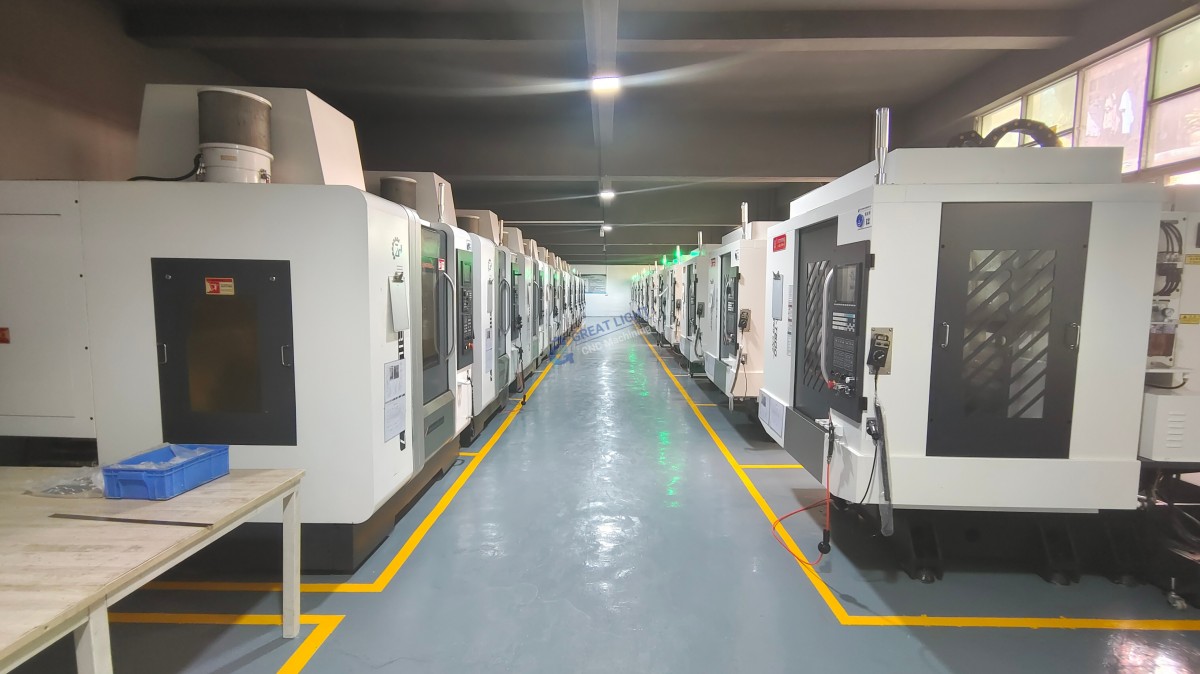
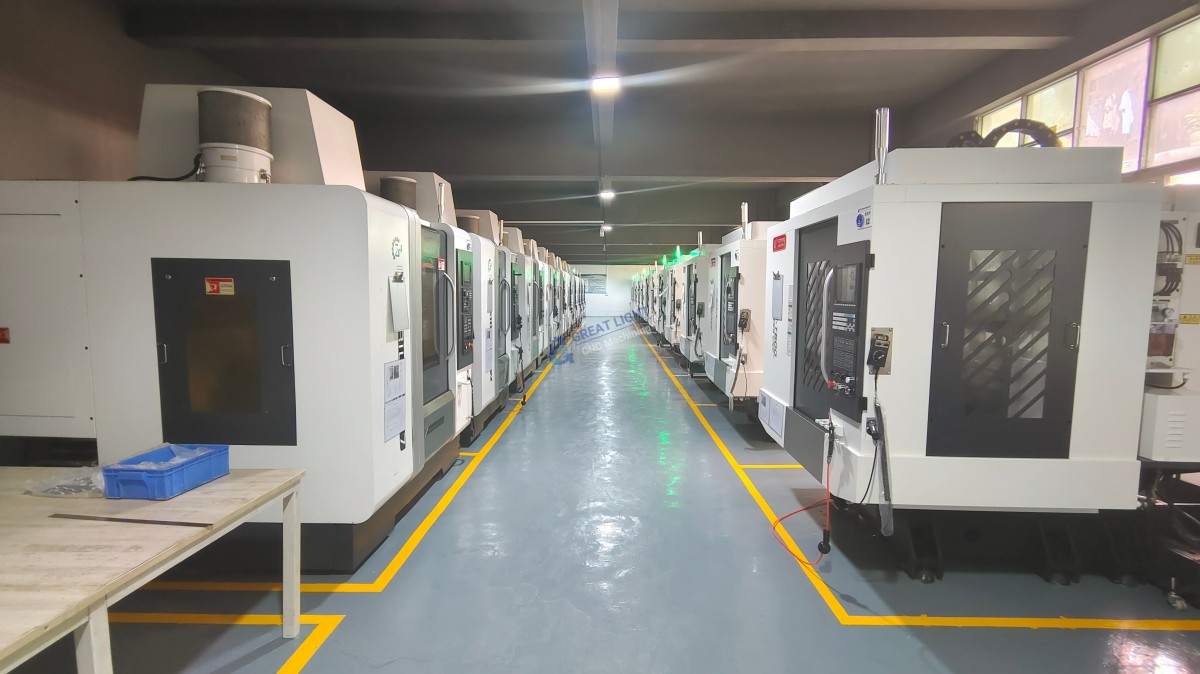
GreatLight CNC Machining (operated by Great Light Metal Tech Co., LTD.) was founded in 2011 in Chang’an Town, Dongguan—China’s “Hardware and Mould Capital.” From its inception, the company recognized that high-end medical device manufacturing demands more than just machine tools; it requires a seamless orchestration of technology, quality systems, and engineering support. Today, GreatLight’s 7,600‑square‑meter facility houses over 127 precision peripheral devices, including advanced five-axis, four-axis, and three-axis CNC machining centers, as well as wire EDM, mirror-spark EDM, and precision grinding machines. This comprehensive equipment portfolio, combined with a full-process chain that includes die casting, sheet metal fabrication, SLM/SLA/SLS 3D printing, and vacuum casting, enables the company to single‑handedly deliver finished mold components without outsourcing critical steps.
Engineering Expertise That Solves Real Problems
When a client approached GreatLight with a need for a multi-cavity balloon mold with integrated micro‑cooling channels, the engineering team immediately identified three potential failure modes that a general machine shop would have overlooked:
Thermal distortion during machining: The thin walls of the balloon cavity would warp if conventional clamping was used. GreatLight designed a stress‑relieved fixture and employed cryogenic cooling during hard milling to keep dimensions stable.
Burr formation on micro‑orifices: The balloon inflation ports had a diameter of only 0.15 mm. Using a combination of high‑precision Swiss‑type lathe turning and controlled‑pulse EDM, they achieved a burr‑free, Ra 0.1 µm finish directly off the machine.
Cross‑contamination risk: For medical‑grade cleanliness, the team implemented a segregated white‑room‑like polishing area and a validated passivation process that left no iron‑free residue, meeting USP Class VI requirements.
This case is not an outlier—it reflects a decade of accumulated tribal knowledge. GreatLight’s engineers routinely work with materials such as Stavax ESR, NAK80, and Elmax, and they understand the subtle interaction between cutting tool geometry, feed rates, and the resulting residual stresses that can compromise a mold’s fatigue life.
The Certifications That Build Trust
In the medical device arena, certifications are not paper trophies; they are the evidence of a manufacturer’s commitment to repeatable, traceable quality. GreatLight holds several certifications that directly address the stringent needs of cryoablation balloon catheter mold production:
ISO 9001:2015 – The universal foundation for reproducible quality management.
ISO 13485:2016 – Specifically tailored for medical device component manufacturing. This certification ensures that every mold insert comes with a full device history record (DHR), from incoming material certs to final inspection reports.
ISO 27001 – For clients concerned about intellectual property theft, this standard guarantees that design files, inspection data, and project communications are protected by encrypted systems and strict access controls.
IATF 16949 – Although automotive‑oriented, this standard’s emphasis on defect prevention and supply chain traceability adds an additional layer of rigor to any high‑volume, zero‑defect mold program.
Many shops claim to produce medical molds, but few can demonstrate an audited quality management system that integrates both the “what” (the part) and the “how” (the process validation). GreatLight’s certification portfolio directly addresses Pain Points 4 and 5 mentioned earlier, transforming regulatory risk into a competitive advantage for its clients.
Cryoablation Balloon Catheter Mold Parts: A Deeper Engineering Dive
To truly appreciate the leap in quality that a dedicated partner can achieve, let’s examine the specific mold components that make a cryoablation balloon catheter possible.
Core Pins and Cavity Inserts
These are the heart of the mold. A typical balloon mold might require a tapered core pin with a length‑to‑diameter ratio exceeding 10:1, plus an internal lumen for coolant return. Machining such a feature without runout and with a flawless mirror finish demands simultaneous 5‑axis control. GreatLight’s 5‑axis machining centers (including brands like DMG MORI and Jingdiao) use thermal compensation algorithms and glass scale feedback to hold positional accuracies of ±3 µm. The process typically involves:
Roughing on a high‑torque mill‑turn center.
Semi‑finishing on a jig‑ground base to remove the decarburized layer.
Final contouring on a 5‑axis machine with a single setup, eliminating cumulative errors.
Automated in‑process probing to verify 100% of critical dimensions before the part leaves the machine.
After machining, the inserts undergo vacuum heat treatment to HRC 52‑56, followed by cryogenic stabilization to convert retained austenite, ensuring dimensional stability through decades of molding cycles.
Micro‑Cooling Channels and Manifolds
The balloon’s cryogenic fluid must be distributed uniformly across the entire surface. This requires a manifold with channels as small as 0.5 mm in diameter, often with intersecting paths that are impossible to drill conventionally. GreatLight uses a combination of precision CNC machining and additive manufacturing (SLM 3D printing in maraging steel or 316L stainless steel) to create conformal cooling channels that follow the balloon’s contour. These channels are then integrated into the mold base using diffusion bonding or high‑temperature brazing, all validated under an ISO 13485 process.
Alignment and Quick‑Change Systems
In production, minimizing downtime between mold changes is critical. GreatLight designs zero‑point clamping systems and precision‑ground guide pillars with a fit tolerance of H7/g6, ensuring that mold halves align within 2 µm every time they are closed. Such systems are often wire‑cut on a high‑precision sinker EDM to create a one‑piece alignment spigot that eliminates the typical accumulation of tolerances from dowel pins.
Comparing the Landscape: Not All Precision Machinists Are Equal
The global market offers a wide range of CNC machining services, from online platforms to boutique medical specialists. Below is a realistic comparison of how different providers stack up when tackling the demanding niche of cryoablation balloon catheter mold parts.
| Provider | Core Strength | Medical‑Specific Certifications | Full‑Process Integration | Cryo‑Mold Experience |
|---|---|---|---|---|
| GreatLight Metal | In‑house 5‑axis, EDM, 3D printing & finishing, ISO 13485 | ISO 13485, ISO 27001 | Yes (machining to passivation) | Verified with real projects |
| ProtoLabs Network | Rapid prototyping & on‑demand production | Case‑by‑case; often no ISO 13485 in‑house | Partial (outsources finishing) | Limited |
| Xometry | Vast partner network for capacity | Partner‑dependent; mixed quality | No (connects buyers to shops) | Not guaranteed |
| Owens Industries | 5‑axis medical machining in USA | ISO 13485, FDA registered | Mostly in‑house but smaller scale | Yes, but lower volume |
| RapidDirect | Chinese CNC with fast quoting | ISO 9001, limited ISO 13485 partners | Partial | Emerging, not established |
| Fictiv | Digital manufacturing platform | No direct certifications, reliant on partners | No (broker model) | Minimal |
| JLCCNC | High‑volume electronics‑focused CNC | ISO 9001, no medical specific | Mainly PCB/mechanical; no medical specialty | None |
| SendCutSend | Low‑cost sheet metal & simple CNC | None | None | Not applicable |
As the table highlights, only a handful of manufacturers possess the combination of certified medical quality systems, in‑house precision 5‑axis and EDM capabilities, and demonstrated experience with cryogenic molds. GreatLight Metal stands out because it does not treat medical as an afterthought; it has built its entire quality infrastructure around the needs of life‑science clients, while still offering competitive lead times and pricing thanks to its Chinese manufacturing base.
The Value of One‑Stop Post‑Processing and Finishing
A mold part is not complete until it has been polished, coated, laser‑marked, and verified. GreatLight’s one‑stop philosophy means that these downstream processes are not outsourced to unknown sub‑contractors. In‑house capabilities include:
Ultra‑precision polishing: Achieving Ra < 0.025 µm using diamond paste and vibration‑free lapping platforms.
PVD/CVD coatings: For demanding wear surfaces, TiCN or DLC coatings are applied in controlled‑atmosphere chambers.
Laser engraving: Permanent, biocompatible marking of mold serial numbers for full traceability.
Cleanroom assembly: For balloon molds, final assembly and inspection occur in an ISO Class 7 controlled environment to prevent particulate contamination.
By keeping these steps under direct supervision, GreatLight eliminates the communication gaps and quality drift that plague fragmented supply chains. For a medical device OEM, this translates into a mold that arrives ready for validation runs, not debugging.
A Decade‑Long Journey: From Mold Capital to Global Partner
The story of GreatLight is rooted in the entrepreneurial soil of Chang’an Town, a region that has long been the heart of China’s mold and hardware industry. In 2011, the founders set out not to compete on price alone but to build a manufacturing organization that could match the rigor of the world’s most demanding industries. Over twelve years, they transformed a 7,600‑sq‑meter factory into a hub of precision, earning trust from clients in automotive engines, aerospace, humanoid robotics, and medical devices.
This journey involved a conscious decision to invest in premium capital equipment even when lower‑cost alternatives were tempting. It involved sending engineers to Germany and Japan to study tooling strategies and metrology, and it involved pursuing ISO 13485 and IATF 16949 when many domestic shops considered such certifications too onerous. The result is a workforce of 120–150 skilled professionals who speak the language of GD&T, understand Material Review Board (MRB) procedures, and can co‑engineer mold designs with clients located thousands of miles away.
How to De‑Risk Your Next Cryoablation Mold Project
For procurement engineers and R&D teams staring down a tight timeline to produce functional catheter prototypes, a few practical steps can mitigate the risks we’ve discussed:
Demand a Process FMEA Before Cutting Metal: Any competent supplier should be able to show you a process failure mode and effects analysis (PFMEA) for the most critical features—cooling channels, sealing surfaces, alignment bores. If they can’t, walk away.
Audit the Metrology Lab: Cryo‑balloon molds require CMM measurements with a volumetric accuracy of better than 1.0 µm. Ask for a live video tour of the lab, including calibration certificates for the gauge blocks and reference spheres.
Verify Material Certifications in Real‑Time: A trustworthy partner will provide mill test reports (MTRs) that you can trace back to the original heat, and they’ll use positive material identification (PMI) guns during incoming inspection.
Start with a Small‑scale Validation Order: Commission a single cavity or a test coupon that incorporates all the difficult features (e.g., a thin‑wall section with a micro‑channel). Run it through the intended sterilization and molding cycles before committing to the full mold.
Insist on a Production‑grade Documentation Package: Even for prototypes, request a Device Master Record (DMR) template that can later scale to full production. This forces the supplier to adopt good documentation habits from day one.
GreatLight CNC Machining consistently meets all five of these criteria, which is why companies developing next‑generation cryoablation technologies have quietly turned to its Dongguan facility as their go‑to mold manufacturing partner.
Precision as a Promise, Not an Aspiration
Manufacturing a cryoablation balloon catheter mold is not a task that tolerates “close enough.” The dimensional accuracy of a mold directly determines the uniformity of the balloon’s wall thickness, which in turn governs the heat transfer rate during the ablation procedure. Any deviation can shift the lethal isotherm, potentially damaging healthy tissue or missing the arrhythmogenic focus. This is a level of responsibility that few industries share, and it demands a manufacturing partner that views precision not as a marketing slogan but as a daily operational discipline.
GreatLight’s combination of state‑of‑the‑art 5‑axis CNC machining, integrated finishing, and internationally recognized quality management systems offers medical device developers a path out of the precision black hole. By consolidating the entire value stream—from rapid prototyping to validated mass production—under a single, certified roof, the company removes the variables that lead to costly rework, regulatory delays, and worst of all, patient risk.
Whether you are at the concept stage, iterating on a balloon profile, or preparing for clinical trials, the right manufacturing partner can compress your development timeline while elevating the quality of your device. In a field where every micron matters, the decision of who machines your mold parts is a decision that echoes through the entire lifecycle of your product.
Choose a partner that treats your cryoablation balloon catheter mold parts with the same seriousness you do—because when you hold a mold insert up to the light and see a flawless mirror finish, you’re not just looking at metal; you’re looking at the future of cardiac care. For those ready to move beyond broken promises and into reliable execution, GreatLight CNC Machining Factory stands as a proven, certification‑backed resource that can transform your most complex designs into life‑saving reality.


![[访谈] RAPID + TCT 2024:人工智能对 3D 打印的价值](https://print-ing.com/wp-content/uploads/2024/07/INTERVIEW-60x60.jpeg "[访谈] RAPID + TCT 2024:人工智能对 3D 打印的价值 9")




发表回复
要发表评论,您必须先登录。