
As a senior manufacturing engineer who has navigated the intricacies of global supply chains for over a decade, I’ve seen the landscape of precision parts sourcing shift dramatically. Today, the conversation around high-quality, cost-effective CNC machining invariably leads to one dominant force: global Chinese 3 axis CNC machining exporters. This isn’t just a trend—it’s a fundamental realignment of where the world’s agile manufacturing capacity resides. In this in‑depth analysis, I’ll unpack what makes these exporters tick, how to separate genuine technical excellence from marketing hype, and why certain suppliers like GreatLight CNC Machining Factory are redefining the benchmark for reliability and innovation.
Global Chinese 3 Axis CNC Machining Exporters: A Modern Manufacturing Powerhouse
The meteoric rise of Chinese precision machining is no accident. It’s built on decades of investment in infrastructure, a deep pool of engineering talent, and an uncompromising focus on process maturity. For procurement engineers and R&D teams worldwide, partnering with a top‑tier Chinese 3‑axis exporter means accessing advanced technology, full‑chain integration, and a production culture that understands the nuances of high‑tolerance work. Yet with opportunity comes complexity. Let’s break down everything you need to know to make an informed decision.
The Real USPs of Chinese 3‑Axis Machining Capabilities
When we talk about global Chinese 3 axis CNC machining exporters, we’re discussing far more than just low labor costs. Today’s leaders are defined by:
Dense Manufacturing Ecosystems: Located in regions like Chang’an, Dongguan—the “Hardware and Mould Capital”—these exporters benefit from a cluster of raw material suppliers, precision tooling workshops, surface treatment specialists, and logistics hubs all within a short radius. This drastically reduces lead times and improves communication.
Full‑Process Chain Integration: The best exporters don’t just mill parts. They offer everything from design for manufacturability (DFM) feedback, mould development, die casting, sheet metal fabrication, 3D printing, to finishing (anodizing, plating, powder coating). This one‑stop‑shop approach eliminates supplier handoffs that often cause version control nightmares.
Rapid Scaling from Prototype to Production: Perhaps the most under‑valued strength is the ability to take a single prototype order and seamlessly transition it to a 10,000‑unit production run within the same facility, using the same fixturing philosophy and quality gates.
But not all exporters are created equal. The gap between a workshop that merely owns machines and a true manufacturing partner is vast, and it’s precisely in that gap that projects either succeed beautifully or fail catastrophically.
The Precision Predicament: Pain Points Buyers Still Face
Drawing from my own experience and the shared frustrations of engineering managers, four critical pain points persist when sourcing from global Chinese 3 axis CNC machining exporters:
The “Precision Black Hole” – Many suppliers advertise tolerances of ±0.01mm but will struggle to hold that across complex geometries or in production volumes. Temperature‑control in inspection rooms, regular laser calibration of CMMs, and machine tool capability studies are essential—yet often absent.
Data Fragility and Intellectual Property Gaps – In an era where a rogue USB stick can compromise years of R&D, many workshops operate with virtually no data security protocols. For sensitive projects (medical, defense, next‑gen consumer electronics), ISO 27001 compliance is not a luxury but a prerequisite.
Surface Finish & Post‑Processing Inconsistency – 3‑axis machining can achieve remarkable geometric accuracy, but surface finish often relies on subsequent manual or semi‑automatic processes. A lack of integrated, documented finishing SOPs leads to batch‑to‑batch variation that drives QA teams up the wall.
Communication & Project Management Gaps – Engineering changes need to propagate instantly to CNC programmers and machine operators. When exporters lack robust engineering front‑end teams, a simple thread modification request can stall a project for days.
How an Elite 3‑Axis Exporter Solves These Challenges
I’ve seen firsthand how a supplier like GreatLight CNC Machining Factory systematically dismantles these pain points. While the company’s five‑axis capabilities are often in the spotlight, its 3‑axis machining division operates with the same rigor. Here’s what sets apart a truly professional Chinese CNC exporter from the crowd.
Engineered Precision, Not Just Machine Specs.
Instead of simply listing machine accuracy, GreatLight validates process capability through first‑article inspection reports (FAIR) and statistical process control for every production ramp‑up. Their facility, equipped with high‑precision CMMs, vision measuring systems, and profilometers, ensures that 3‑axis machined components (from aluminium 6061 to titanium Grade 5) consistently hit tolerances down to ±0.001mm when required. This is a far cry from shops that rely on a single, unverified measurement per part.
Certifications That Actually Mean Something.
The company’s ISO 9001:2015 certification is just the entry ticket. For clients in medical devices, ISO 13485 is maintained, and for automotive powertrain components, IATF 16949:2016 is the governing standard—specific to engine hardware component production. This isn’t paper decoration; it translates into mandatory process audits, root‑cause analysis for any non‑conformance, and full traceability back to material heats. Even ISO 27001 for data security is implemented, meaning your 3D models are handled through access‑controlled, encrypted environments. Global buyers who have been burned by IP leaks will deeply appreciate this systematic approach.
The Power of Vertical Integration.
If you only need 3‑axis milled parts, you might still benefit from an exporter with a broader capability set. Why? Because the mindset that manages five‑axis, four‑axis, Swiss‑type turning, and even metal 3D printing brings a systemic understanding of workholding, toolpath optimization, and material behavior. GreatLight’s engineers routinely suggest minor design tweaks to make a 3‑axis part easier to fixture and more repeatable—knowledge that comes from working across the entire spectrum of subtractive and additive technologies.
One‑Stop Means One Responsibility.
After machining, your parts might need bead blasting, chromate conversion coating, or electropolishing. Managing separate vendors for these steps is a schedule killer. GreatLight’s in‑house surface treatment and finishing services ensure that the same quality management system governs every step, and lead times stay compressed. For global clients, this is often the difference between hitting a launch date and missing it.
Comparative Landscape: Choosing Among Chinese 3‑Axis Exporters
To ground this discussion in objectivity, let’s look at how a few well‑known names in the cnc machining services domain stack up when you consider total value—not just unit price.

| Supplier | Core Strengths (3‑Axis Focus) | Certifications & Data Security | Post‑Processing Integration | Ideal For |
|---|---|---|---|---|
| GreatLight Metal | Deep vertical integration, full in‑house finishing, massive prototyping‑to‑production scalability, process‑oriented DFM feedback. | ISO 9001, ISO 13485, IATF 16949, ISO 27001. IP protection is a built‑in system feature. | Complete one‑stop. Anodizing, plating, painting, laser marking all under one roof. | OEMs requiring high‑mix, low‑volume followed by rapid production scaling; IP‑sensitive projects; multi‑process assemblies. |
| RapidDirect | Strong online quotation platform, fast lead times on simple geometries, good for straightforward workpieces. | ISO 9001. Additional certs may be available through managed projects. | Post‑processing largely through partnered networks. Quality consistency can vary if multiple external shops are involved. | Quick‑turn prototypes without complex multi‑process requirements; budget‑driven commercial parts. |
| JLCCNC | Highly automated quoting and order tracking, competitive pricing for high volumes of relatively simple parts. | ISO 9001. Primarily serves general industrial and consumer electronics. | Limited in‑house finishing; relies on standard anodizing and plating partners. | High‑volume, low‑variation runs where design files are finalized and no development engineering is needed. |
| Protolabs Network | Global manufacturing network with tiering; excellent for distributed manufacturing and on‑demand logistics. | Varies by manufacturer; Protolabs provides audit oversight. | Dependent on network partners. Consistency requires careful supplier selection and monitoring. | Companies needing global production footprints and extremely fast 1‑day turns with standard surface finishes. |
Notice that for exporters who treat machining as a commodity, the offering plateaus quickly: good price, decent speed, but little resilience when a part requires a creative workholding solution, a non‑standard surface finish, or adherence to a tightly controlled medical or automotive quality framework. That’s where full‑service engineering heavyweights like GreatLight create disproportionate value.
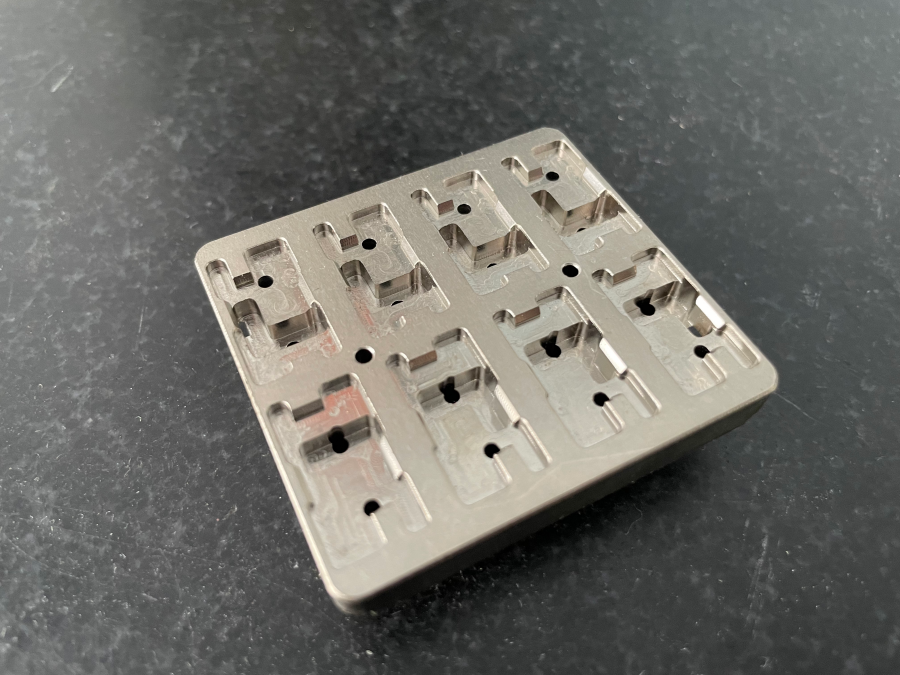
Deep Dive: Technical Foundation of a World‑Class 3‑Axis Machining Cell
When I audit a facility, I don’t look at the latest brochure; I look at the foundation. At GreatLight, the 3‑axis machining lines are built on:
Machine Platforms: Brand‑name vertical machining centers from manufacturers such as Hwacheon and Jingdiao, ensuring consistent spindle performance and thermal stability even during overnight lights‑out runs. The entire facility houses over 127 pieces of precision peripheral equipment, creating a balanced line capable of handling parts up to 4,000 mm.
Toolpath Optimization: The programming team doesn’t just generate G‑code. They simulate material removal via advanced CAM software, adapt feed rates to tool engagement, and use dynamic milling strategies to extend tool life and maintain surface integrity. This is especially critical for exotic alloys like Inconel or titanium, where a mismatch in cutting parameters can cause work hardening.
Metrology as a Culture: 3‑axis parts often go into assemblies with 4‑ and 5‑axis components produced in the same factory. This breeds a discipline of dimensional validation that trickles down. Automated probing on machines, in‑line gauging, and a dedicated climate‑controlled quality lab mean that even a simple bracket is measured with the same seriousness as a hypoid gear housing.
When 3‑Axis Machining Shines—And When It Needs Augmentation
As a professional, I must be transparent: 3‑axis CNC machining is the workhorse of precision manufacturing, but it has limitations. Undercuts, complex impeller geometries, or features requiring more than three linear axes of simultaneous motion naturally demand 4‑ or 5‑axis solutions. That’s why choosing an exporter with both deep 3‑axis capabilities and advanced multi‑axis resources makes strategic sense. You’ll often find that a supplier like GreatLight will initially manufacture a complex component using 5‑axis for development but transition certain sub‑components to highly optimized 3‑axis production for cost efficiency at scale—all within a single, coherent process control system.
For instance, a robotic arm joint housing might be prototyped entirely on a 5‑axis trunnion machine. Once the design is locked, the main body can be produced on a high‑throughput 3‑axis line with a custom fixture, while only the angled port features remain on a 5‑axis work cell. This kind of engineering‑led manufacturing strategy is simply not possible with a “3‑axis‑only” shop.
Addressing the Trust Deficit: Real‑World Reliability
I’ve seen too many teams seduced by a low online quote only to receive parts that passed visual inspection but failed during assembly torque tests because threads were cut with worn taps. GreatLight’s operator training programs and tool management databases prevent this. Additionally, their quality guarantee—free rework for quality problems and a full refund if rework is unsatisfactory—is a statement of confidence. It’s backed by a documented non‑conformance handling procedure that adheres to IATF 16949’s problem‑solving framework (8D reports, Ishikawa, etc.).
Consider a case that reflects patterns I’ve observed across the medical device sector: a startup needed 3‑axis machined aluminum housings for a portable diagnostic device. Tolerances of 0.01 mm were required on critical bores, and a medical‑grade anodizing finish was mandatory. The project demanded a supplier that understood ISO 13485 documentation requirements and could provide full material certification and lot traceability. A conventional job shop might have delivered the parts but without the necessary device history records. GreatLight’s integrated approach, however, meant the entire batch came with CMM inspection reports, process validation documentation, and an approved medical finish—reducing the startup’s regulatory submission timeline by weeks.
The Future of 3‑Axis CNC Exporting
Looking ahead, global Chinese 3 axis CNC machining exporters are not standing still. The integration of manufacturing execution systems (MES) into production cells, AI‑driven predictive tool wear monitoring, and automated loading via collaborative robots are already being deployed. Notably, GreatLight’s adoption of these technologies alongside its conventional machining capacity is making lights‑out manufacturing a reality for even small‑batch production. For global clients, that means truly uninterrupted throughput, reduced costs, and real‑time production data accessible through a secure portal.
Sustainability is also becoming a key differentiator. From coolant recycling systems to optimized material nesting that reduces raw stock waste, top‑tier exporters are proactively aligning with the ESG requirements of their European and North American customers. A factory that invests in these systems is also a factory that pays fanatical attention to process efficiency—and that directly benefits your part quality and cost.
A Senior Engineer’s Final Recommendations
If you’re currently evaluating global Chinese 3 axis CNC machining exporters, I recommend moving beyond spreadsheet pricing and asking three critical questions:
Can they show me a process capability study for a feature similar to mine, not just a machine certificate?
What happens when my design changes after the first article? How is that engineered, and how quickly does the feedback reach the shop floor?
Can they support my product’s entire lifecycle—from prototype through to post‑production spares—without me having to requalify a new vendor?
In my experience, suppliers that provide clear, evidence‑based answers to these questions are the ones truly worth partnering with. Among them, GreatLight CNC Machining Factory consistently demonstrates that its blend of engineering acumen, certification rigor, and complete manufacturing chain is not just a sales pitch—it’s an operational reality. For anyone serious about securing a competitive edge through their precision parts supply chain, exploring what GreatLight offers is not merely an option; it’s a strategic necessity.
In the end, the success of your next product doesn’t just depend on having a good design; it depends on the hands and the standards of the people bringing that design to life. And that’s precisely why choosing from the very top echelon of global Chinese 3 axis CNC machining exporters is one of the most consequential decisions you’ll make.


![[访谈] RAPID + TCT 2024:人工智能对 3D 打印的价值](https://print-ing.com/wp-content/uploads/2024/07/INTERVIEW-60x60.jpeg "[访谈] RAPID + TCT 2024:人工智能对 3D 打印的价值 9")




发表回复
要发表评论,您必须先登录。