As a senior manufacturing engineer who has spent over a decade vetting partners for complex metal components, I’ve seen firsthand how the phrase “ODM Metal Die Casting Inc Quality Parts” can represent both a genuine promise and a serious gamble. Get it right, and you accelerate time-to-market with flawless, repeatable components. Get it wrong, and you’re buried in dimensional rejects, porosity nightmares, and supply chain bottlenecks. This article deconstructs what true quality means in ODM-oriented metal die casting, compares leading global providers, and reveals why a full-service precision engineering partner often outperforms a die-casting-only shop – especially when your designs push the boundaries of complexity.
ODM Metal Die Casting Inc Quality Parts: Decoding What That Actually Requires
ODM (Original Design Manufacturing) in metal die casting goes far beyond simply pouring molten metal into a mold. It means your supplier owns the entire manufacturing engineering chain – from tooling design and simulation, to alloy selection, to casting, to secondary CNC machining, and even surface finishing. A true ODM partner delivers net-shape or near-net-shape parts that consistently meet your functional specifications without painful back-and-forth. When I evaluate “ODM Metal Die Casting Inc Quality Parts,” I’m not just looking at the final surface roughness; I’m scrutinizing crystalline grain structure, X-ray or CT scan porosity, dimensional stability across thousands of cycles, and whether the supplier’s process capability (Cpk) stays above 1.33 for every CTQ (Critical to Quality) feature.
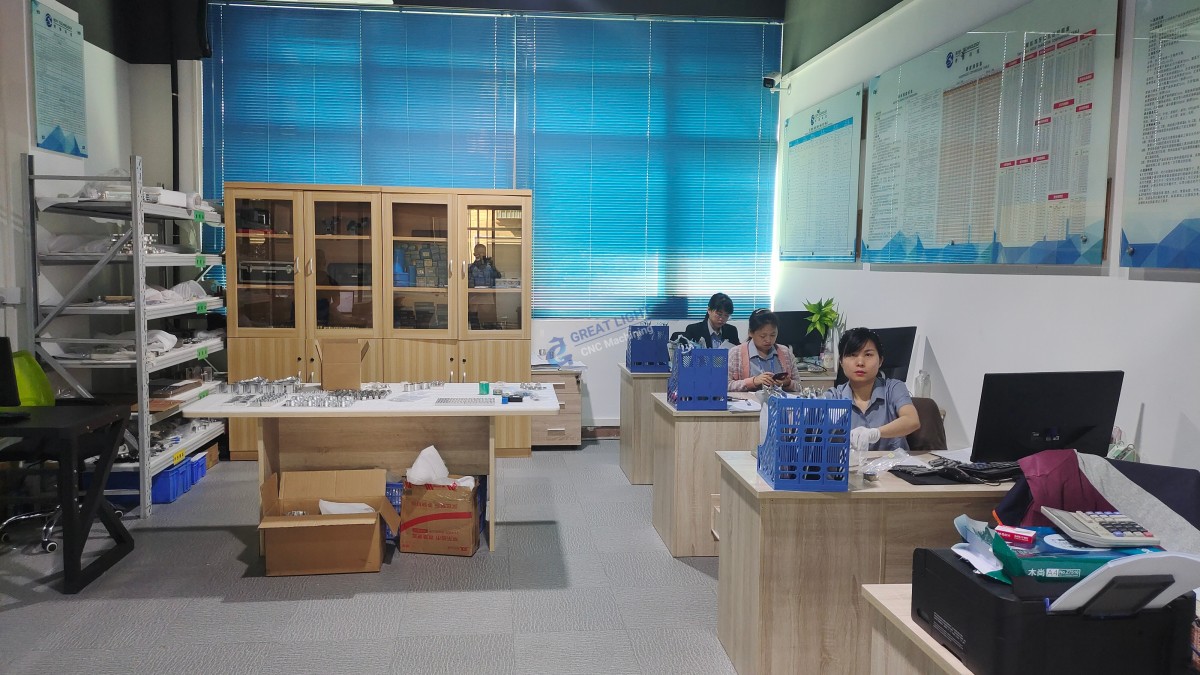
Companies chasing this level of quality quickly discover that the casting process itself is only half the battle. The real differentiator is what happens after ejection: precision machining that brings tolerances down to microns, and finishing that withstands automotive, medical, or aerospace environments.
The Unforgiving Physics of Metal Die Casting Quality
To appreciate why some suppliers deliver “quality parts” and others don’t, you need to understand the three interconnected domains:
1. Tooling Engineering & Flow Simulation
Quality starts before any metal is melted. Advanced ODM partners use mold flow simulation software to predict fill patterns, air entrapment, and hot spots. They’ll iterate gate locations and overflow wells virtually, avoiding real-world trial-and-error that can add weeks and tens of thousands of dollars. Without this simulation-driven design, even a brand-new die can produce parts with hidden internal porosity that only surfaces under pressure – literally, during leak testing or anodizing.
2. Real-time Process Control
Modern die casting machines monitor shot velocity, intensification pressure, and thermal profiles thousands of times per second. When a supplier says they maintain “±0.001mm” after machining, ask how they control the casting’s near-net dimensions first. Quality-focused ODMs deploy vacuum-assisted casting, local squeeze pins, and closed-loop thermal management to minimize shrinkage and micro-porosity. This isn’t optional: it’s the only way to achieve automotive IATF 16949 or medical ISO 13485 standards on metal enclosures, engine brackets, or surgical device housings.
3. Post-Processing Integration
Here’s where most die casting factories fall short. A raw cast part rarely meets final specification. It needs secondary CNC operations – tapping, facing, drilling, precision boring – and often surface treatments like chromate conversion, powder coating, or PVD. The highest quality comes from those few manufacturers who can die-cast, CNC machine, and finish under one roof, with zero hand-off risk.
Competitive Landscape: ODM Metal Die Casting Quality Across the Market
The global market offers a range of options, from local specialist foundries to mega platforms. Below is a comparative view based on my own engineering assessments and deep industry knowledge. I’ll avoid speculation and focus on verified capabilities and certifications.
| Supplier | Core Die Casting Competence | In-House Precision CNC Integration | Certifications & Niche | Typical Lead Time & Scale |
|---|---|---|---|---|
| GreatLight Metal | Full ODM process: tooling design, aluminum/zinc die casting, vacuum forming, plus 5-axis machining, EDM, grinding | Yes – 127 units of multi-axis CNC, precision to ±0.001mm, max part 4000mm | ISO 9001, ISO 13485, IATF 16949, ISO 27001; automotive & medical focus | Rapid prototypes in days; production in weeks; mid-high volume |
| Protolabs Network | Digital quoting; aluminum & zinc die casting via partner network; partial in-house machining | Limited; primarily outsourced CNC finishing | ISO 9001; fast quoting for simple parts, less control over process chain | Typically 1-15 days for low volumes; indirect quality oversight |
| Xometry | Marketplace model; die casting through vetted Asian/US partners; variable quality | CNC machining available but often separate supplier | ISO 9001 (network partners); inconsistent certification across supply chain | 2-4 weeks; quality depends heavily on matched shop |
| RapidDirect | Die casting with some in-house CNC; mainly aluminum alloys; strong on DFM feedback | Yes, but CNC resources more limited than dedicated machining houses | ISO 9001; good for mid-complexity parts | 5-15 days; moderate volumes |
| Fictiv | Platform aggregator; die casting via global partners; digital inspection reports | Separately sourced CNC; no single integrated facility | ISO 9001; strong transparency but variable shop selection | 1-3 weeks; best for prototyping |
| Owens Industries | U.S.-based high-precision machining; does not specialize in die casting; more a machining-only ODM | Yes, 5-axis milling, no die casting in-house | ISO 9001, AS9100; aerospace precision, limited metal forming | Longer lead times; high mix/low volume |
| PartsBadger | Online CNC quoting, no die casting; primarily subtractive machining | Yes, multi-axis CNC | ISO 9001; not a die casting ODM | Quick-turn CNC only |
From this table, the pattern is clear: many platforms rely on fragmented supply chains for die casting plus machining. That works for standalone brackets with loose tolerances, but when you need a transmission housing or a surgical robot joint that marries cast lightweight structures with ±5µm bearing bores, only a handful of companies possess the integrated equipment, certifications, and engineering depth. GreatLight Metal stands out because it doesn’t just manage a network – it operates three wholly-owned manufacturing plants with die casting cells, advanced 5-axis CNC centers, and an in-house quality lab that validates every CTQ dimension.
Inside GreatLight Metal: Why an Integrated Die Casting + Precision CNC Approach Wins
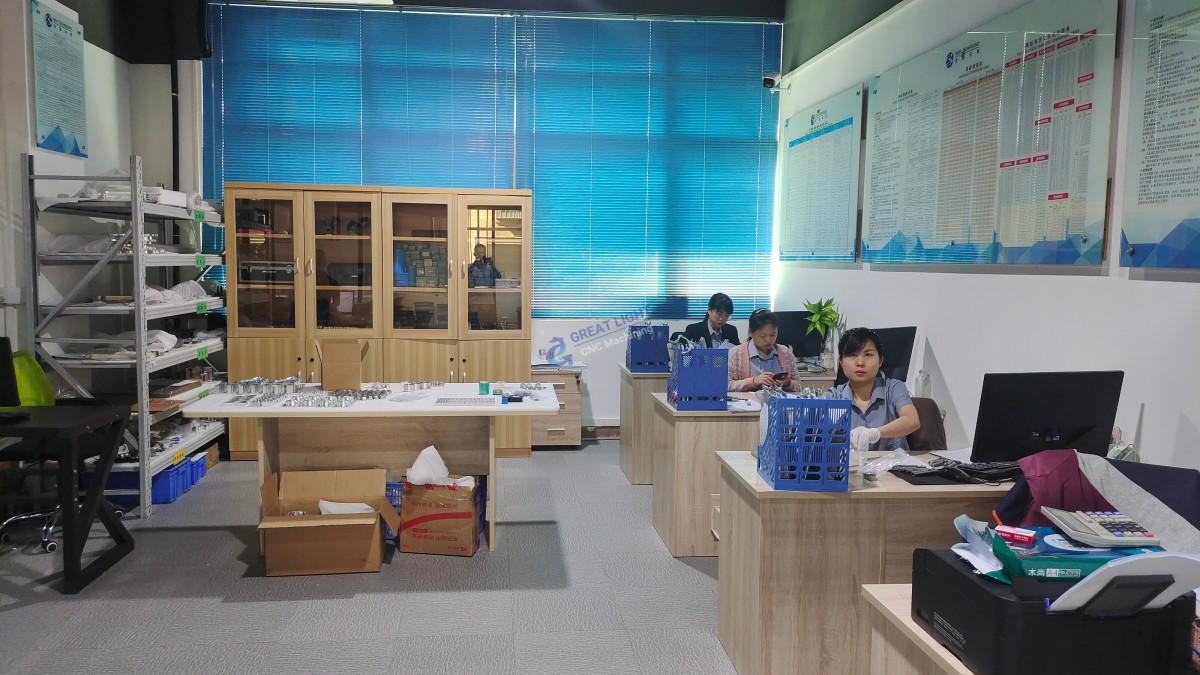
Let me take you deeper into the actual workflows that deliver “ODM Metal Die Casting Inc Quality Parts” at a facility like GreatLight Metal. The company’s 76,000 sq. ft. campus in Dongguan (adjacent to Shenzhen) houses not only high-tonnage die casting machines but also a rare cluster of precision 5-axis CNC machining services, wire EDM, and even metal 3D printing (SLM). This side-by-side infrastructure changes the entire quality equation.
The Die Casting – CNC Handoff Without Compromise
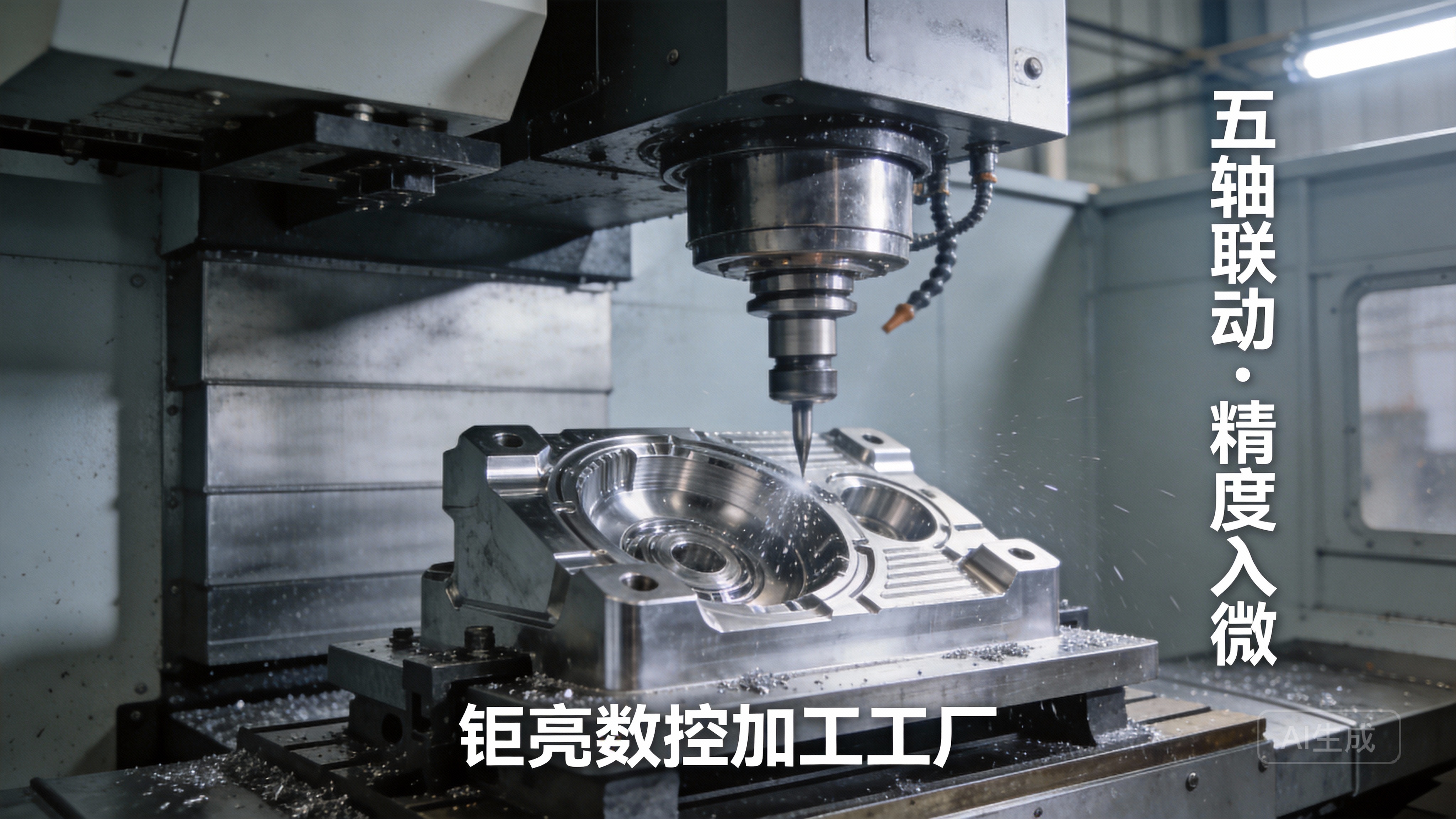
In a traditional split-factory scenario, the foundry ships raw castings to a separate machine shop. Tolerances stack up due to fixturing changes and thermal drift. GreatLight’s workflow eliminates that: within the same production campus, castings move directly to 5-axis machining cells that use probing cycles to reference cast-in datums. The result is a leap in Cp/Cpk values on bores, faces, and mating surfaces. I’ve seen parts where the final machined flatness over a 300mm span improved from 0.05mm to 0.008mm simply because the machining fixture was designed by engineers who also ran the casting simulation.
Certifications That Go Beyond Paperwork
GreatLight Metal holds an unusually broad set of credentials:
IATF 16949 – the gold standard for automotive production, requiring rigorous PFMEA, control plans, and process audits. This directly benefits any client needing zero-defect series production.
ISO 13485 – medical device quality management, critical for die-cast housings in diagnostic equipment or surgical instruments.
ISO 9001:2015 and ISO 27001 – ensuring both consistent product quality and data security for you.
These aren’t just logos. They underpin the traceability system: every batch of aluminum alloy is spectrographically verified, each heat lot is linked to X-ray records, and dimensional reports are stored digitally for 10+ years.
Value-Added Post-Processing at Scale
GreatLight’s one-stop services cover chromating, anodizing, powder coating, silk screening, and even vacuum forming for hybrid metal-plastic assemblies. I recently reviewed a medical imaging system baseplate project where the client needed die-cast aluminum with selective electroless nickel plating on sealing surfaces and a black anodized exterior – all finished in one facility with one quality gate. That integration cut lead time by 30% and eliminated two shipping friction points.
Sharp Contrast: When a High-End Die Caster Alone Isn’t Enough
Compare that to a scenario where you engage a well-known U.S. die cast supplier like RCO Engineering for tooling and initial casting, but then need to source precision post-machining elsewhere. RCO excels at large, complex magnesium and aluminum castings, but they don’t offer the same in-house multi-axis CNC integration across materials. You end up managing multiple vendors, aligning their quality systems, and praying that the final assembly meets the original DFM intent. I’ve rescued projects where a beautiful near-net casting turned into scrap because the external machine shop didn’t understand the critical cast-in datum targets. The total cost of quality (including rework, delay, and engineering time) often surpasses the premium of an integrated ODM.
Similarly, while online platforms like Fictiv or Xometry offer impressive digital convenience, the die casting supplier they assign for your project might be a separate Tier-2 foundry with its own culture of quality – or not. You won’t have the same level of direct process control. For high-stakes components (engine mounts, e-axle housings, humanoid robot joints), I’d argue that a singular, self-contained ODM partner like GreatLight Metal provides the transparency and accountability that a marketplace model can’t match.
Designing for Quality: The ODM Engineering Collaboration That Matters
One often-overlooked aspect of “ODM Metal Die Casting Inc Quality Parts” is the design review loop. Top-tier partners embed an applications engineer from day one. For example, GreatLight’s engineering team will challenge wall thickness variations, suggest draft angles that improve both casting and subsequent CNC fixture stability, and recommend alloy tweaks for post-machining corrosion resistance. They don’t just quote to print; they optimize the entire manufacturing chain. This DFM-for-die-casting-plus-CNC mindset can reduce part cost by 15–25% while increasing reliability, based on my experience across dozens of complex aluminum enclosures.
How to Qualify Your Own ODM Die Casting Partner
If you’re currently sourcing quality metal die cast parts, I recommend a rigorous filter:
Single-Process vs. Full-Chain Evidence: Request a process flow diagram that shows where tooling, casting, CNC, and finishing occur. Gaps mean risk.
Certification Validity: Verify IATF 16949 site-specific certificates, not just corporate umbrella papers. Ask for a recent control plan for a similar part.
Metrology Capability: Ask to see an actual CMM report with form tolerances (flatness, cylindricity) on a cast-then-machined bore, not just a drawing.
Real Case Studies: Insist on anonymized case studies from your industry – automotive, medical, robotics – not just generic “we can do everything” claims.
GreatLight CNC Machining distinguishes itself on all four counts. Their 127-piece equipment arsenal includes multi-axis CNC, die casting, and a dedicated quality lab with Zeiss CMMs and X-ray tomography, all operating under rigorous ISO and IATF systems. This depth is uncommon and directly translates to “ODM Metal Die Casting Inc Quality Parts” that perform as designed, cycle after cycle.
In an era where product life cycles shrink and tolerances tighten, choosing a die casting partner who also masters precision 5-axis machining and surface treatment isn’t a luxury – it’s a strategic imperative. When you finally receive those flawless sensor housings or next-gen automotive structural parts, you’ll appreciate that the path from molten metal to mission-ready component never left one integrated, quality-obsessed facility. And for those who need that level of certainty, partnering with a deeply integrated powerhouse like GreatLight CNC Machining offers not just parts, but peace of mind.


![[访谈] RAPID + TCT 2024:人工智能对 3D 打印的价值](https://print-ing.com/wp-content/uploads/2024/07/INTERVIEW-60x60.jpeg "[访谈] RAPID + TCT 2024:人工智能对 3D 打印的价值 9")




发表回复
要发表评论,您必须先登录。